


How Long Does Gutter Installation Take in Buford? A Start-to-Finish Timeline
On a typical single-story home, our crew is on site for about 2 to 4 hours. That's an estimate, and bigger or steeper homes, or ones that need fascia work first, can take longer. We'll give you a timeline for yours at the free estimate.
A small ranch with simple eaves is usually on the quick end. A two-story house with long runs, several rooflines and a lot of downspouts takes more of the day.
The whole process takes longer than the install, and most of that is scheduling. We generally schedule installs 1 to 2 weeks after the estimate is approved and signed, in the order signed estimates come in. Since jobs go in that order, your exact date depends on our current schedule. Here's what happens at each step and what can make a job run longer.
How Long Does Gutter Installation Take on a Typical Home?
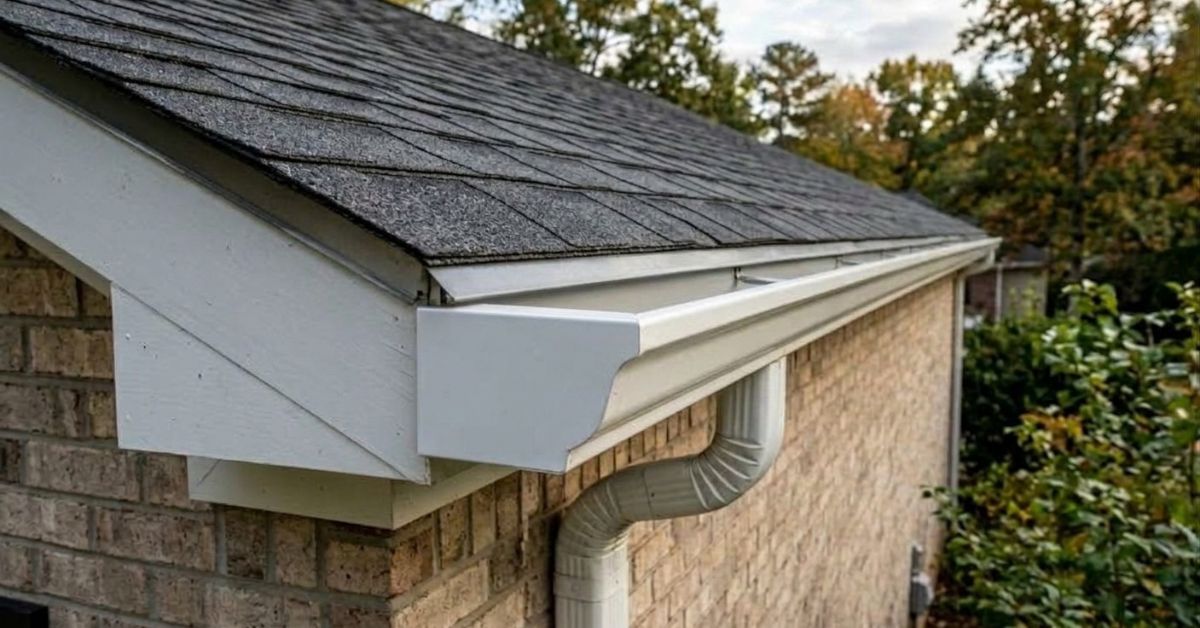
On a single-story Buford home, the full job usually takes one visit of about 2 to 4 hours. That's our estimate, and it covers taking down the old gutters, forming the new ones, hanging, sealing, downspouts, a water test and cleanup.
The biggest factor is how many feet of gutter the house needs. More roofline means more gutter to form and hang, so a bigger house simply takes longer.
Downspouts matter more than people expect. Each one means cutting the outlet, fitting elbows around the wall, strapping it down and setting where the water goes, so a house with a lot of them adds time.
Access matters too. Gutters on a single-story eave you can reach easily go up faster than gutters on a tall second story or over a deck.
You can see what's included in a residential job on our
gutter installation in Buford page.
What Happens Before Installation Day
Two things happen before anyone shows up to install: an inspection and measurement, then picking your material and color. Your part in both is pretty small.
Inspection and Measurement
At the measurement visit we walk around the house, measure each run, count the corners, figure out where the downspouts should go, and check the fascia and drip edge.
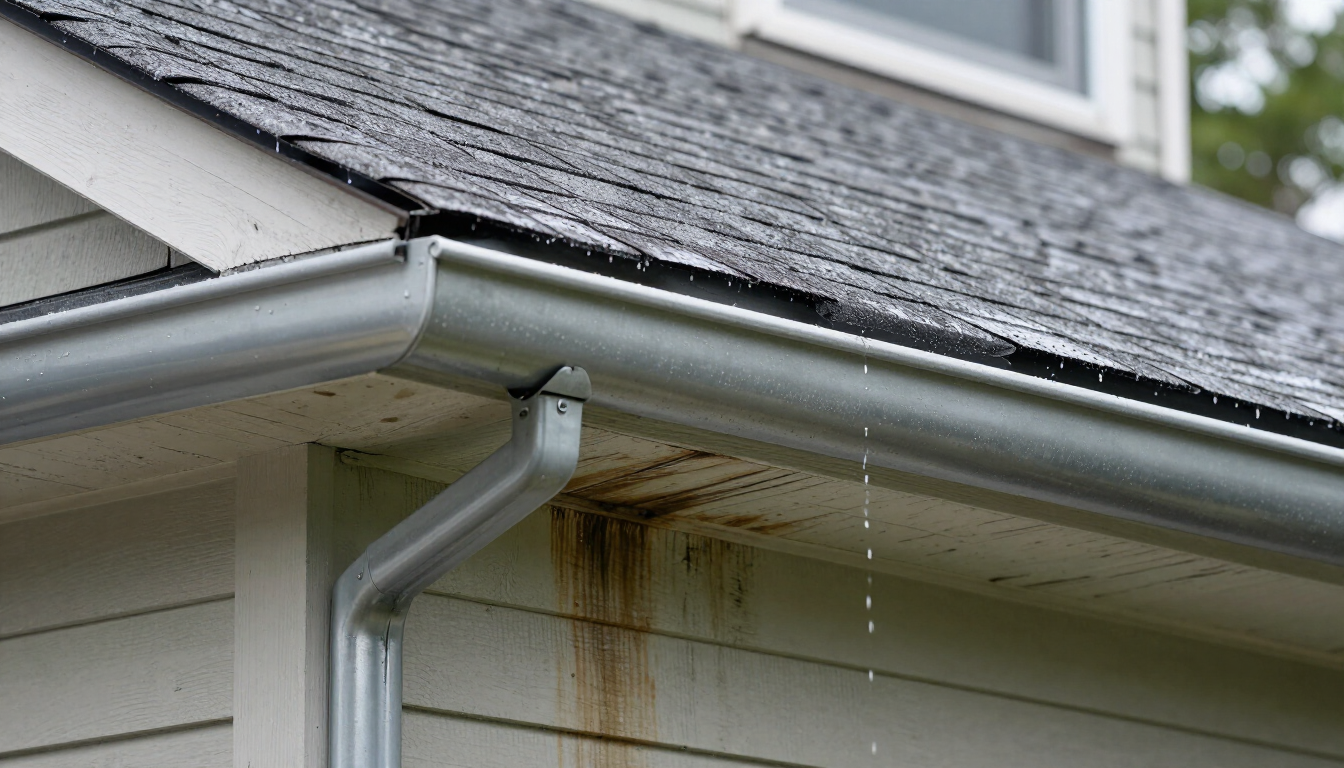
This is also when existing problems show up. Soft fascia, downspouts that are too small, or a gutter sloped the wrong way all get flagged now, because finding them on install day is what makes a short job run long.
If you're not ready for a full replacement yet, a gutter inspection in Buford covers the same ground.
Material and Color Selection
Picking the profile, thickness and color is usually one short conversation. Most Buford homeowners are choosing between 5-inch and 6-inch K-style aluminum, in a color that matches the trim or the roof.
Common colors are usually easy to get. A less common color can take longer to get in, so it's worth deciding early instead of at the last minute.
What Happens on Installation Day
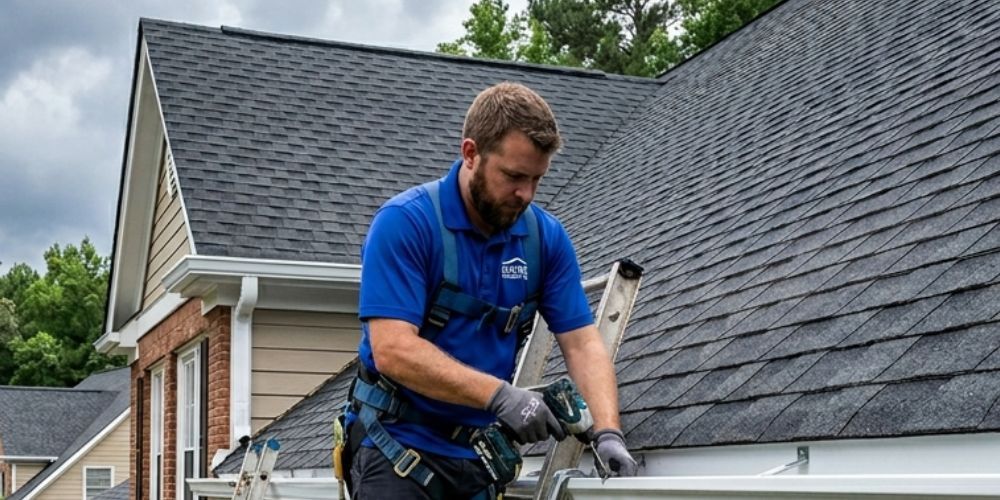
Install day usually goes in six steps: forming the gutters, taking down the old ones, hanging and sealing, downspouts, a water test, and cleanup.
Fabrication and Tear-Off
Seamless gutters are formed right on site from a coil of metal run through a machine in the driveway. Each run comes out as one
continuous piece cut to the exact length.
That's why on-site gutter fabrication in Buford skips the wait you'd have with pre-made sectional gutters.
Next, the old system comes down. The old gutters come off in sections, the hangers and spikes get pulled, and we take a look at the fascia while it's exposed.
Hanging, Sealing, and Downspouts
Hanging is usually the longest step. Our crews typically space hangers 30 to 36 inches apart, so a long run takes a lot of them.
Each gutter is hung with a slight slope toward the outlet so water actually drains. A common rule of thumb is about a quarter inch of drop for every 10 feet.
Corners, end caps and outlets get sealed along the way instead of all at the end. Then come the downspouts: each one is cut, fitted with elbows to clear the wall, strapped, and pointed away from the foundation.
Water Test and Cleanup
Next, each gutter gets a hose test to make sure water reaches the downspout and nothing is left sitting in the gutter. If there's a low spot, it gets fixed before we pack up.
Then cleanup. The old material gets hauled off, the driveway and flower beds get checked for scraps and screws, and we walk the job with you.
What Makes a Gutter Installation Take Longer
A few things can make an install take longer: fascia repair, tall or steep roofs, complicated rooflines, weather, and big commercial jobs. One of these can add a few hours, and a couple together can add a day.
Fascia repair is the most common one. Rotted board has to be cut out and replaced, and sometimes primed, before new hangers can hold, and how long that takes depends on how much of it there is.
Height and pitch slow everything down. On a two-story wall or a steep roof, moving ladders and setting up safely just takes more time, so gutter installation on steep roofs in Buford usually takes longer than the same length of gutter on a ranch.
Complicated rooflines mean more corners, and corners take more work. A house with several gables, dormers and spots where the roof meets a wall has a lot more corners than a simple rectangle, and each one gets measured, cut and sealed by hand.
Georgia weather can change the plan too. Sealant and safe footing both need dry conditions, so an afternoon storm off Lake Lanier can stop a job partway and push the finish to the next day.
Size is the last one. A
commercial gutter job with long roof spans, bigger box gutters and work around business hours takes longer, and the schedule depends on the property.
What to Check After the Install
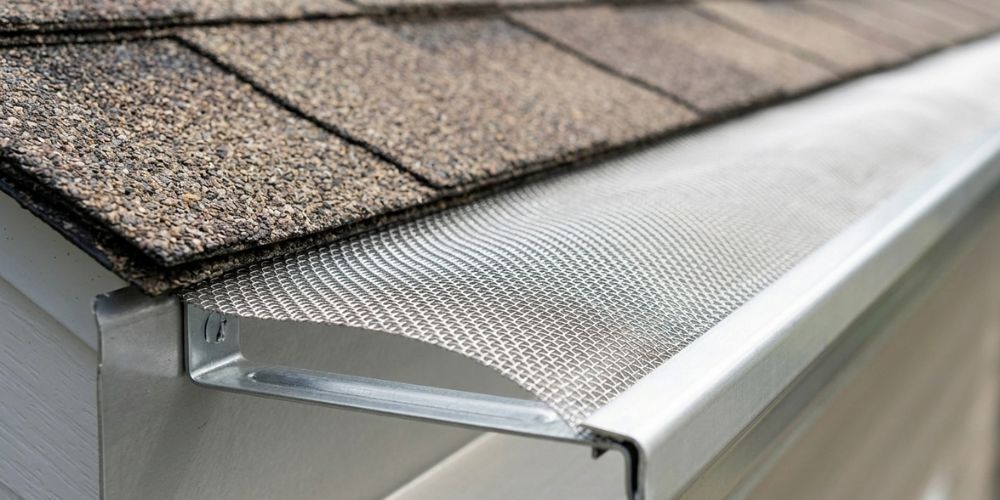
The first good rain is the real test. Walk around the house while it's coming down and watch each downspout, since a steady stream out the bottom means that gutter is draining the way it should.
Look along the gutter line for any drips at the corners or seams. A little water right after install can just be leftover from the hose test, but a drip that keeps going in the rain is worth a call.
Check where the water lands too. It should be heading away from the house, not pooling by the foundation or running back toward a walkway.
And take one more look at the gutter line from the corner of the house. It should look straight, with no dips or waves between hangers.
Planning Around Your Installation Day
Install day doesn't ask much of you. It helps if someone can check in at the start to confirm where the downspouts go, and again at the end for the walkthrough.
Clear the driveway so there's room for the gutter machine and the material trailer. Move patio furniture, grills and potted plants away from the edge of the roof, and keep pets inside while the ladders are up.
A lot of Buford homeowners are surprised how quick it is. If you want a timeline for your own house, set up a free estimate and we'll come take a look and walk you through it.
You might also like
Gutters 4 Less Blog