


Planning Gutters for Multi-Level Rooflines in Buford, GA: When Upper Roofs Drain Onto Lower Ones
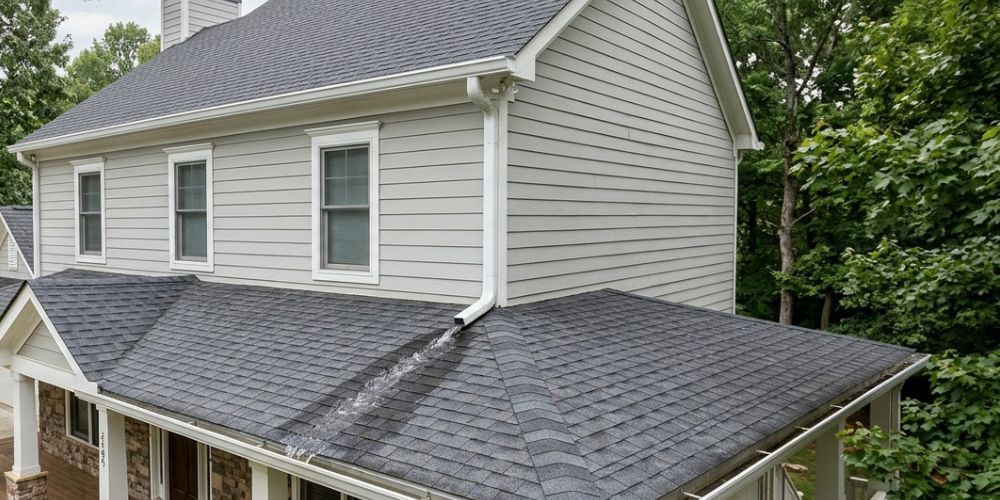
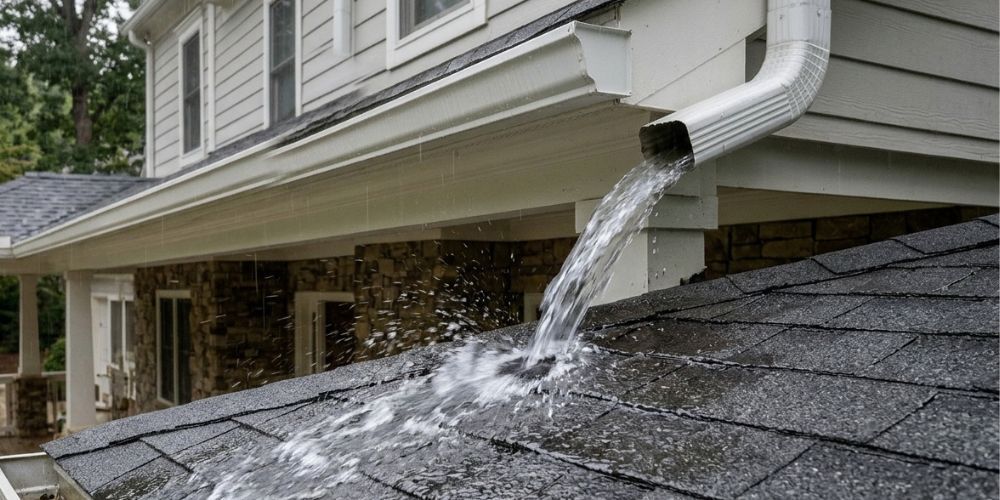
During a heavy rain, the downspout off a second-story gutter can empty a steady stream of water right onto the porch or garage roof below it. That's an upper roof downspout draining onto a lower roof, and it shows up on plenty of Buford homes with a bonus room over the garage or a second story over the porch.
It's worth sorting out before any new gutters go up. At Gutters 4 Less, we plan multi-level gutter systems so the water from each level gets its own way down to the ground.
What Happens When an Upper Roof Drains Onto a Lower Roof in Buford
Here's the short version: all the water from the upper gutter lands in one spot on the lower roof. It then runs across that roof to the lower gutter, which has to take it on top of its own load.
You'd barely notice it in a drizzle. Get one of those heavy afternoon storms moving through the Lake Lanier area, though, and the stream out of that downspout can splash, spray sideways, or hit the wall next to it.
The spot right under the downspout also stays wet longer than the rest of the roof. That's why the usual approach is to carry upper roof water down to the ground or into another gutter, rather than letting it pour out onto the roof below.
Then there's the lower gutter. It's catching its own roof's water plus a steady stream from upstairs, and all of that extra water shows up at one point instead of spread along the run.
Where Multi-Level Rooflines Show Up on Buford Homes
Multi-level rooflines turn up pretty much anywhere one part of the house sits higher than another. The ones we run into most around Buford are second stories over a front porch, two-story sections above an attached garage, and additions or sunrooms tied into an older roof.
Every one of those leaves an upper gutter ending above a lower roof. When the gutters first went up, somebody had to decide where that downspout would go, and dropping it onto the roof below was the quick answer.
Dormers do it too, just smaller. A short gutter over a dormer usually has nowhere to go but down onto the main roof.
Bonus rooms over garages are another big one. That room's roof drains into a gutter, and more often than not its downspout ends right on top of the garage roof.
Signs an Upper Downspout Is Causing Problems Below
The first signs usually show up on the lower roof right under the downspout, and at the lower gutter just past it. Most homeowners spot them from the yard or from an upstairs window.
- A dark streak or worn-looking path running down the lower roof from the downspout
- Moss or algae on the patch that stays damp after rain
- Water splashing against siding or a wall where the downspout lands
- Overflow at the lower gutter near the spot where the upper water arrives
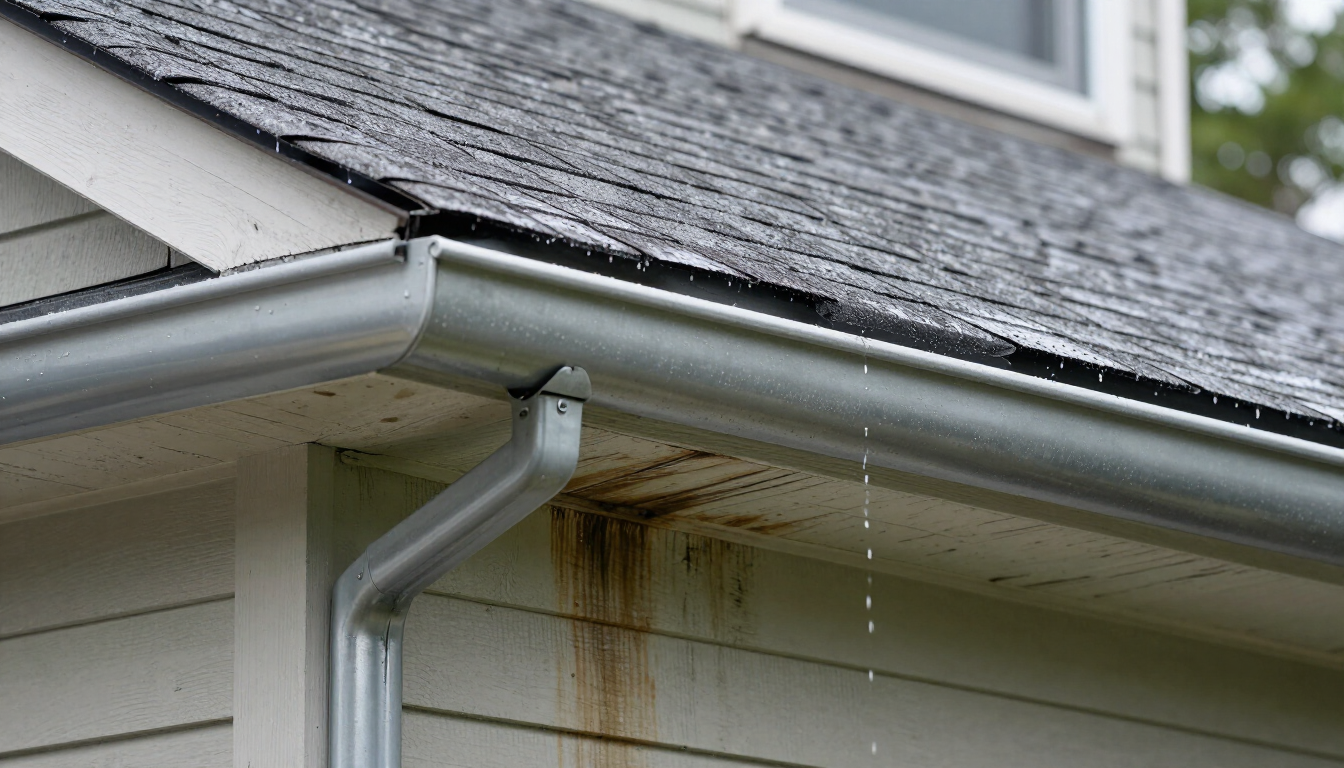
- Staining on the fascia or siding under that part of the lower gutter
These signs point to a gutter routing problem first. If the lower roof itself looks worn, a roofer can tell you about its condition, and the drainage fix is the part we take care of.
Routing Options for an Upper Roof Downspout in Buford
There are three common ways to route an upper roof downspout, and the right one comes down to where the lower gutter sits and what the wall below looks like. We look at both levels together before picking one, since a fix that helps the lower roof can still send water toward a door or a walkway.
Extending the Downspout Across the Lower Roof
The upper downspout keeps going down the lower roof and empties straight into the lower gutter. The water rides inside the pipe the whole way, so it never sheets across the roof surface.
It works well on most porch and garage roofs. It keeps the upper water contained without changing anything about the upper gutter.
A downspout running across the lower roof is easy to see from the street. Matching its color to the gutters and trim keeps the fix from standing out on the front of the house.
Running the Downspout Down the Wall to the Ground
Where the wall allows it, the upper downspout can run past the lower roof's edge and straight down to the ground. That keeps the upper water off the lower roof and out of the lower gutter completely.
It works best when the upper gutter ends near an outside corner of the house. Getting around the lower eave usually takes an offset or two.
What About Just Turning the Elbow?
A lot of homeowners try aiming the bottom elbow so the stream points down the slope of the lower roof. It helps a little with splashing, but the water still runs across the lower roof on its way to the gutter.
It's more of a stopgap. If the elbow trick is the only thing standing between your upper roof and your lower one, it's worth having us take a look.
Moving the Upper Outlet
Sometimes the better answer is changing where the upper gutter drains in the first place. If the upper run can be pitched toward the other end, where there's a clear drop to the ground, the lower roof gets left out of it entirely.
This takes a little more planning, because the slope of the upper run has to change. It's often the cleanest option on a new install, when our gutter contractors in Buford are laying out the whole system from scratch.
Planning the Lower Gutter on a Multi-Level Buford Roofline
A lower gutter that takes water from upstairs has to stay straight and tight to the fascia under more weight than a single-level run. Our
crews keep hangers every 30 to 36 inches along these runs, with one close to the spot where the upper downspout empties in.
That spot takes the most force in a storm, since water from an extended downspout hits the trough hard right there. Without a hanger close by, it's usually the first place a lower gutter starts to sag or pull away from the fascia.
Seamless runs help here too. With joints only at the corners and end caps, there are fewer places for the extra water to find a way out.
Don't forget the ground. Water from two roof levels eventually leaves through the lower downspouts, so where those downspouts empty is worth a look while the plan is still on paper.
After an install, our checklist on how to tell if gutters were installed correctly in Buford walks through the ground-level checks for slope, hangers, and downspout placement. It's a quick way to confirm both levels are draining the way they should.
Giving Every Level of the House a Clear Path
Multi-level rooflines are common, and most of them work just fine once each level has somewhere to send its water. The fix is often a routing change, not a whole new system.
If you've got an upper downspout emptying onto a lower roof, a quick inspection can show which option fits your house. Call our Buford team at (678) 551-7223, and we'll walk you through the options with no pressure and no upsell.
You might also like
Gutters 4 Less Blog