


Two-Story Homes in Alpharetta, GA: Why Roof Height Changes How Gutters Get Cleaned
Walk down almost any street in Alpharetta and you'll count more two-story homes than ranches. Their gutters work harder, too, because there's more roof above them and they sit a full story higher off the ground.
So two-story gutter cleaning isn't just a taller version of a normal cleaning. At Gutters 4 Less, our Alpharetta crews plan around the height on every two-story home, which means you never have to climb up there yourself.
Why Roof Height Changes Two-Story Gutter Cleaning
Height changes three things about the job: how much water the gutters take, where the leaves end up, and how long it all takes. A two-story house deals with all three at once.
A taller house usually has a bigger stretch of roof above each upper gutter. More roof up there means more water and more leaves dropping into that one gutter every time it storms.
The leaves don't always stay put, either. Pine straw and oak leaves that wash off the upper roof land in a lower gutter or just sit on the porch roof until the next rain.
Then you've got the clock. Our crew needs more time to get up to a second-story gutter, work the whole run, and come back down than they'd need for the same length over the garage door.
None of that means a two-story home has worse gutters. They just carry more, and keeping them clear looks a little different.
How Faster Runoff Affects Upper Gutters on Alpharetta Homes
On a lot of two-story homes, the main roof is the biggest and steepest part of the house. Water picks up speed the whole way down a slope like that, so it's moving fast by the time it reaches the gutter.
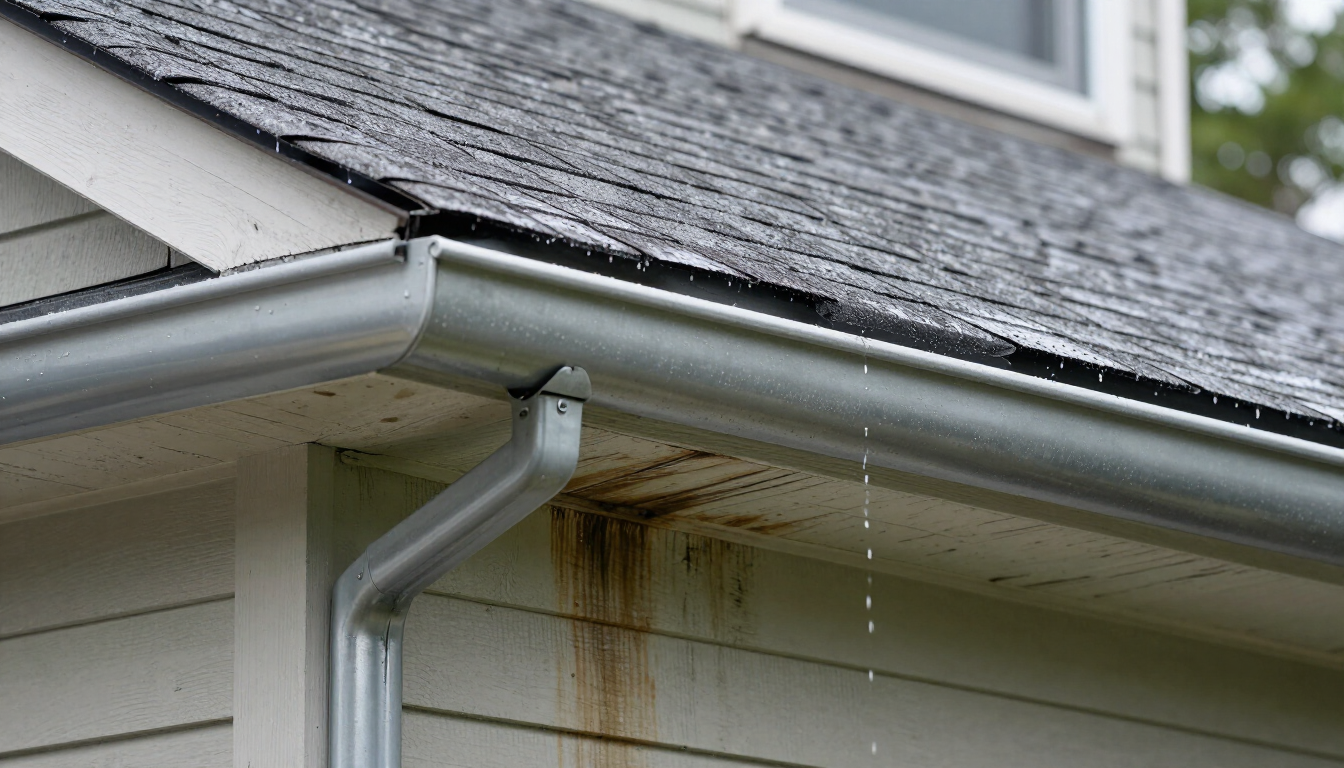
Fast water needs somewhere open to land. If the upper gutter is half packed with leaves, the stream hits that pile, kicks up, and jumps the front edge before it ever gets to the downspout.
That's the reason upper gutters can look perfectly fine from the street and still spill in a storm. From the driveway you can't see a packed trough, you only see the water that misses it.
Alpharetta's summer storms don't help. A gutter that keeps up with a light shower can spill along the whole front of the house when a real downpour comes through.
Big oaks and pines make it worse. Under heavy tree cover, upper gutters build up a thick, wet mat that soaks up water like a sponge, and that weight hangs on the hangers day and night, rain or not.
Upper and Lower Gutter Tiers on Two-Story Homes in Alpharetta
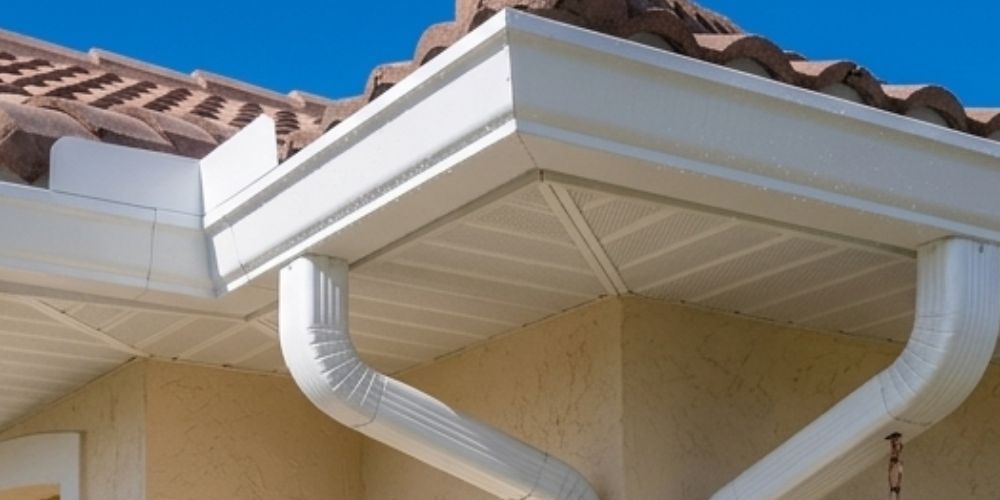
Most two-story homes have at least two tiers of gutters: the upper run along the main roof, and lower runs over a porch, garage, or first-floor room. You might not think of them as one system, but they are.
Here's how they connect. An upper downspout often empties onto a lower roof or right into a lower gutter, so a clog upstairs sends extra water and debris down to the next level.
Clean one tier and skip the other, and you've really only done half the job. The upper gutters, the lower gutters, and the downspouts running between them all need to be open.
Downspouts are longer on a two-story house, and a clog can hide anywhere along the drop. Elbows are a common spot, especially where an upper downspout turns onto a lower roof.
Gutter guards on the upper run still need a look now and then. Debris can sit on top of a guard or collect in the corners where the guard meets the roof.
Don't forget the lower roofs themselves. Leaves slide off the upper roof and pile up on porch and garage roofs, and the next good rain washes that pile straight into the lower gutter.
Overshoot and Overflow on Two-Story Gutters
People use these two words like they mean the same thing, but they don't. Overshoot is water leaving the roof so fast it sails right past the gutter, and overflow is water that gets into the gutter and then spills back out because something's blocking it.
From the yard it's hard to tell which one you've got. The trick is to look at where the water lands.
- Water sheeting off the front lip of an upper gutter in heavy rain
- Splash marks on siding, windows, or a lower roof under the upper run
- A line of washed-out mulch or soil under the eave
- Dirt streaks down the outside face of the gutter
Keep an eye on the inside corners, too. That's where two roof sections dump into one spot, and on a two-story house it's often the first place to spill.
Most of the time a cleaning solves overflow, and it tends to calm down overshoot as well, since the water has an open trough again. If a clean gutter still lets water fly past, the pitch or position might be off, and our crew can check that while we're already there.
What Our Crews Check on Upper Gutters
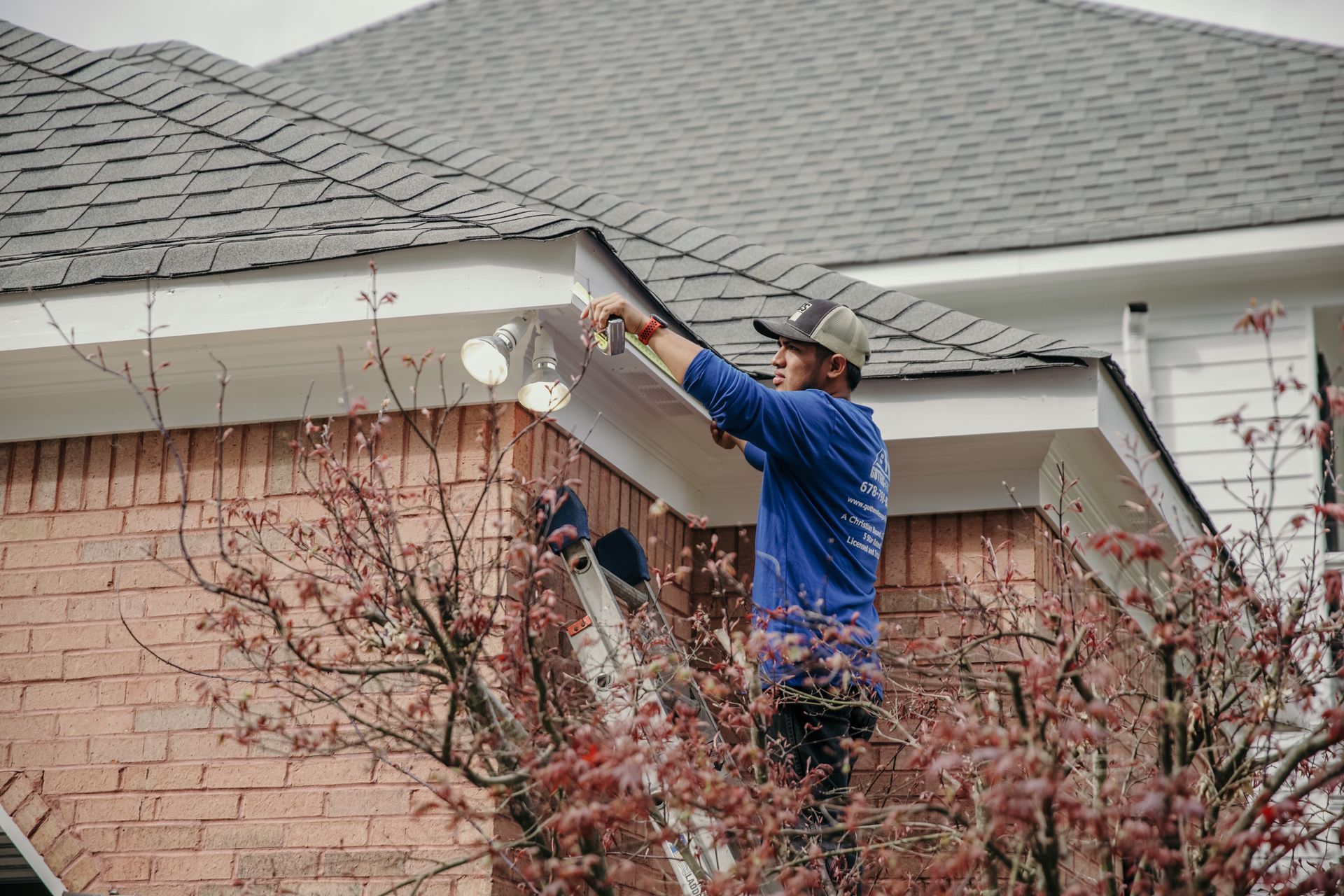
Nobody really looks at their upper gutters. A cleaning is the one time someone's right there next to them, so we use it to spot what you can't see from the ground.
- Hangers that have pulled loose or are spaced wider than our 30 to 36 inch standard
- Spots where the gutter has pulled away from the fascia
- Sections that sag and hold water after the flow test
- Leaking corners, end caps, or outlets
If we find something, we'll show you, explain what it means, and lay out your options, with no pressure and no upsell.
Setup Time and Safety for Two-Story Gutter Cleaning
Two-story jobs take longer to set up, plain and simple. Most of that time goes into getting the crew up to the second-story gutters safely, and the cleaning itself works the same way it always does.
Please don't climb up there yourself. The height, the weight of wet leaves, and the reach you need to work a full run make it a job for a crew with the right gear.
Our gutter cleaning service in Alpharetta runs the same steps on a two-story house as on any other. We pull the debris, run water through to test the flow, make sure every downspout is open, and bag up and haul off whatever comes out.
As for timing, a lot of Alpharetta homeowners like to book around peak leaf fall. How often your house needs it comes down to the trees around it and the shape of the roof, so there's no one schedule that fits everybody.
Keeping Both Levels of Your Home Draining
A taller roof sends more water, faster, into gutters that are harder to reach. Keep both levels clear and the water has an easy trip to the downspouts and away from your foundation.
Every two-story home is a little different, and a quick look is usually all it takes to figure out what yours needs.
Not sure where your upper gutters stand, or when they were last cleaned? Our Alpharetta team at (678) 336-8298 can come out and take a look.
You might also like
Gutters 4 Less Blog