


How to Tell If Your Gutters Were Installed Correctly: A Buford Homeowner's Checklist
You can judge most of a gutter installation from the ground with a garden hose, a level, and about twenty minutes. A correct install holds a steady slope toward the downspouts, sits tight against straight fascia, uses hangers spaced no more than 36 inches apart, and moves water well away from the foundation. Anything that fails one of those four tests is worth a closer look.
Buford homes put real load on a gutter system. Pine and oak debris fills troughs quickly, and the storm bands that move across the Lake Lanier area can drop an inch of rain in under an hour. This checklist walks through what to look at, what each finding usually means, and what to ask gutter contractors in Buford before you hire anyone for the fix.
What a Correct Gutter Installation Looks Like on a Buford Home
A correct gutter installation is straight along its length, pitched consistently toward each downspout, and fastened to solid wood behind the fascia board. Those three qualities cover most of what separates a system that lasts twenty years from one that needs attention in three.
Start by standing at the corner of the house and sighting down the length of the gutter run. The top edge should read as one clean line, with any dip or wave being intentional pitch rather than sag between fasteners.
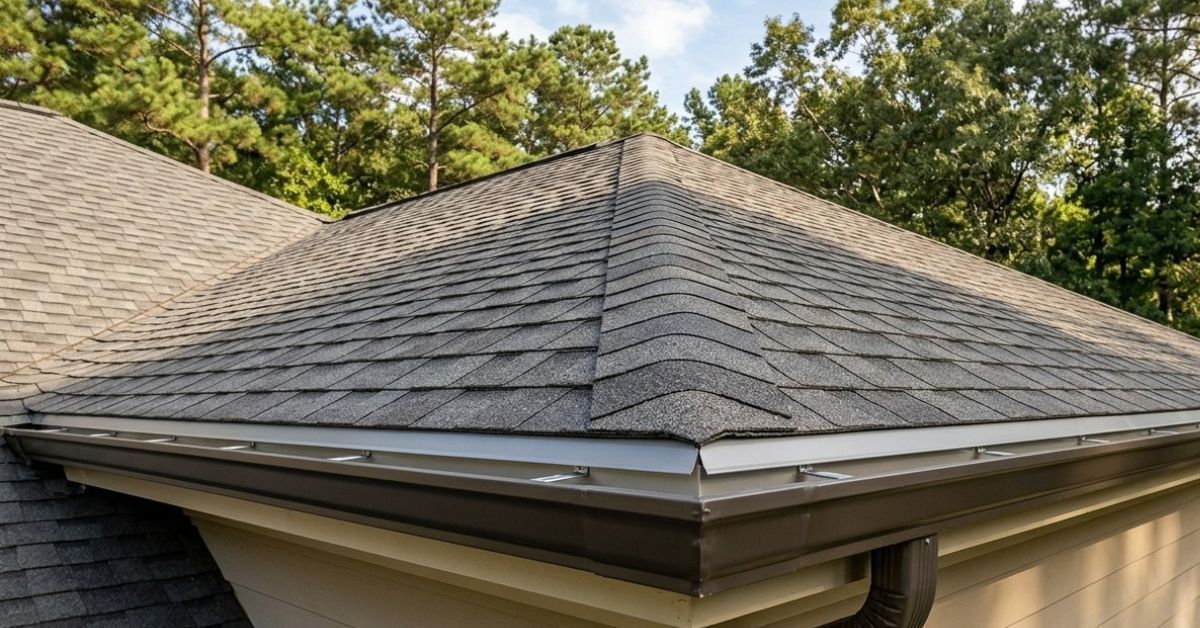
Next, look at where the gutter meets the roof. The back edge of the trough should tuck under the drip edge so water coming off the shingles lands inside the gutter instead of behind it.
Then check the seams. Sectional gutters have a joint every ten feet or so, and each one is a place water can eventually work through. Seamless gutters formed on site remove those joints from the middle of a run entirely, leaving only the corners and end caps.
Finally, note the gutter size. Most Buford homes are well served by 5 inch K style gutters, though larger roof areas and steeper pitches often call for 6 inch. Gutters 4 Less sizes systems around the actual roof area feeding each run, and our guide to
choosing the right rain gutter size covers how that math works.
How to Check Gutter Slope and Pitch From the Ground
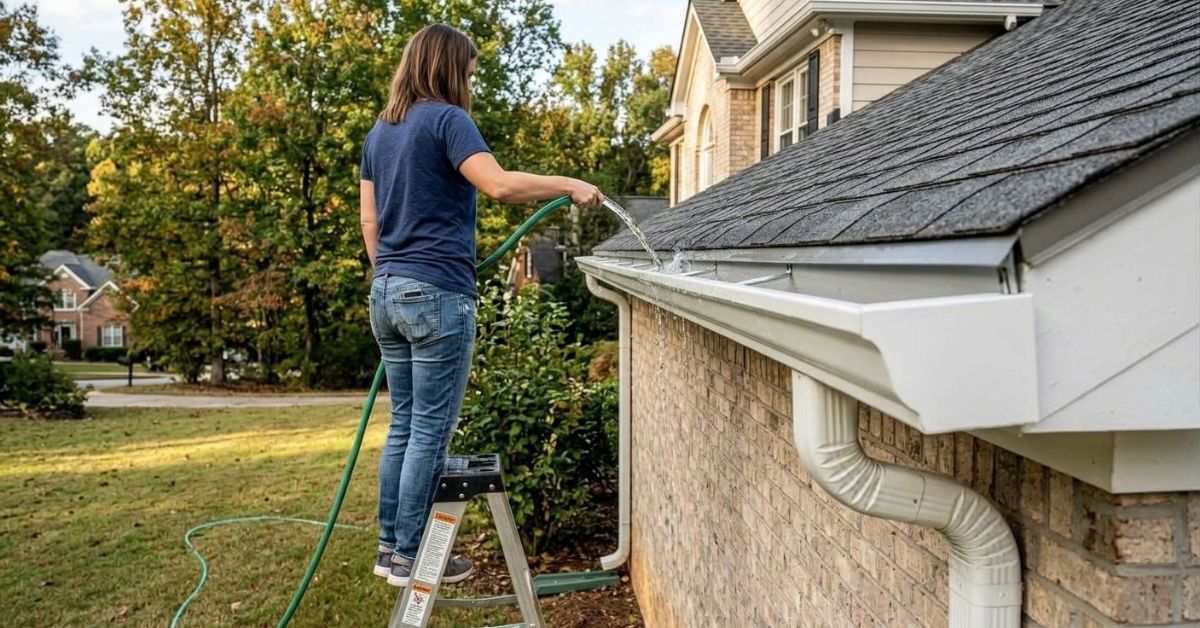
Gutter slope should fall roughly a quarter inch for every 10 feet of run toward the downspout, and you can verify it with a garden hose. Run water into the high end of the gutter and watch whether it moves steadily toward the outlet or pools somewhere in the middle.
Standing water is the clearest signal that pitch is off. A gutter holding water after the hose is shut off is carrying weight it was not designed to hold, since water runs about 8.3 pounds per gallon.
Streaking on the outside face of the gutter tells a similar story. Dirt lines that run down the front of the trough usually mean water crested the front edge instead of flowing to the downspout.
Long runs deserve extra attention. A 40 foot run pitched to a single downspout needs about an inch of total fall, which is enough that you may notice the gutter sitting visibly lower at one end. That is correct, not a defect. If the pitch on your run looks wrong, our guide to how much slope gutters need walks through the math.
If the run is level end to end and still drains, it may be draining only because the volume is low. Buford storms tend to expose that quickly, and a system that handles a garden hose fine can overflow in a heavy afternoon downpour.
Gutter Hanger and Fastener Checks Any Homeowner Can Do
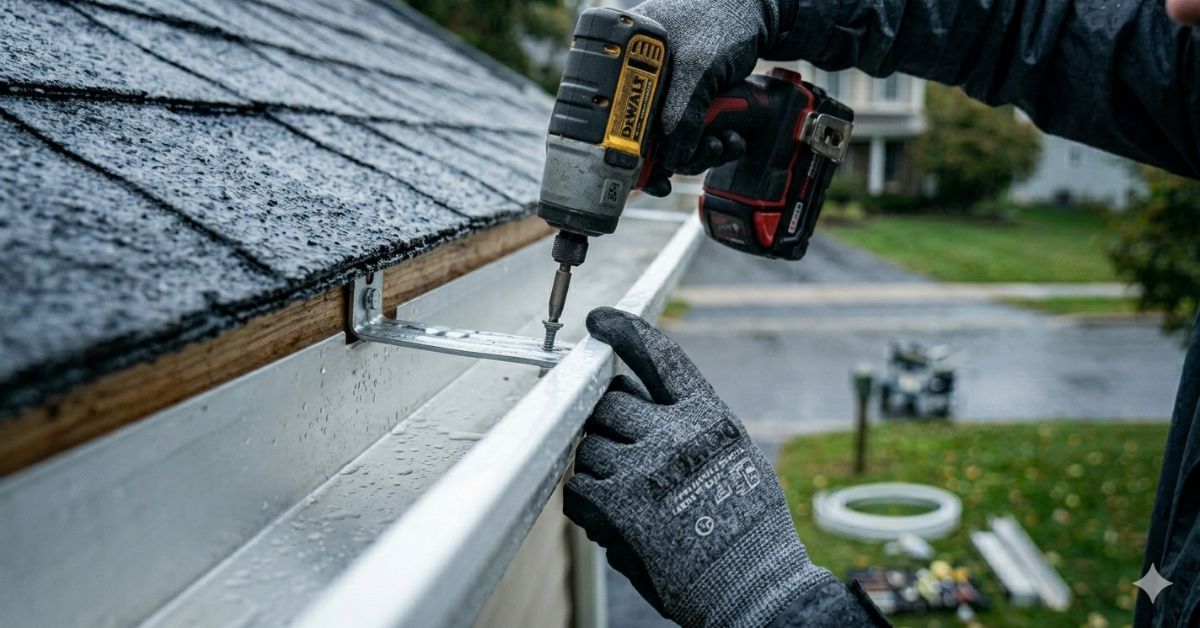
Gutter hangers should sit no more than 36 inches apart, and closer than that on steep roofs or under heavy tree cover. Count the hangers on a 10 foot section from the ground, since most are visible as small brackets crossing the top of the trough.
Spacing and Count
Five hangers across a 10 foot section works out to 30 inch spacing, which holds up well in Buford. Three or four across that same span leaves gaps of 40 inches or more, and those stretches sag once wet pine straw settles in.
Fastener Type
Hidden hangers with screws are the current standard on residential installs. Older spike and ferrule systems work loose over time as the wood behind the fascia expands and contracts through Georgia summers and winters.
Visible Warning Signs
Look for hanger heads that have backed out past the face of the gutter, and for daylight between the back of the trough and the fascia board. Either one means the fastener is no longer holding and the load has shifted to its neighbors. What correct spacing should look like in the first place is covered on our page about gutter hanger spacing in Buford.
Gaps and sagging between hangers show up first at the midpoint of a run. That midpoint is where you want to focus your attention if you are only going to check one spot, and it is also where our
gutter repair work in Buford most often starts.
Downspout Placement and Drainage Checks Around Your Home
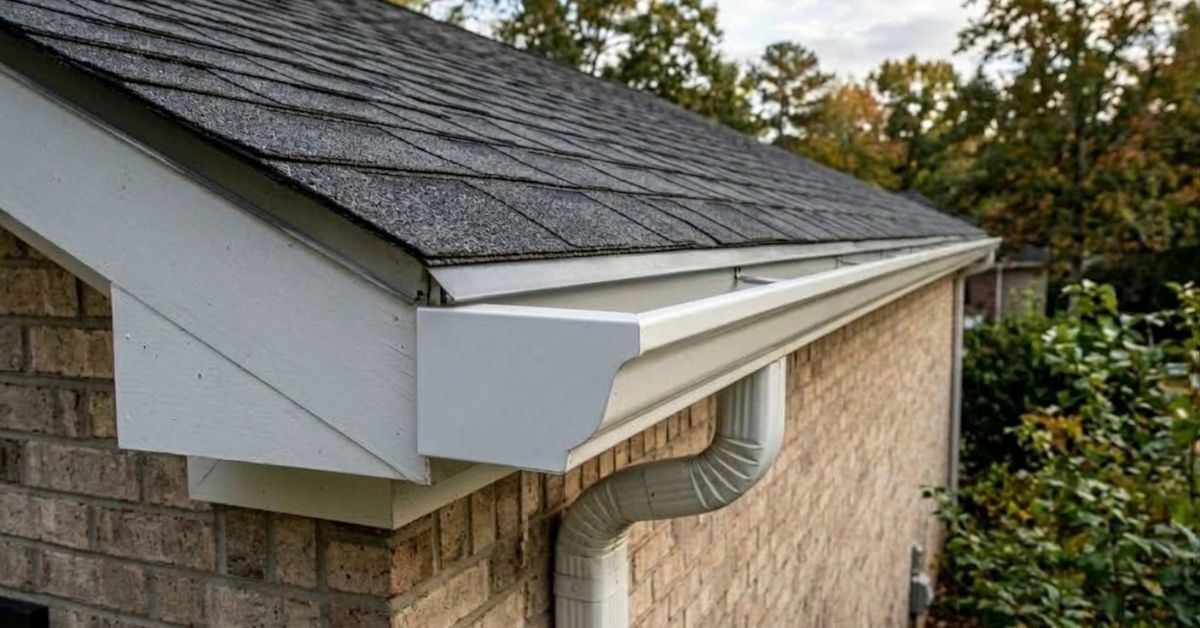
Downspouts should appear at least every 30 to 40 feet of gutter run and discharge water a minimum of 4 to 6 feet from the foundation. Walk the perimeter of the house and count them, then follow each one to where the water actually lands.
A single downspout serving a 60 foot run is undersized for the rain volumes Buford sees. Adding a second outlet often solves overflow problems that look like a pitch issue from the ground.
Check the ground at the base of each downspout. Eroded mulch, a washed out trench, or a persistent damp spot against the wall means the discharge point is too close to the house.
Extensions and splash blocks matter more on lots that slope toward the structure, which is common on the rolling ground around Buford and the Lake Lanier corridor. Water released at the foundation on a lot like that has nowhere to go but down along the footing.
Also look up at where the downspout ties into the gutter. The outlet should sit at the low point of the run, and the elbow should route cleanly down the wall without a sharp offset that catches debris.
Signs the Fascia or Roof Edge Was Not Handled Right
Soft, stained, or bowed fascia behind a gutter usually means water has been getting behind the trough rather than into it. That is a roof edge problem showing up as a gutter symptom, and it changes what a repair involves.
Run your eye along the fascia board below the gutter line. Peeling paint, dark streaks, and wood that looks swollen along its bottom edge all point to sustained moisture.
On older homes, original fascia may already carry some rot before a new gutter goes on. Fastening new hangers into compromised wood transfers the problem to the new system, so that wood needs to be addressed first.
Another thing worth checking is whether the drip edge is present at all. Without it, water can wick backward off the shingle edge and run down behind the gutter, which explains fascia damage on a system that otherwise drains fine.
If you want a fuller picture of what tends to go wrong during installation, our page on common gutter installation mistakes in Buford covers
the technical side in more depth.
What to Ask Gutter Contractors Before You Hire
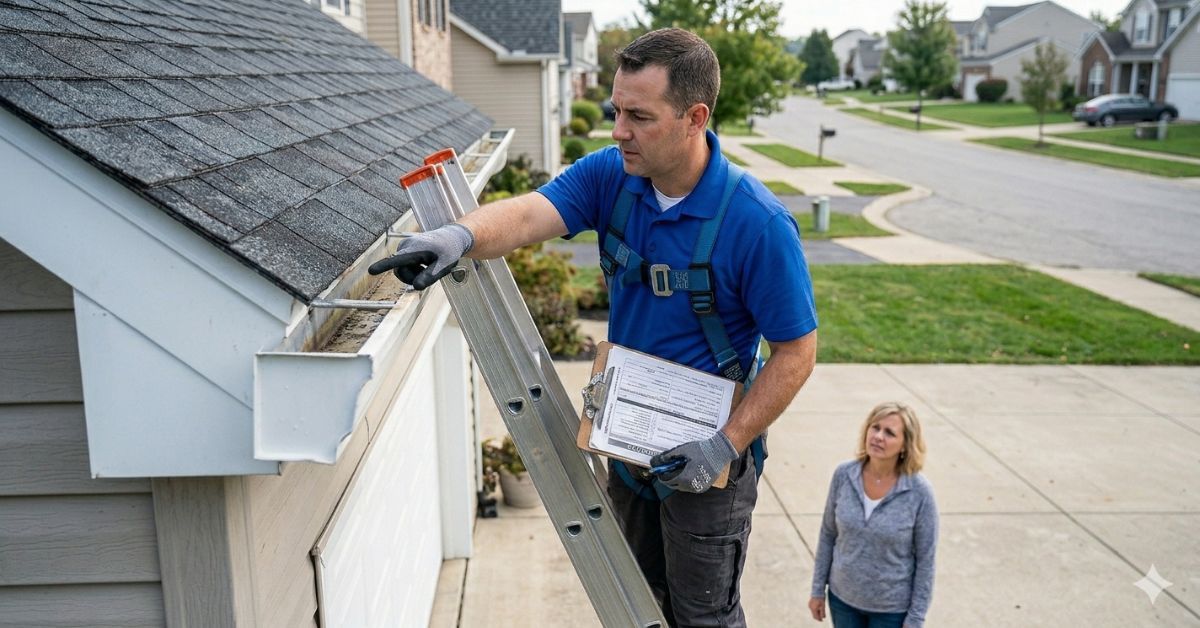
Ask what hanger spacing they use, how they set pitch, and whether the quote includes fascia repair if the wood behind the gutter turns out to be soft. Those three answers tell you a great deal about how the crew approaches the job.
Questions About the Work Itself
Ask how many downspouts the design calls for and why that number was chosen. A contractor who sized the system around your roof area will have a specific answer rather than a general one.
Ask whether the gutters will be seamless and formed on site. Ask what gauge aluminum they run, since heavier gauge holds its shape better under wet debris load.
Questions About Scope and Follow Up
Ask what happens if the crew finds rotted fascia mid job. Knowing whether that becomes a change order or is already covered prevents a surprise partway through.
Ask how the system should be maintained given your specific tree cover, and treat any answer that sounds like a fixed schedule with some skepticism. A house under heavy pine may warrant more frequent checks than one on an open lot, and the right rhythm depends on the property.
Gutters 4 Less answers these questions during every estimate, and you can see how we approach the work on our page for gutter contractors serving Buford.
Turning Your Checklist Into a Plan
Working through this checklist gives you something more useful than a yes or no answer. You end up with a list of specific findings, such as standing water 20 feet from the downspout, or hangers spaced closer to 48 inches than 30, and those details make any conversation with a contractor far more productive.
Some findings are minor and can wait. Others, particularly soft fascia and water discharging at the foundation, tend to get more expensive the longer they sit.
If you would rather have us take a look, Gutters 4 Less offers
gutter inspections throughout Buford and can walk the roofline with you. Bring your notes, and we will tell you plainly what needs attention now and what can wait.
You might also like
Gutters 4 Less Blog