


How Roof Pitch and Square Footage Affect Rain Gutter Performance in Buford, GA
When rain gutters fail during a storm, the first instinct is usually to blame the gutters. Too small. Clogged. Installed badly. Sometimes that's the issue. More often in Buford, the real culprits are two factors most homeowners never check. The pitch of the roof, and the square footage feeding the gutter run.
Together, those two variables determine how fast water moves, how much water arrives, and whether a standard 5-inch rain gutter system in Buford can handle a real Atlanta-metro storm. Here is how each one factors into rain gutter performance, and what it means for sizing the system on your home.
How Roof Pitch Affects Rain Gutter Performance in Buford
Roof pitch is the steepness of the roof, measured as vertical rise per 12 inches of horizontal run. A 4/12 pitch is moderate. A 12/12 pitch is steep. Most Buford homes sit between 5/12 and 9/12, though newer construction often pushes higher.
Why does pitch matter for gutters? Because steeper roofs accelerate water. On a gentle pitch, rainwater moves slowly across the surface
and reaches the gutter at a manageable rate. On a steep pitch, that same rainfall arrives with substantially more velocity and volume per minute. Less time to drain. More water per surge.
That's where effective drainage area enters the picture. A roof with steeper pitch effectively drains more water per square foot than a flatter roof of the same physical size. So two homes with identical square footage can end up with very different rain gutter sizing requirements, depending entirely on roof pitch.
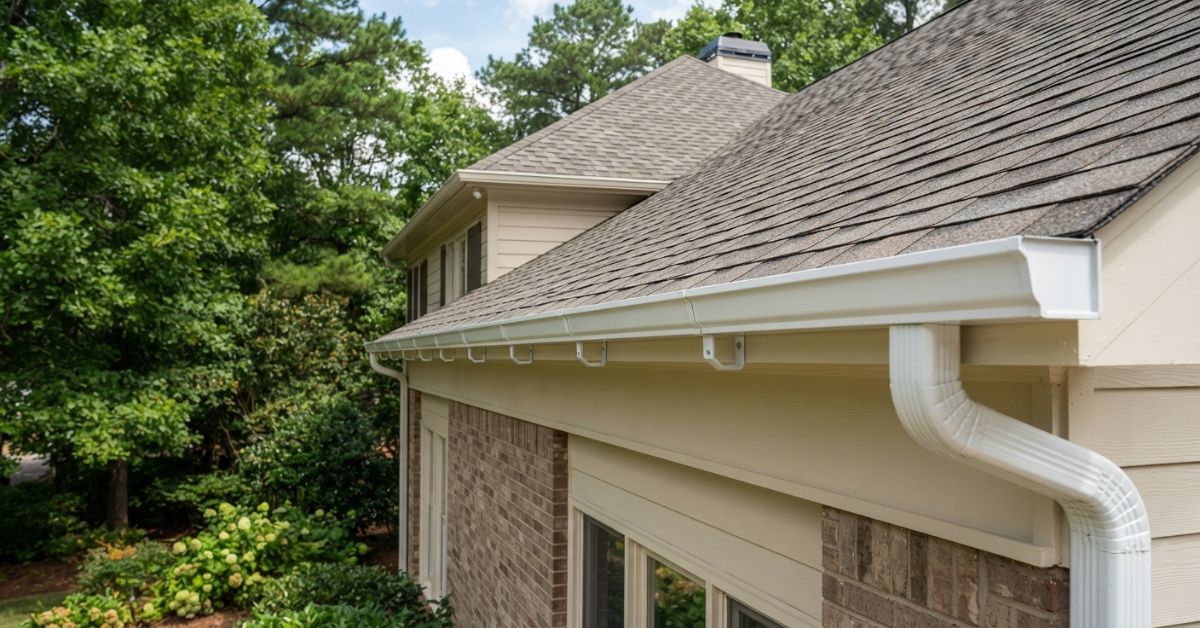
For Buford homes with steeper rooflines, the practical takeaway is simple. The standard 5-inch gutter system that came with the house may not be sized for the area's heavier summer storms. Wider gutters, or additional downspouts, become a real consideration.

How Square Footage Affects Rain Gutter Sizing
Square footage is the second variable. But it is not as simple as "bigger home, bigger gutter." What actually matters for sizing is the roof's effective drainage area, not the home's interior square footage.
Effective drainage area combines three factors:
- Total roof projection. The actual horizontal projection of the roof, not the home's living space.
- Pitch factor. A multiplier based on how steep the roof is.
- Rainfall intensity. The maximum rate of rainfall expected in the area, measured in inches per hour.
For Buford and the Atlanta metro, rainfall intensity during peak summer storms can reach 7 to 8 inches per hour. That is higher than national averages. It is also a key reason builder-grade gutter systems sometimes underperform here.
The capacity numbers help. Standard 5-inch K-style gutters handle a maximum drainage area of roughly 5,500 square feet under typical conditions. A 6-inch K-style system bumps that to roughly 7,900 square feet. Sounds like a wide margin. It isn't. Those numbers assume average pitch and average rainfall. Plug in Buford's steeper rooflines and higher rainfall intensity, and the safe maximums shrink quickly.
5-Inch vs 6-Inch Rain Gutters in Buford: When to Upgrade
So when does the upgrade from 5-inch to 6-inch make sense? A few practical guidelines.
Stick with 5-inch gutters if:
- The roof pitch is moderate (4/12 to 6/12)
- The roof's drainage area sits well under the typical 5,500 square foot capacity
- Tree coverage is light, so debris doesn't reduce effective capacity
Move to 6-inch gutters if:
- The roof pitch is 7/12 or steeper
- The home is larger, or has multiple roof valleys, dormers, or skylights
- Mature trees overhang the roofline (pine needles and leaves clog faster than expected)
- The home sits on a north-facing slope where moss and pine debris build up
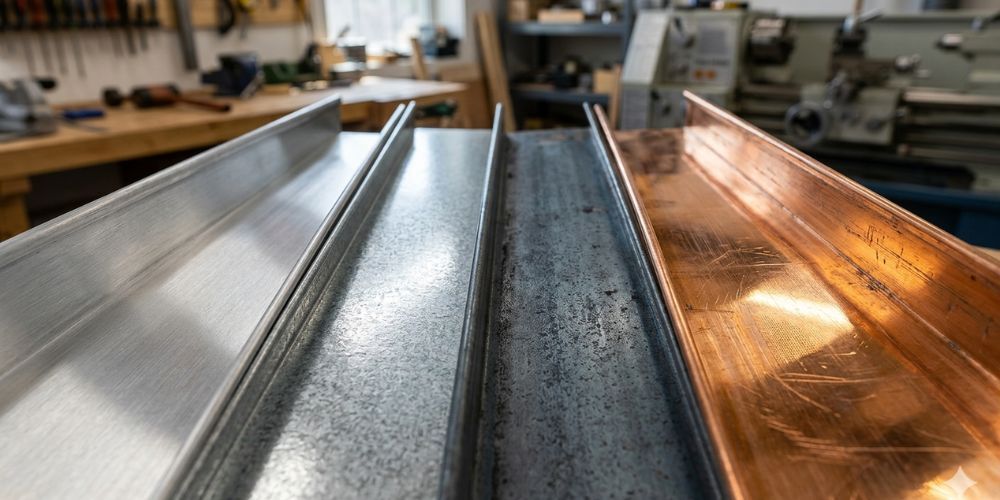
The upgrade isn't only about width. Six-inch gutters typically pair with larger 3x4 downspouts (versus the standard 2x3), which roughly doubles water exit capacity. When storms peak, that difference matters more than the gutter width itself. For a closer look at how the material choice interacts with sizing, see our
comparison of aluminum, steel, and copper.
Downspout Placement for Buford Rain Gutters
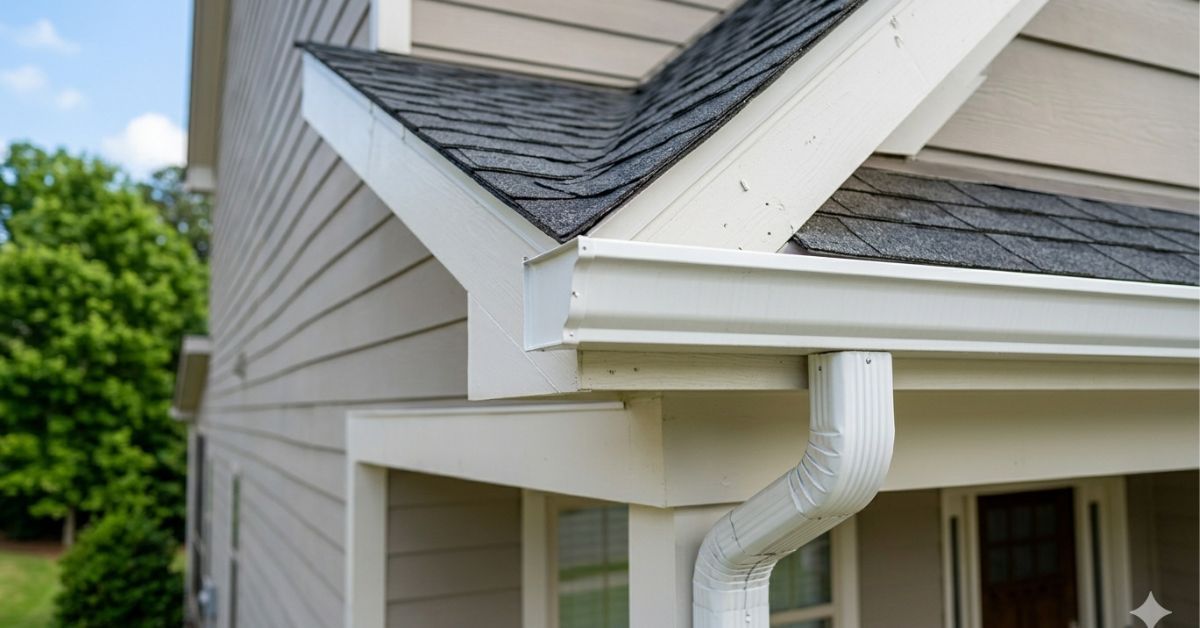
Gutters are only as effective as their drainage exit points. Here is a common mistake. A homeowner upgrades to wider gutters but keeps the original downspout configuration. Same overflow problem, just in a wider channel.
What's the rule? One downspout per 30 to 40 feet of gutter run on moderate pitches. On steep pitches, drop that to one per 25 to 30 feet. A 100-foot run on a 10/12 pitch realistically needs four downspouts. Not two.
Placement matters as much as count. Downspouts should sit at the lowest points of each run and avoid valley areas where water naturally collects. Route them at least 4 to 6 feet away from the foundation (splash blocks or underground drainage work) to protect basements, crawl spaces, and landscaping from chronic water issues. For Buford homes with basements or walkout designs, downspout placement is one of the leading factors in foundation water problems.
Not sure whether your current rain gutter system in Buford is sized correctly for your roof? A professional gutter inspection can identify the issues and recommend the right upgrades.
Common Roof Scenarios for Buford Homes
A few patterns come up regularly in Buford homes, both older and newer.
Older homes with later additions. Many established Buford homes were built with original 5-inch K-style gutters. When a second story or roof expansion gets added later, the new section is often steeper than the original. The gutter system stays the same size, though. The result is overflow at the junction between old and new sections, especially during peak storms. We see this most often on homes that have had a finished attic conversion or a sunroom added without revisiting the drainage.
New construction with builder-grade systems. Production homes typically come with 5-inch gutter systems regardless of roof complexity. For homes with steeper pitches or larger footprints, that often means undersized gutters from day one. Upgrading at purchase time, or before the first major storm season, usually pays back in foundation protection alone.
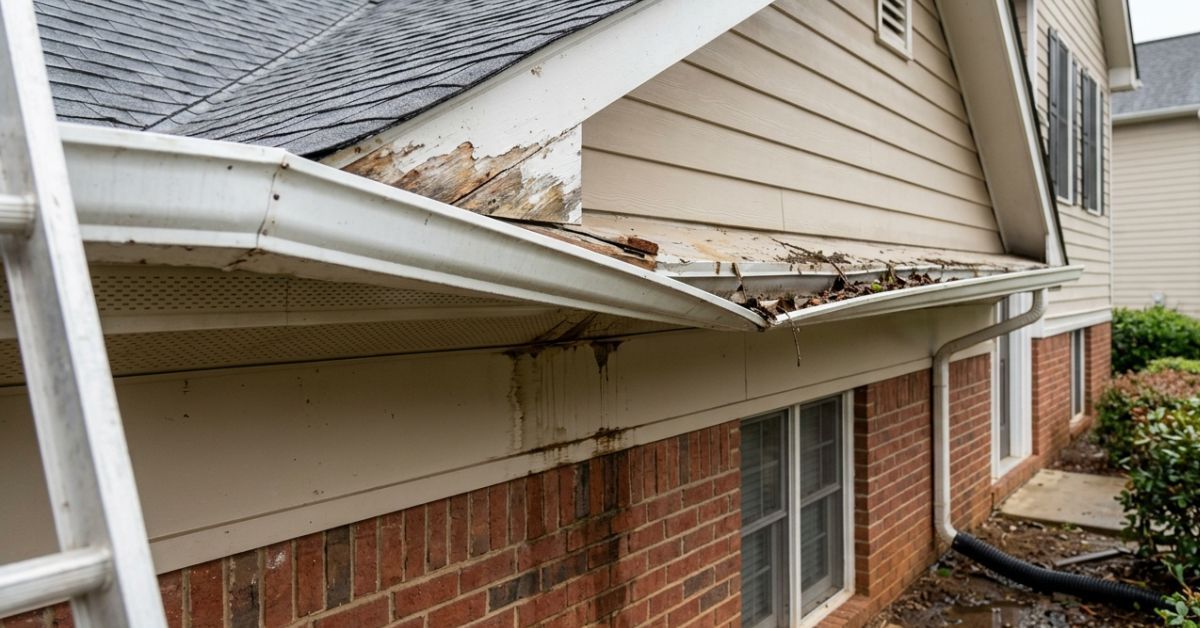
Homes on sloped lots with heavy tree cover. Buford's topography includes a lot of properties on slopes, and many sit under mature pine canopies. Fast water flow off steeper rooflines plus frequent debris from pine needles and moss makes 5-inch systems unreliable. Six-inch gutters paired with leaf protection are typically the right approach. If the existing system is already showing strain, our piece on signs your rain gutters are failing walks through what to look for before water damage starts.
Final Thoughts on Sizing Rain Gutters for Your Buford Home
Roof pitch and square footage are the starting point, not the ending point. Rainfall intensity, downspout placement, tree coverage, and roof complexity all factor into whether a system can keep up during real Atlanta-metro storms.
For most Buford homes with steeper rooflines or larger footprints, the safer choice is upgrading to 6-inch rain gutters with appropriately sized downspouts. Noticing overflow during heavy rain? Foundation seepage? Just unsure whether your current system is sized correctly?
Contact Gutters 4 Less for an on-site assessment or for professional gutter installation in Buford. We will measure roof pitch, calculate effective drainage area, and recommend the right rain gutter system for your home and the area's climate.
You might also like
Gutters 4 Less Blog