


Signs Your Rain Gutters Are Failing in Buford, GA: What to Watch For Before Water Damage Starts
Gutters rarely quit all at once.
They drop hints first, a little overflow in a hard rain, a section leaning off the fascia, a damp streak down the siding, and the Buford homes that catch those early almost always pay less to set them right.
We repair and replace gutters all over Buford, and most of the failures we get called for traced back months to a sign somebody walked past.
Here is what we tell homeowners to look for, and when it is worth having us out.
The Signs We See Most on Buford Homes
Most of this you can spot from the yard. You do not need a ladder, just a slow walk around the house after a good storm.
Gutters Sagging or Pulling Off the Fascia
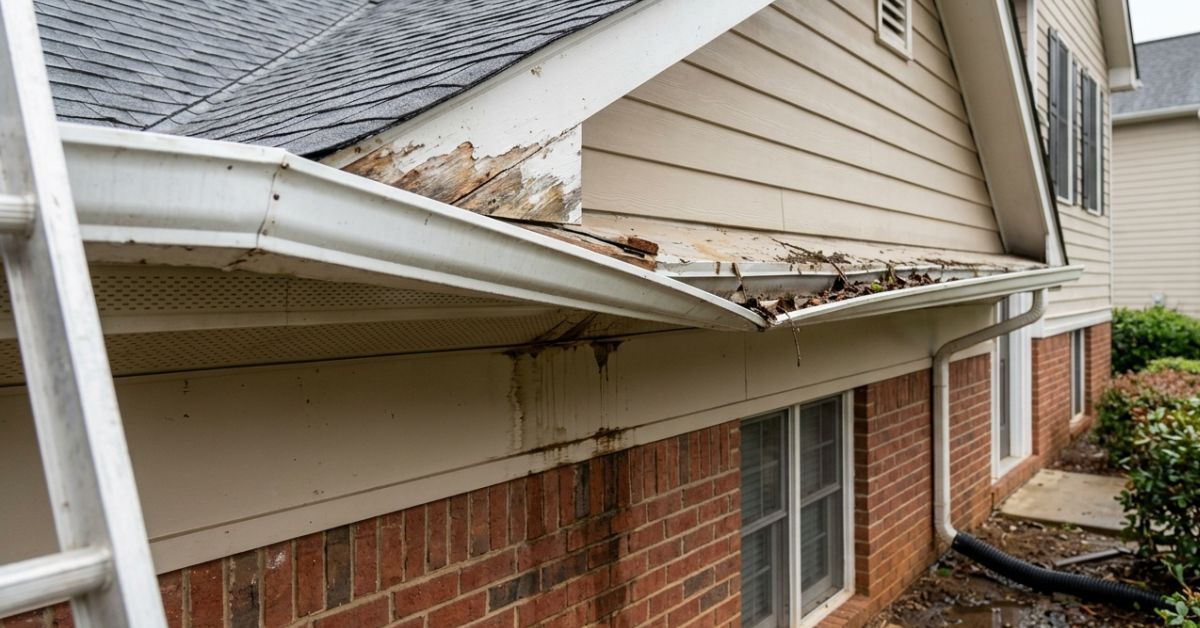
A healthy run sits tight and straight against the board. When a section starts to bow, dip, or lean away from the house, the hangers have usually given out under years of debris weight and standing water.
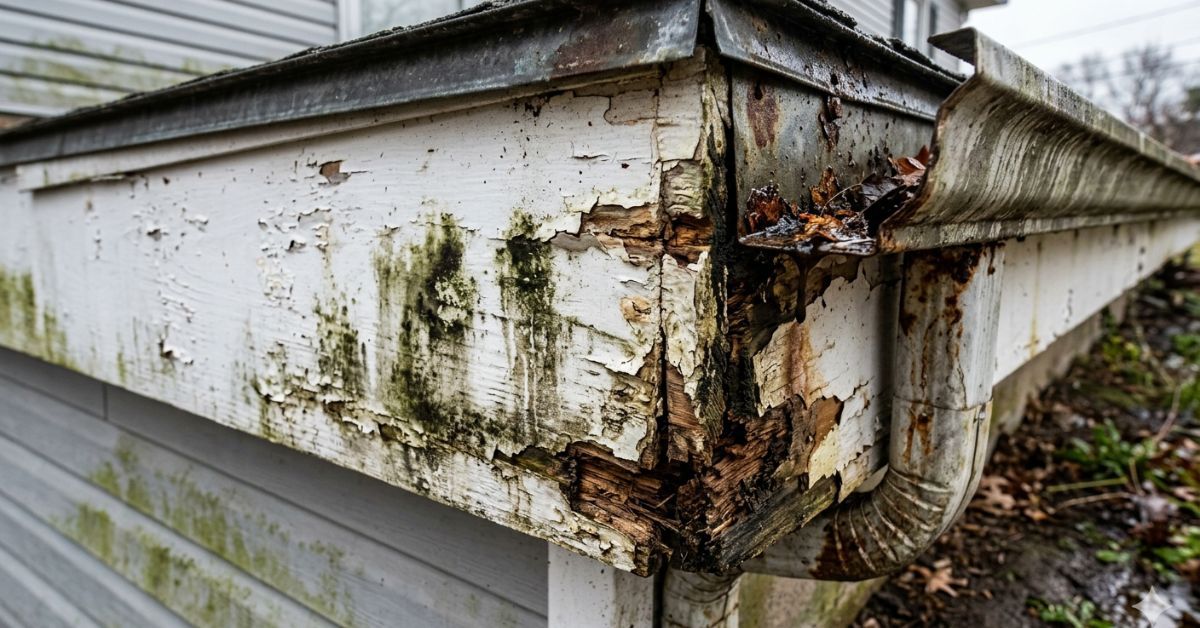
Once a gutter pulls back even a little, water runs behind it instead of through it. That is how the fascia gets wet for months without anyone seeing it.
Cracks, Splits, and Leaking Seams
Hairline cracks look harmless, but they widen with every load of water and every cold snap. Seams and corners are the first to go on older sectional gutters, and a corner that drips mid-storm is already letting water onto the wood behind it.
Rust Streaks or Peeling Paint
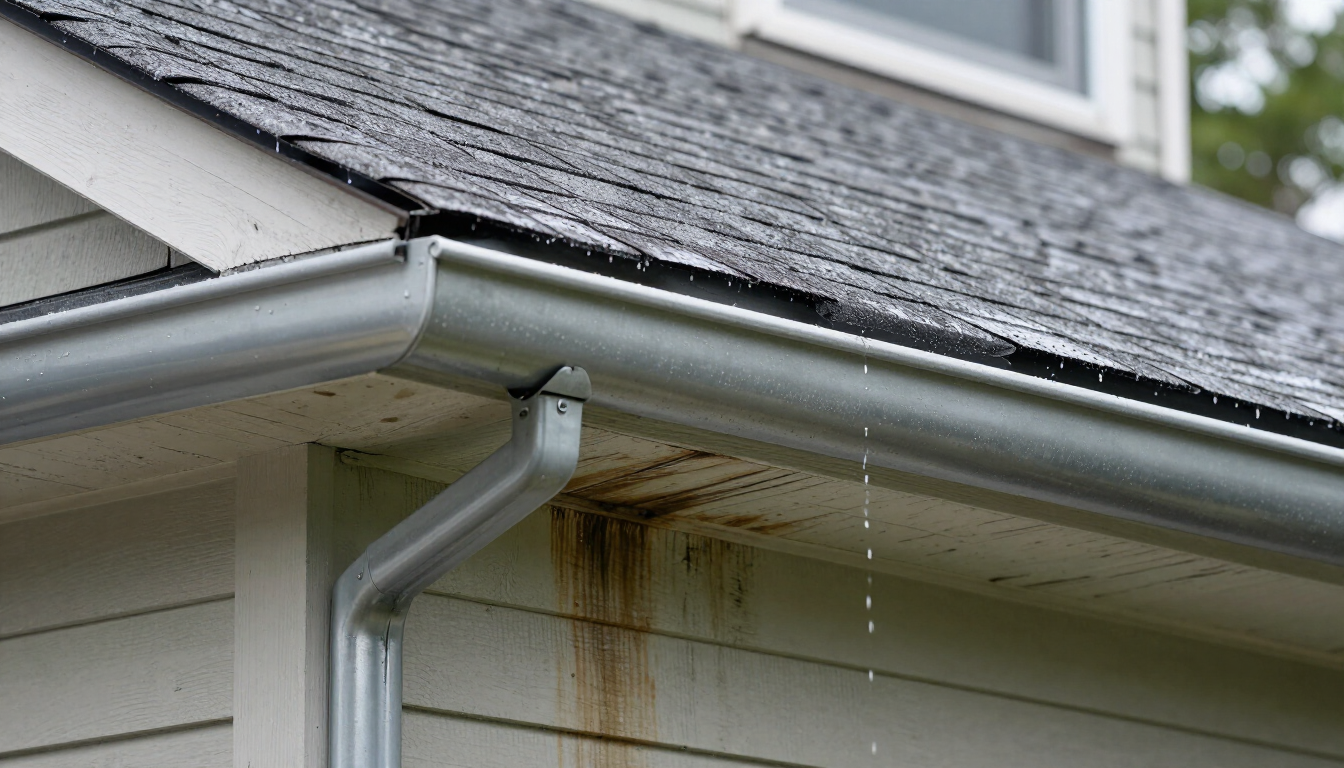
Orange streaking means the coating has worn thin and moisture is sitting where it should not. We see it most on older steel systems, though any gutter shows its age after enough Georgia humidity and summer rain.
Downspouts Coming Loose
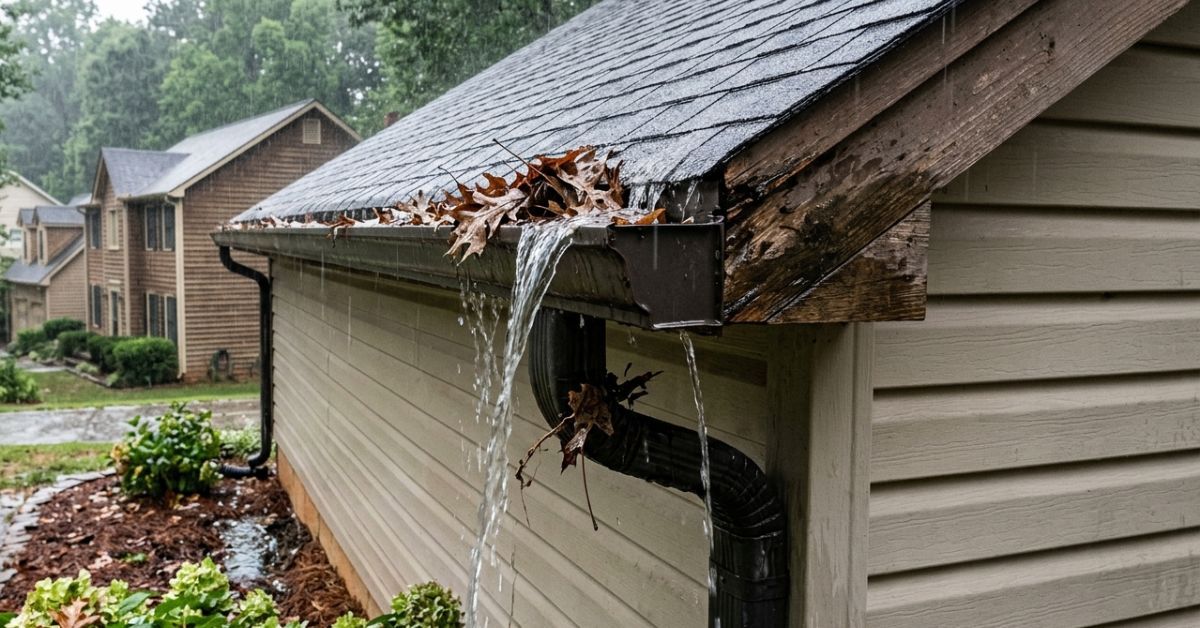
Downspouts are the part that carries water away from the house. When one separates, clogs, or pulls off the siding, the runoff dumps straight at the foundation. Walk the discharge points and look for:
- A washed-out flower bed or mulch under the spout
- A rut or channel cut into the red clay
- Standing water that lingers against the wall after rain
These show up fast after a storm and tend to get worse quickly once they start.
Water Damage That Points Back to the Gutters
Sometimes the gutters look fine and the house tells the story instead. When a system stops moving water, the siding, trim, and foundation usually show it before the gutter does.
Dark stains under the gutter line, soft or swollen fascia boards, mud that stays wet long after the rain, or a musty smell in the crawl space all point the same direction. Any of those, and water is getting somewhere it should not.
Why Buford Weather Is Demanding on Gutters
Buford gives a gutter system plenty to handle. Heavy summer downpours, thick pine and oak cover, pollen season, and steady humidity all stack up over a year.
Older 5-inch gutters on a bigger roofline fall behind in a hard storm, and pine needles slip through basic guards and pack down into clogs that hold water. The humidity does the slow work, loosening sealants and fasteners while the metal expands and contracts through the temperature swings.
Whether to Repair or Replace
Not every problem means a full replacement. If the system is sound overall and the trouble is isolated to a section or two, a cleaning and a targeted repair usually puts it right.
Replacement starts to make more sense when:
- Cracks and leaks show up across several runs
- The fascia behind the gutters has begun to rot
- The gutters were undersized for the roof from the start
A lot of older Buford homes still carry their original 5-inch gutters, and those simply cannot move enough water in today's storms.
When to Have Us Out Sooner
Some signs are worth a same-week call. If water is reaching the crawl space, pouring behind the gutters during a storm, or a section is separating from the house, that is the point to stop waiting.
Others can hold until before the next storm season, but the longer any of it sits, the more it tends to cost. A quick look now is almost always cheaper than fascia or foundation work later, and you can see how the whole setup fits together on our rain gutters in Buford page.
Get a Buford Gutter Inspection
If something on your house matches this list, we are glad to come take a look and tell you straight what is going on. We walk the system, check the fascia behind it, and put any recommendation in writing, with no pressure and no upsell.
To set up an inspection for your Buford home, reach out to Gutters 4 Less or call us at (678) 883-1926.
You might also like
Gutters 4 Less Blog