


Gutter Installation for Steep Roofs in Buford, GA: Special Considerations
Most gutter installations in Buford follow a standard process. But installing a rain gutter for steep roofs requires special considerations in the design to ensure it performs just as well, if not better, than standard gutters.
Once the roof pitch gets into the steeper range, usually around 8/12 and above, the stress on the gutter system increases fast. Water moves more quickly. Gutters take more force during storms. Hangers loosen sooner. Overflow becomes more common if the system is undersized or positioned incorrectly.
What works on a moderate roofline often fails early on a steep one.
That is why steep-roof gutter installation in Buford requires a different approach from the start.
Why Steep Roofs Put More Stress on Gutters
The steeper the roof, the faster water reaches the gutter system.
A lower-pitch roof sheds water gradually. A steep roof sends runoff into the gutters with much more velocity, especially during Georgia’s heavy summer storms.
That creates several problems if the system is not built for it.
Water Overshooting the Gutters
One of the most common issues on steep roofs is overshooting.
During heavy rain, water can move so quickly down the roof that it skips right over the gutter instead of falling into it cleanly. This happens constantly with undersized gutters or poor alignment.
Increased Stress on Hangers and Fascia
Fast-moving water puts more strain on every part of the system:
- Hangers
- Fasteners
- Corners
- Downspout connections
- Fascia boards
Over time, weaker installations start pulling away from the home or sagging between supports.
More Movement at Corners and Seams
Steep roofs also create more turbulence inside the gutter system.
Corners and downspout junctions take repeated impact from high-volume water flow, which increases the likelihood of leaks, sealant breakdown, and movement over time.
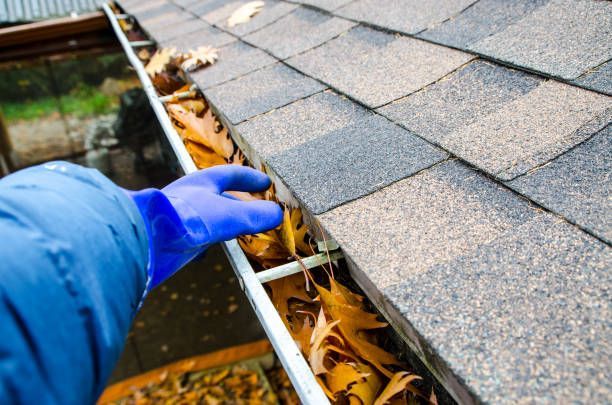
Why 6-Inch Gutters Usually Make More Sense
For steep roofs in Buford, standard 5-inch gutters are often not enough.
Most steep-pitch homes benefit from:
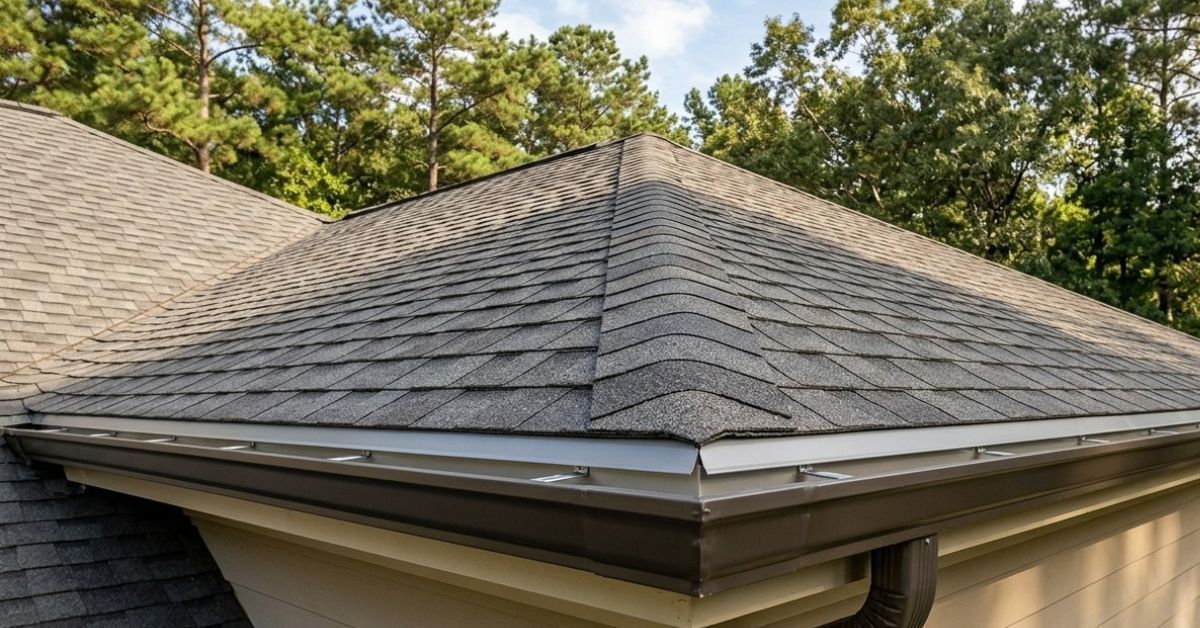
- 6-inch K-style gutters
- Larger 3x4 downspouts
- More downspouts overall
- Deeper gutter profiles for better water capture
The goal is simple. Slow the water down and move it away from the home before overflow becomes a problem.
On especially steep rooflines or larger homes, oversized systems may be necessary to handle the runoff volume properly.
This is especially true on metal roofs, where water sheds even faster than it does on asphalt shingles. Besides, roof pitch and square footage also affect rain gutter sizing, adding into the gutter design considerations.
Hanger Spacing Matters More on Steep Roofs
A lot of gutter failures on steep homes come down to support spacing.
Standard residential installations often space hangers every 24 to 36 inches. That can work fine on lower-pitch roofs, but it leaves too much unsupported weight on steep systems.
For steep-roof gutter installations, tighter spacing is usually the better move.
Best Practices for Steep-Roof Support
A properly supported steep-roof system typically includes:
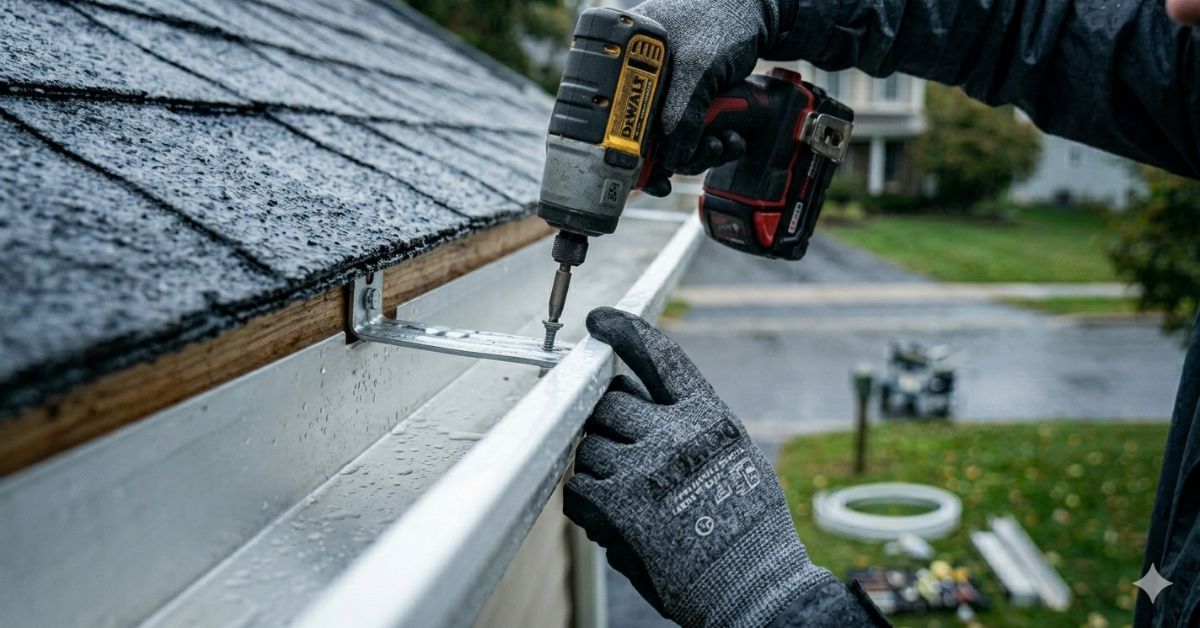
- Hidden hangers every 18 to 24 inches
- Heavy-duty hanger systems
- Stainless steel screws instead of gutter nails
- Reinforced corner support
- Proper drip edge integration
These details help prevent sagging and reduce long-term movement during storms.
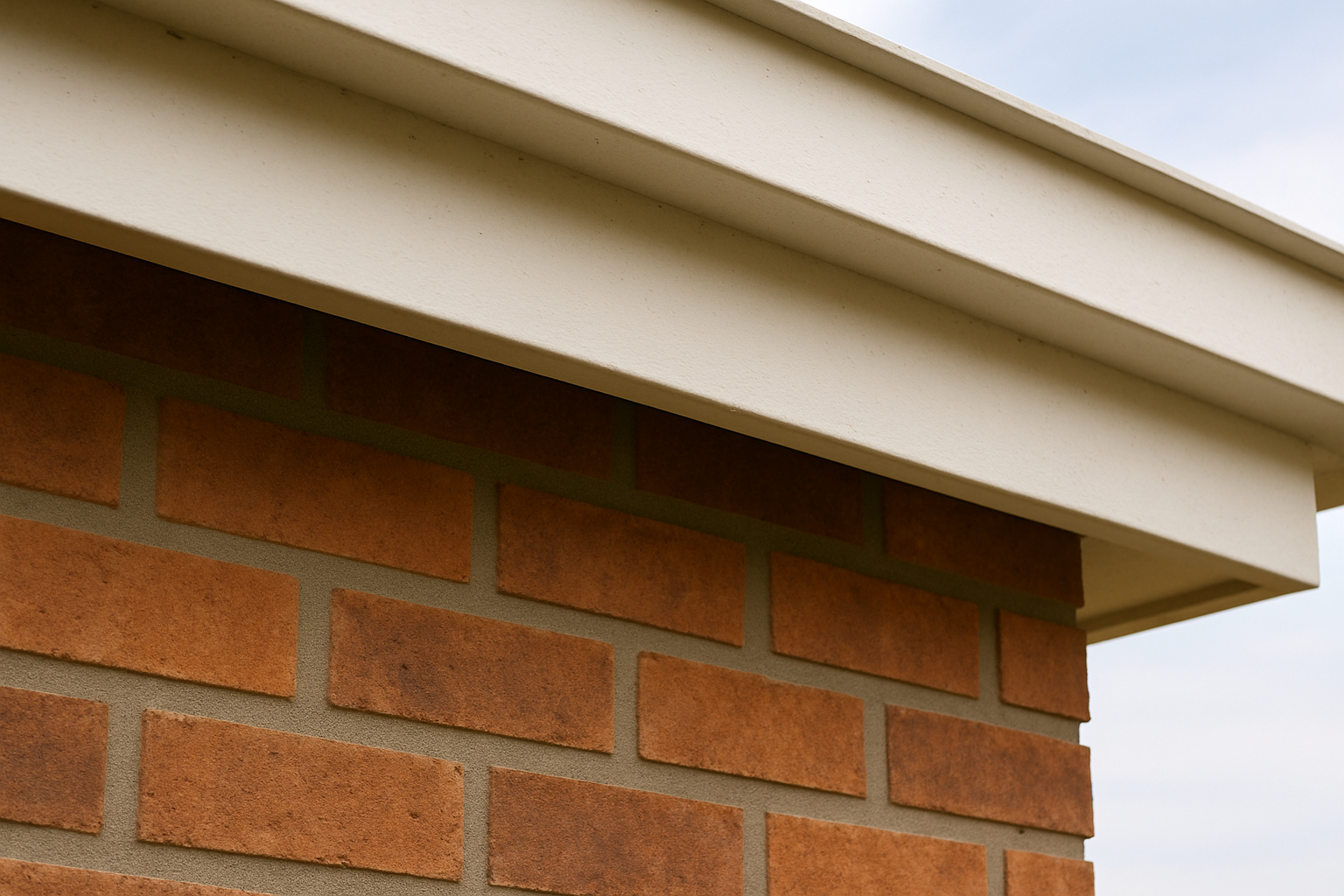
Fascia Condition Is a Huge Factor
Even the best gutter system will fail if it is attached to damaged fascia boards.
This is one of the biggest problems we see on older Buford homes. Previous overflow issues often leave hidden wood rot behind the gutters, especially near corners and downspout areas.
If the fascia is soft or deteriorated, it needs to be repaired before installation.
Skipping this step usually leads to:
- Gutters pulling loose
- Fastener failure
- Sagging sections
- Water intrusion behind the system
A steep roof adds too much stress for compromised fascia to hold up long term.
Fascia Condition Is a Huge Factor
Even the best gutter system will fail if it is attached to damaged fascia boards.
This is one of the biggest problems we see on older Buford homes. Previous overflow issues often leave hidden wood rot behind the gutters, especially near corners and downspout areas.
If the fascia is soft or deteriorated, it needs to be repaired before installation.
Skipping this step usually leads to:
- Gutters pulling loose
- Fastener failure
- Sagging sections
- Water intrusion behind the system
A steep roof adds too much stress for compromised fascia to hold up long term.
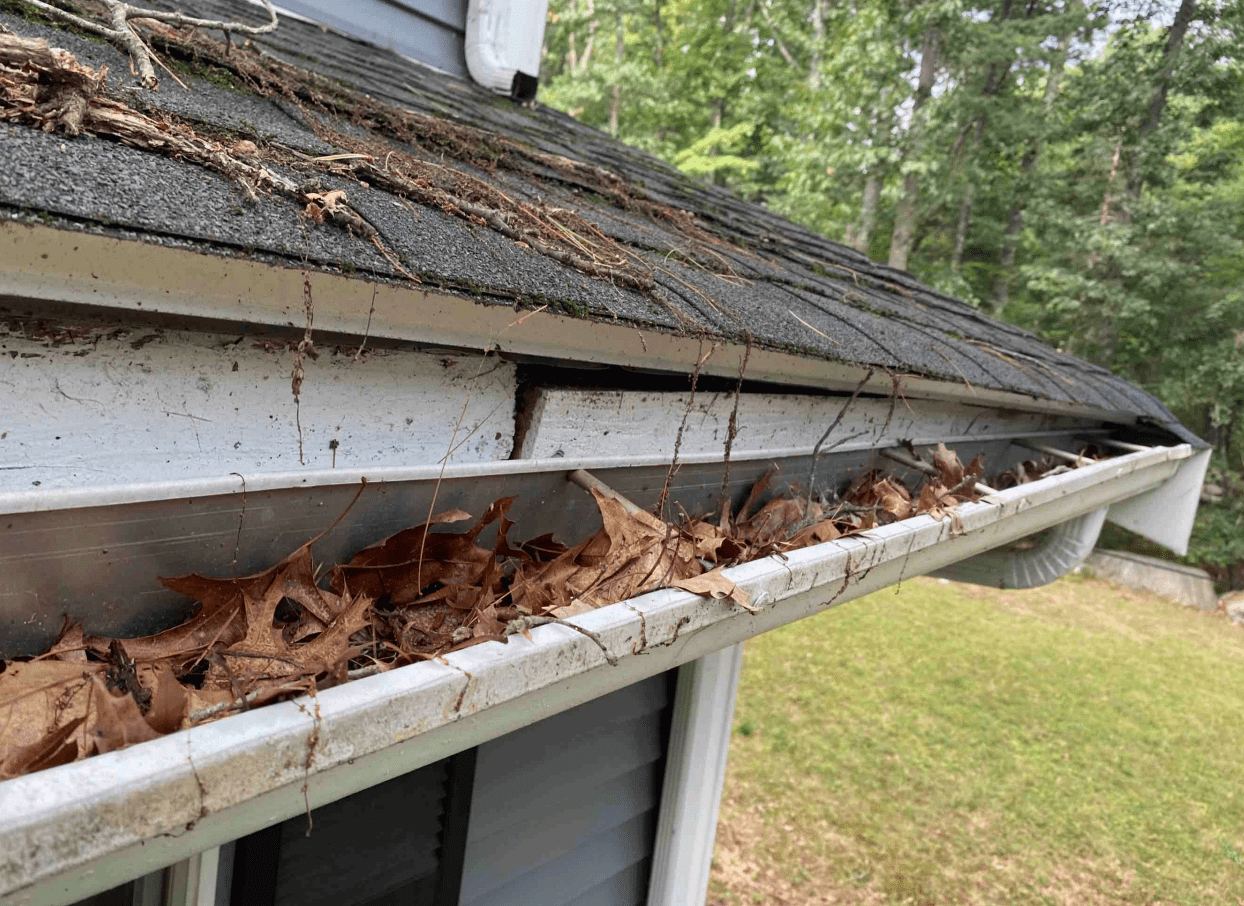
Downspout Placement Becomes More Important
Steep roofs move a lot more water through the system, which means downspout sizing and placement matter more than usual.
What Works Better on Steep Roofs
Most steep-pitch systems perform better with:
- 3x4 downspouts instead of smaller 2x3
- Downspouts every 25 to 30 feet
- Placement at natural low points
- Extensions that carry water away from the foundation
On homes with basements, walkout foundations, or sloped lots, proper drainage planning becomes critical.
A poorly placed downspout on a steep roof can dump massive amounts of water directly beside the foundation during heavy rain.
Downspout Placement Becomes More Important
Steep roofs move a lot more water through the system, which means downspout sizing and placement matter more than usual.
What Works Better on Steep Roofs
Most steep-pitch systems perform better with:
- 3x4 downspouts instead of smaller 2x3
- Downspouts every 25 to 30 feet
- Placement at natural low points
- Extensions that carry water away from the foundation
On homes with basements, walkout foundations, or sloped lots, proper drainage planning becomes critical.
A poorly placed downspout on a steep roof can dump massive amounts of water directly beside the foundation during heavy rain.
Common Problems With Poor Steep-Roof Installations
When steep roofs are installed using standard methods, the same problems tend to show up repeatedly.
Overflow During Heavy Rain
This usually points to:
- Gutters that are too small
- Incorrect positioning
- Poor slope setup
- Not enough downspout capacity
Gutters Pulling Away From the House
Most of the time, this comes back to:
- Weak fasteners
- Wide hanger spacing
- Damaged fascia
- Too much water weight over time
Leaks at Corners and Seams
Steep roofs put constant pressure on gutter corners and junctions.
If poor sealants or weak installation methods are used, leaks develop quickly.
What to Ask Before Hiring a Gutter Contractor
Not every gutter contractor has experience with steep-pitch installations.
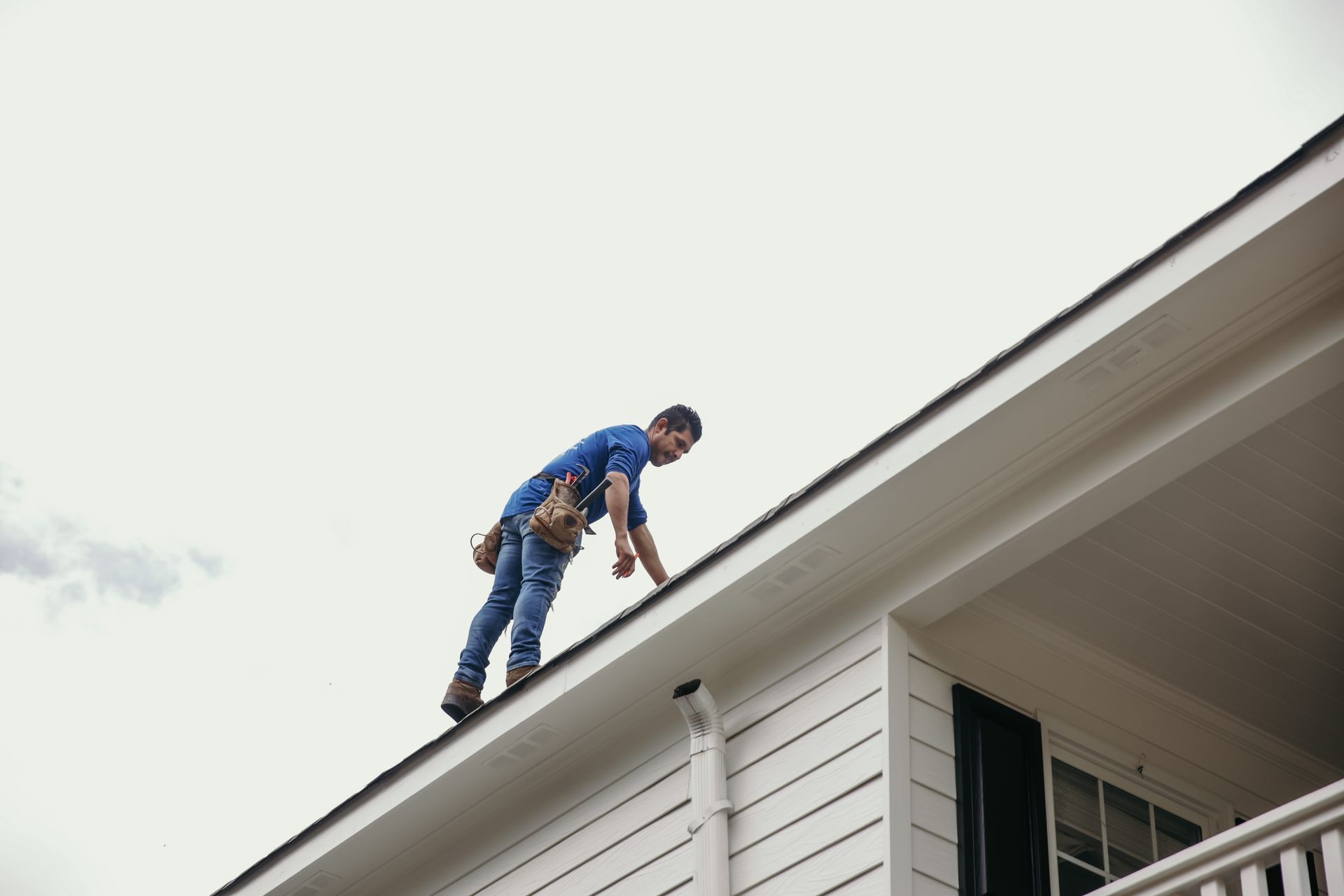
A steep roof requires different planning, different installation methods, and proper safety equipment.
Before hiring a gutter contractor in Buford, ask:
- Have they worked on steep roofs before?
- Do they recommend 6-inch gutters for steep pitches?
- What hanger spacing do they use?
- Do they inspect and repair fascia if needed?
- Do they use screws instead of nails?
- How do they handle water overshoot on steep rooflines?
The answers matter because steep roofs leave less room for installation mistakes.
Final Thoughts
Steep roofs are not necessarily harder to work on for experienced installers. They just require a different approach.
The right rain gutter size, stronger support spacing, larger downspouts, and proper fascia preparation all become more important as the
roof pitch increases.
When those details are handled correctly during the gutter inspection process, a steep-roof gutter system can perform just as reliably as
one on a standard roofline.
If your Buford home has a steep roof and you are planning a gutter replacement or new installation, Gutters 4 Less can evaluate the pitch, drainage needs, fascia condition, and runoff volume to recommend the right system for your home.
You might also like
Gutters 4 Less Blog