


Gutter Hanger Spacing for Buford, GA Homes | Gutters 4 Less
Gutter hangers should be spaced 24 to 36 inches apart on most homes, with 24 inches being the safer choice on steep roofs, under heavy tree cover, or anywhere ice and wet debris build up. Anything wider than 36 inches leaves too much unsupported trough between fasteners, and that is where sagging begins.
Buford homes tend to sit at the tighter end of that range. Pine straw and oak leaves pack into gutters through most of the year, and the storm cells that roll across the Lake Lanier area can move a large volume of water through a run in a short window. Both conditions add weight, and weight is what hanger spacing exists to manage.
How Far Apart Gutter Hangers Should Be
The working range for gutter hanger spacing is 24 to 36 inches on center, measured from the center of one hanger to the center of the next. Most manufacturers list 36 inches as the maximum, and treating that number as a ceiling rather than a target gives a system real margin.
At 24 inch spacing, a 10 foot gutter section carries six hangers. At 36 inch spacing that same section carries four, and the difference in load per hanger is substantial once the trough fills.
Water alone is heavy. A 5 inch K style gutter running full holds roughly 0.3 gallons per linear foot, which works out to about 2.5 pounds of water for every foot of trough.
Add wet pine straw on top of that and a 30 foot run can carry well over a hundred pounds. Gutters 4 Less installs at 24 to 30 inch spacing on most Buford properties for exactly that reason.

Why Gutter Hanger Spacing Fails on Buford Homes
Hanger spacing fails when the load on the gutter exceeds what the fasteners and the wood behind them can carry, and that usually happens gradually rather than all at once. The first hanger to give way transfers its share to the two beside it, which accelerates the process.
The most common starting point is a fastener driven into soft or rotted fascia. Screws hold well in sound wood, and they hold poorly in wood that has been taking moisture for a few seasons.
Another common factor is debris that never clears. A gutter holding a permanent bed of decomposed pine straw carries that weight around the clock rather than only during storms.
Freeze and thaw cycles play a role too. Buford sees enough winter nights below freezing that standing water in a clogged gutter can ice up, and ice adds load at the worst possible moment.
Older systems using spike and ferrule fasteners are more likely to loosen than modern hidden hangers. The spike works its way out as the fascia expands and contracts through the year, which is why so many hanger failures start on homes with original hardware.
How Roof Pitch and Gutter Size Change Hanger Spacing
Steeper roofs and larger gutters both call for tighter hanger spacing, often 24 inches or less. A steep pitch delivers water into the trough at higher velocity and in a more concentrated stream, which puts sudden downward and outward force on the gutter.
Roof Pitch
On a roof at 8/12 or steeper, water arrives with enough momentum to push the front edge of the gutter away from the fascia. Tighter hanger spacing resists that, and so does a hanger with a screw that ties the front lip back to the trough. Our page on gutter installation on steep roofs in Buford covers how that changes the approach.
Gutter Size and Material
A 6 inch gutter holds roughly 40 percent more water than a 5 inch gutter, which means more weight per foot and a case for closer hangers. Copper and steel are heavier than aluminum before any water enters the trough at all.
Run Length and Corners
Hangers should also sit within about 12 inches of every end cap, corner miter, and downspout outlet. Those are the points where a run is most likely to separate, and standard spacing across the middle does not protect them.
Long runs benefit from tighter spacing near the low end where water collects before entering the downspout. That section carries more standing volume than the high end during any given storm.
What Pine and Oak Debris Does to Hanger Load
Pine straw and oak leaves add persistent weight to a gutter that water alone would not, because organic debris holds moisture long after a storm passes. A trough packed with wet pine straw can carry two to three times the load of a clean trough during the same rainfall.
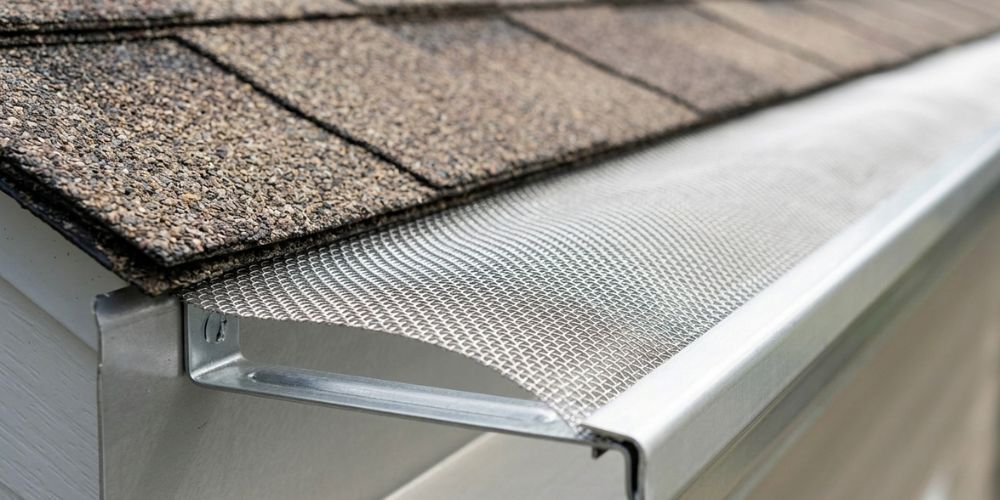
Pine needles are particularly demanding on a gutter system. They are small enough to slip past most guards, they mat together into a dense layer, and they break down into a sludge that holds water like a sponge.
Oak leaves behave differently but create their own load. They arrive in volume over a short window in late fall and can block a downspout outlet quickly, which turns the entire run into a standing reservoir.
Buford properties with mature pine and oak canopy directly overhead see this year round rather than seasonally. Homes on more open lots deal with far less of it, which is part of why a single maintenance rhythm does not fit every property.
If your gutters sit under heavy tree cover, more frequent checks may be worth considering, and the right interval depends on how much canopy actually overhangs the roofline. Regular gutter cleaning in Buford keeps that load off the hangers in the first place.
Signs Your Gutter Hangers Are Spaced Too Far Apart
The clearest sign of insufficient hanger spacing is a visible dip in the middle of a gutter run between two fasteners. Sight down the length of the gutter from the corner of the house and look for any wave in what should be a straight line.
Water that pools in the low spot rather than draining is the next confirmation. That standing water deepens the sag, and the sag holds more water, so the condition worsens on its own.
Look also for hanger heads that have pulled out past the face of the gutter. A backed out fastener means that hanger is no longer carrying its share, and the neighbors are now spanning a wider gap than they were designed for.
A gap between the back of the gutter and the fascia is another indicator. That gap lets water run behind the trough and onto the wood, which sets up the fascia rot that causes the next round of hanger failures.
Overflow at the same spot during every storm often traces back to spacing rather than clogs. If the gutter is clear and still spills in one location, the trough has likely dropped there. Our overview of
signs that rain gutters are failing walks through the other symptoms worth watching.

Getting Hanger Spacing Right on a New Installation
Correct hanger spacing on a new installation starts before the first bracket goes up, with a check of the fascia the hangers will fasten into. Sound wood is what makes 24 inch spacing meaningful, since spacing only helps if every fastener holds.
Gutters 4 Less sets hangers at 24 to 30 inches on center across most Buford installs, tightens that further on steep pitches, and places a hanger within 12 inches of every corner, end cap, and outlet. We also replace compromised fascia before hanging anything on it.
Screws go into the fascia and, where the layout allows, into the rafter tails behind it. That gives the fastener structural wood to bite rather than relying on the fascia board alone.
Spacing decisions get made per elevation rather than per house. A north facing run under dense pine gets treated differently from a south facing run over an open yard, even on the same structure.
You can see the full scope of how we handle these details on our gutter installation services in Buford.
Putting the Spacing Numbers to Use
The short answer stays the same regardless of the house. Gutter hangers belong 24 to 36 inches apart, and Buford conditions of heavy pine and oak load, steep roof pitches, and high volume storms off the Lake Lanier corridor make the tighter end of that range the practical choice.
You can check your own spacing from the ground in a few minutes. Count the hangers across a 10 foot section, sight the run for sag, and look for any fastener that has backed out.
If the count comes up short or the line is not straight, have us take a look. Gutters 4 Less handles
gutter repair throughout Buford and can add hangers, reset pitch, or address the fascia underneath depending on what we find.
You might also like
Gutters 4 Less Blog