


Do Gutters Come Off When Replacing a Roof? Buford, GA Guide
In most roof replacements, the gutters stay right where they are. Roofing crews work above the gutter line, so a sound system with holding hangers and no rot behind it does not need to come down for shingles to be torn off and replaced.
Removal becomes the right call in specific situations. The gutters are already failing, the fascia behind them needs repair, or the drip edge and gutter apron have to be installed in a way that requires access behind the trough.
Buford homeowners planning a roof replacement benefit from knowing which situation applies before the crew arrives. Gutters 4 Less handles both roofing and gutter work, and the sequencing below is what determines whether the job takes one visit or two.
Do Gutters Have to Come Off During a Roof Replacement?
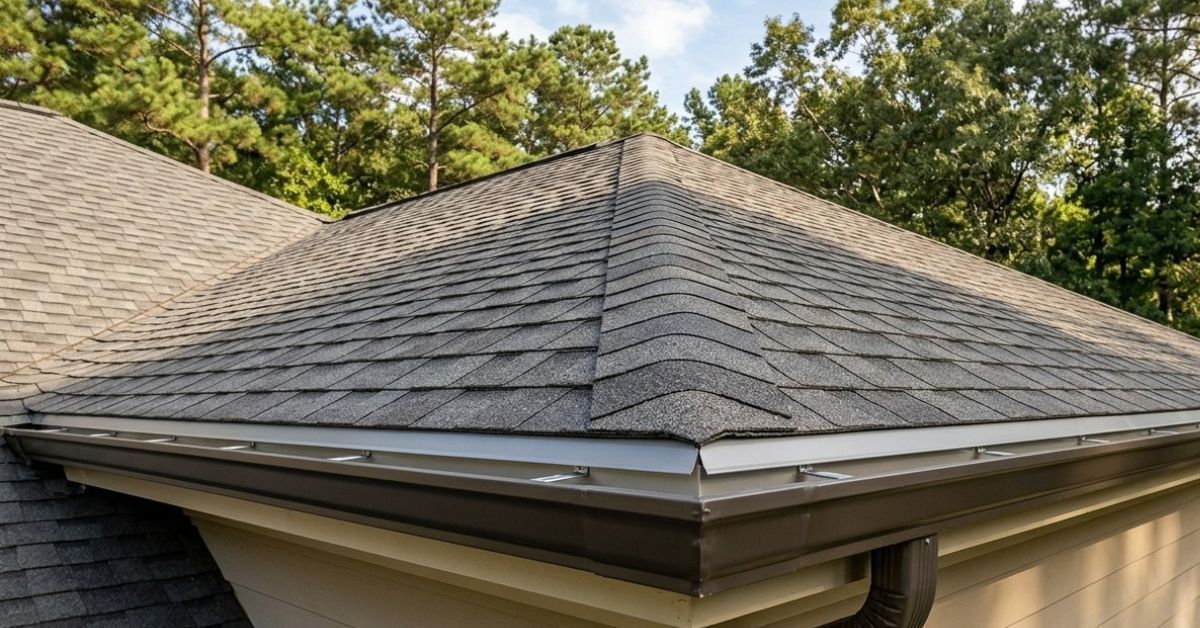
Gutters do not have to come off for most roof replacements. Roofers tear off old shingles, replace damaged decking, install underlayment, and set new shingles entirely above the gutter line, so the trough can stay hung throughout the job.
Two conditions make that possible. The gutters have to be securely fastened with hangers that are still holding, and the fascia behind them has to be sound.
Crews protect gutters that stay in place. Tarps over the trough, debris containment at ground level, and a magnetic sweep for nails at the end of the job keep the existing system clear of the tear-off.
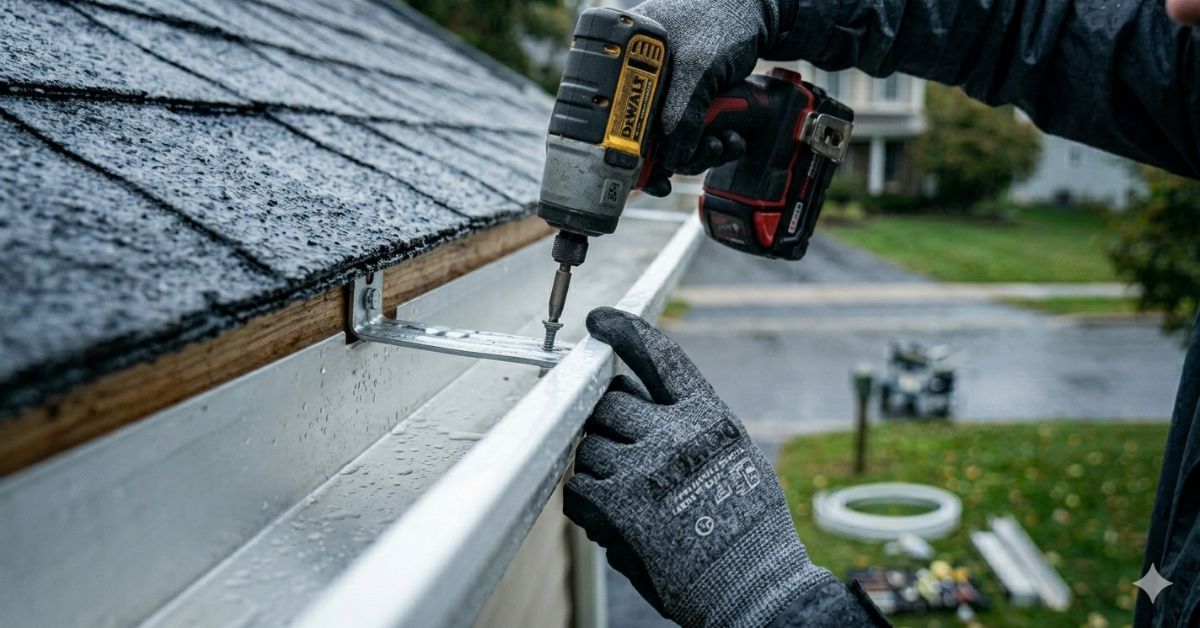
Removal adds labor and handling risk on both ends. Taking a gutter down and rehanging it means new fastener holes, a re-check of pitch, and the chance that older aluminum bends during the move.
The default position on a Buford roof replacement is that the gutters stay. Gutters 4 Less evaluates the existing system before the tear-off begins so that call is made deliberately rather than mid-job.
When Gutter Removal Is Actually Warranted
Gutter removal makes sense when the existing system is at the end of its service life or when work behind the trough requires access. Four situations cover most Buford homes.
The gutters are failing. Sagging runs, separated seams, pulled hangers, or corrosion at the fasteners all mean the system is due for replacement, and a roof job is the natural moment to handle it.
The fascia or sub-fascia needs repair. Rot behind the gutter line shows up on older homes where water has been overflowing for years, and those boards cannot be replaced with the gutter still hanging.
The drip edge is missing or the wrong profile. Some older Buford homes have no drip edge at the eave, and installing it correctly can require the gutter to come down first.
The homeowner is replacing gutters anyway. Pairing a gutter replacement with a shingle replacement in Buford removes the sequencing question entirely, since the new gutters go up after the new roof is finished.
Gutter guards factor in as well. Some guard systems tuck under the first shingle course, and those have to be removed and reset regardless of the gutter's condition.
How Gutters Get Damaged During a Roof Tear-Off
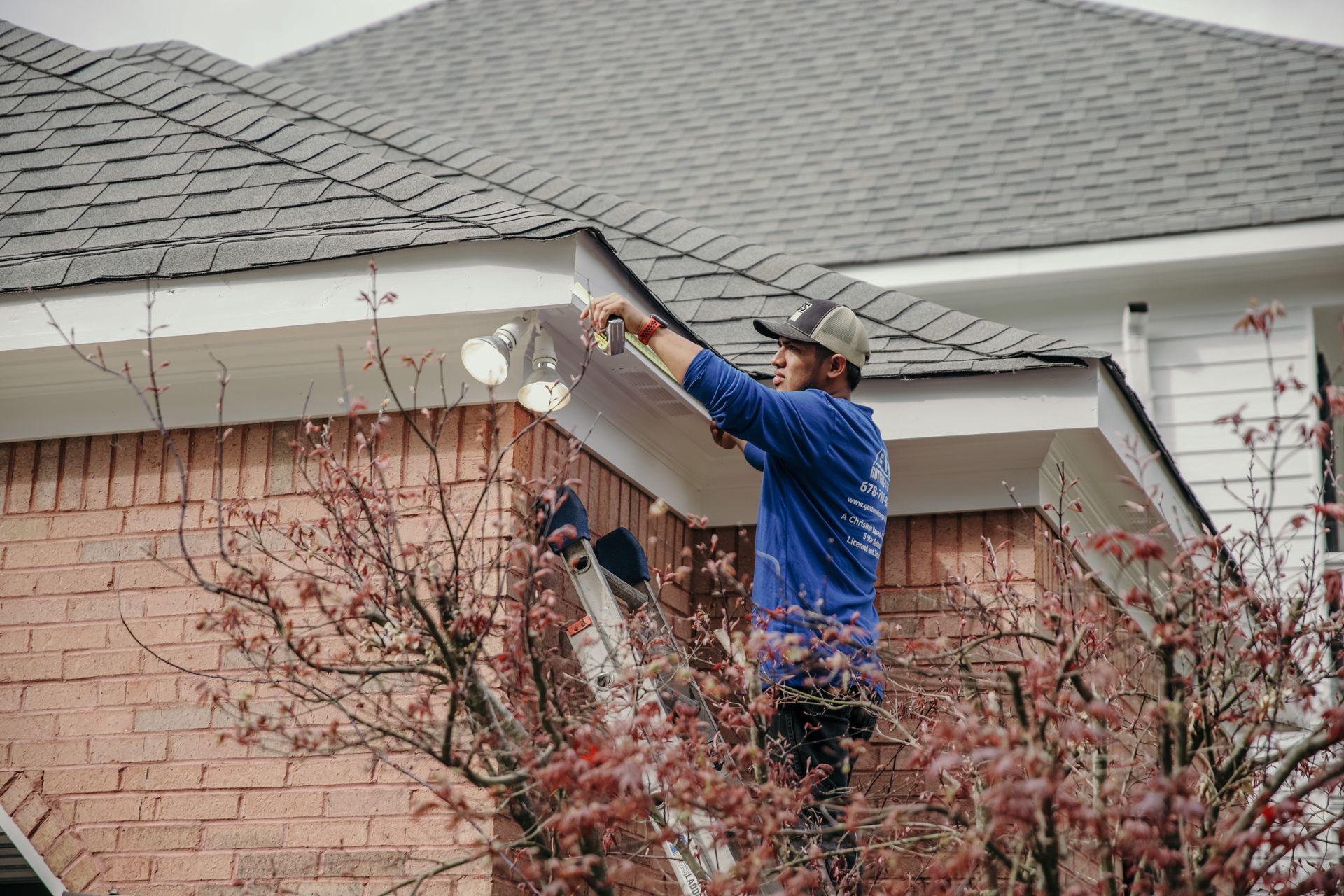
The main risks to gutters during a roof tear-off are falling debris, ladder pressure, and dropped shingle bundles. All three are manageable with the right setup, and all three are worth asking about before work starts.
Falling shingle debris is the most common. Old three-tab shingles slide off the deck in sheets, and a trough directly below catches that weight if it is not covered or if the debris is not being directed into a chute.
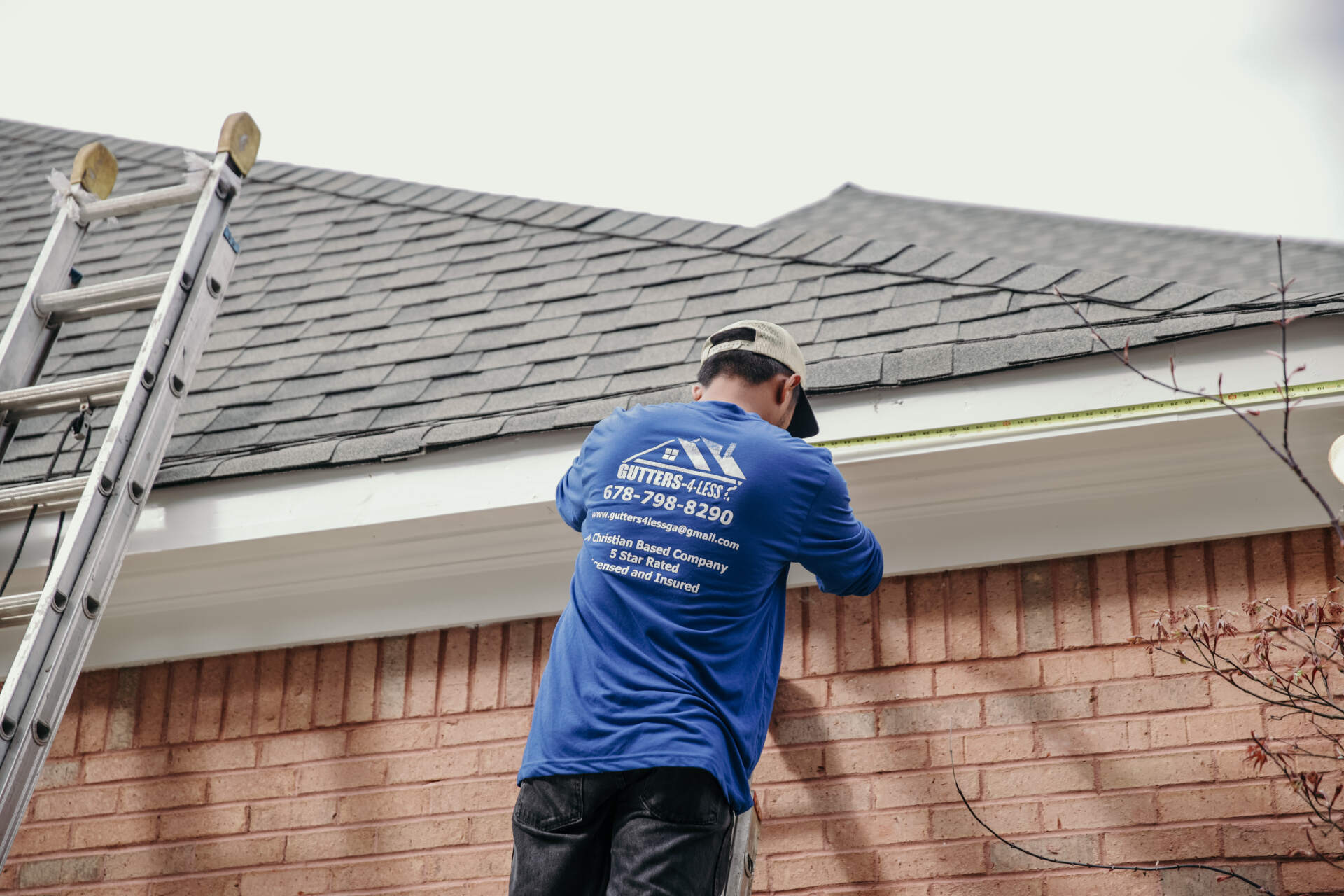
Ladder pressure bends aluminum. A ladder leaned against a gutter lip can deform the front edge, which is why crews use standoffs or stabilizers that transfer the load to the roof or wall instead.
Nails are the quieter issue. Tear-off nails land in gutters and downspouts, then work their way toward the outlet and restrict flow, so a post-job flush matters as much as the ground sweep.
Granule buildup is the last one. Granules from old shingles collect inside the trough during tear-off, and a gutter that drained fine beforehand can run slow afterward. A gutter inspection in Buford after roof work confirms the system is still draining the way it should.
Drip Edge and Gutter Apron: Where They Sit in the Sequence
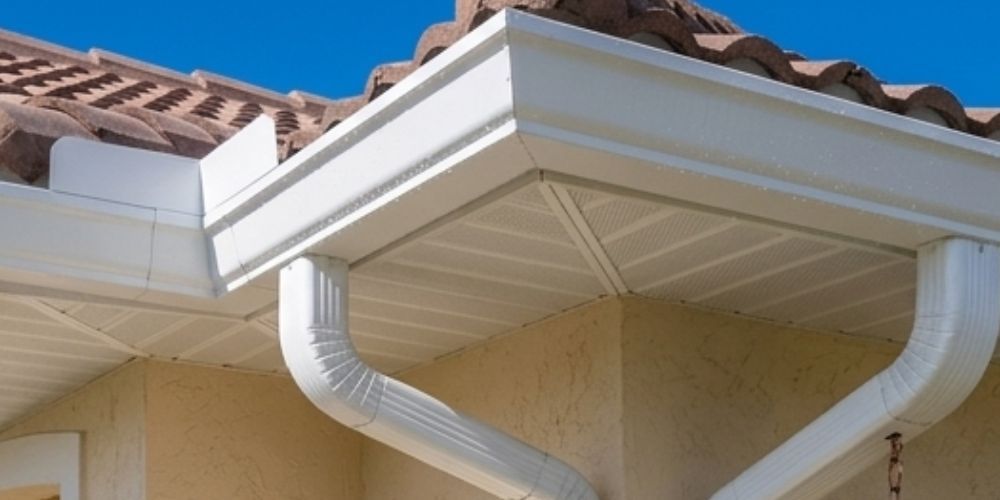
Drip edge and gutter apron are metal flashing pieces installed at the roof edge to direct water into the gutter instead of behind it, and both go on during the roofing work rather than after. Getting that sequence right is what keeps water off the fascia.
The two pieces differ in shape and in what they protect, and that comparison is covered in full on our page about gutter apron vs drip edge. What matters during a roof replacement is when each one goes on.
Placement at the eave follows a set order. Drip edge goes on the deck first, underlayment over it, and shingles on top, so water sheds outward at every layer.
At the rake the order reverses. Underlayment goes down first and the drip edge installs over the top of it, which is the opposite of how the eave is built.
This is where roof and gutter work overlap directly. If a gutter is hung too high or too tight to the roof edge, the apron cannot tuck behind it properly, and the fix is adjusting the gutter rather than the flashing. Working with a
roofing contractor in Buford who also handles gutters removes the back-and-forth between two trades.
Why Coordinating Roof and Gutter Work Saves a Second Trip
Handling roof and gutter work under one contractor removes a second setup, a second ladder day, and a second round of scheduling.
That second trip is a real line item covering crew travel, equipment staging, dumpster placement, and site protection.
Sequencing is the bigger gain. New gutters hung after the new roof and new drip edge are in place get set at the correct height and pitch on the first try.
The reverse order creates rework. Gutters installed before a roof replacement often have to be adjusted or partially taken down once the drip edge goes on, which means paying for the same handling twice.
Fascia repair fits cleanly into a combined schedule. With the gutters down and the roof edge exposed, damaged boards get replaced while access is already open.
There is a responsibility argument as well. When one contractor owns both the roof edge and the gutter attachment, there is no question about which trade to call if water shows up behind the fascia. Gutters 4 Less coordinates roof installation in Buford and gutter work on the same schedule for homeowners doing both.
What to Confirm Before the Roofing Crew Starts
Ask five questions before a Buford roof replacement begins and the gutter question answers itself. Each one takes a minute and heads off
the most common surprises.
Ask whether the gutters are staying or coming off, and why. An answer tied to the condition of the hangers and fascia is the sign the system was actually looked at.
Ask how the gutters will be protected during tear-off. Tarping, debris chutes, ladder standoffs, and a post-job flush are the standard measures.
Ask whether drip edge or gutter apron is being installed, and in what profile. If the home currently has no drip edge, adding it while the roof edge is open is worth doing.
Ask what happens if rot is found behind the gutter line. Fascia damage is not always visible from the ground, and knowing the process avoids a mid-job decision under time pressure.
Ask for a plain read on gutter condition. If the existing system is sagging in places or overflowing during heavy rain, replacing it during the roof job is often more economical than a series of gutter repairs in Buford later.
Planning the Job Around the Roof Edge
Gutters usually stay on during a roof replacement. They come off when they are already failing, when the fascia behind them needs repair, or when drip edge and gutter apron work requires access behind the trough.
Buford homeowners get the cleanest result when the roof edge and the gutter system are treated as one job, because height, pitch, and flashing all have to work together. Handling them separately is where most of the rework comes from.
Gutters 4 Less runs roofing and gutter work on the same schedule, which keeps the sequencing tight and avoids a second trip. If a roof replacement is on the calendar, have us look at the gutters before the tear-off starts.
You might also like
Gutters 4 Less Blog