


Gutter Apron vs Drip Edge: What Goes Where on a Buford Roofline
A gutter apron and a drip edge are two different pieces of metal flashing that sit at the edge of a roof, and they do two different jobs. Drip edge protects the edge of the roof deck and the fascia board by pushing water off the sheathing and away from the wood behind it. A gutter apron reaches out farther and bends down into the gutter, so runoff lands inside the trough instead of running behind it.
Most homes in Buford benefit from having both pieces installed correctly. Roofs here take on heavy rain totals through spring and summer, and water that finds a path behind the gutter goes straight into the fascia. Understanding what each piece does makes it much easier to spot when one of them is missing or installed wrong.
What a Drip Edge Does on a Roof
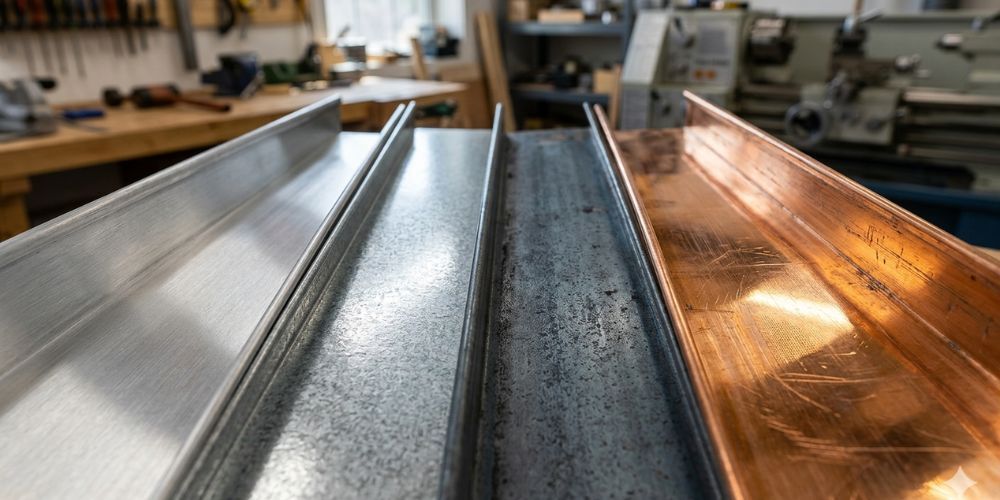
Drip edge is an L-shaped or T-shaped metal flashing installed along the eaves and rakes of a roof to direct water off the roof deck and away from the fascia. It tucks under the first course of shingles at the eave and extends past the roof edge by roughly half an inch to three quarters of an inch.
The vertical leg of the drip edge hangs down in front of the fascia board. That leg creates a break so water drips clear of the wood rather than clinging to it and wicking backward.
Drip edge also stiffens the roof edge. Sheathing at the eave is the part most exposed to moisture, and a metal edge keeps that first few inches of decking from soaking up water every time it rains.
Georgia's current residential code, the 2024 International Residential Code with Georgia amendments, requires drip edge at both the eaves and the rake edges of asphalt shingle roofs. That requirement covers re-roofs as well as new construction, which is why Gutters 4 Less installs it as standard practice on any roof replacement rather than as an upgrade line item. Local jurisdictions can adopt their own amendments, so your building inspector has the final say on your particular address.
What a Gutter Apron Does Differently
A gutter apron is a wider, deeper piece of flashing that extends past the roof edge and bends down into the gutter itself, delivering runoff inside the trough. Where a standard drip edge might project half an inch, a gutter apron typically reaches two to four inches past the roof edge before it turns down.
That extra reach is the whole point. The apron spans the gap between the shingle edge and the back wall of the gutter, so water has no open path to fall behind the trough.
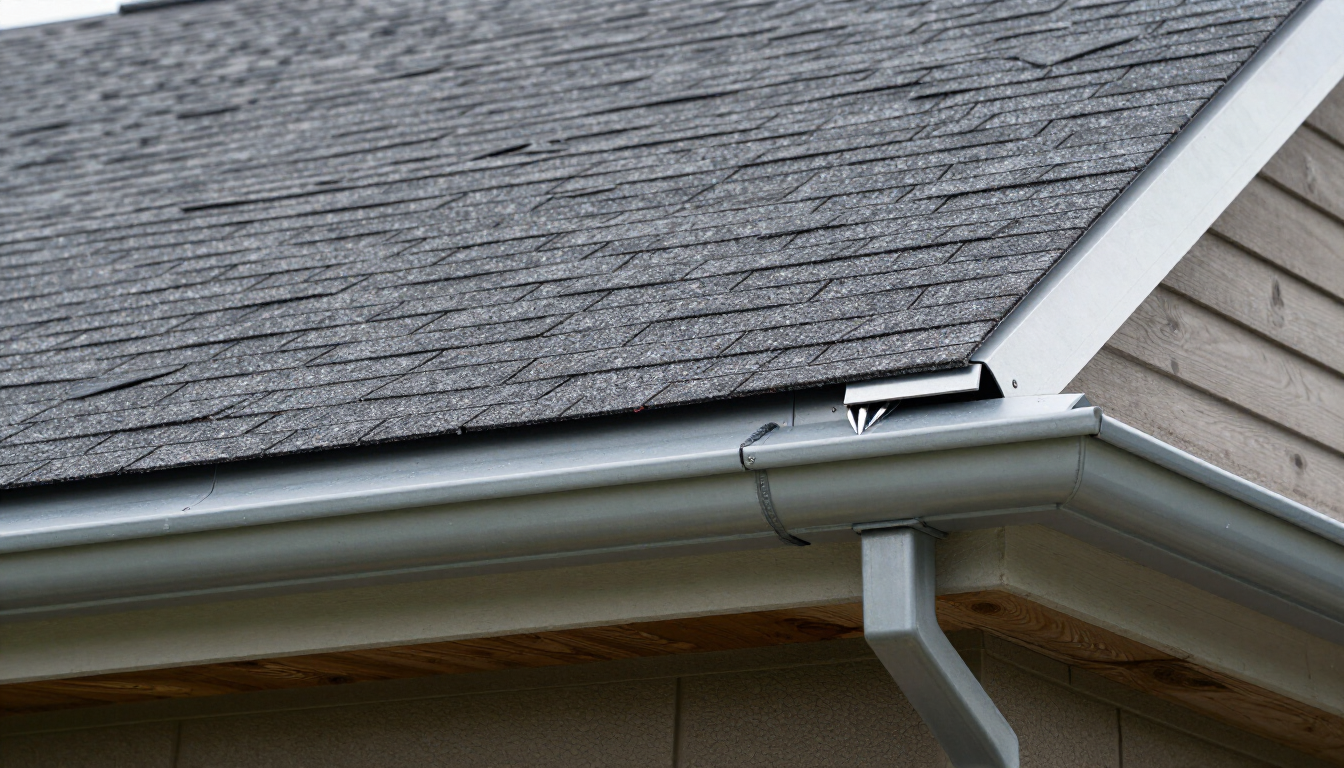
Gutter aprons are shaped with a longer downward leg that hooks over the back lip of the gutter. On a correctly installed system, you can look up from below and see metal bridging that entire gap.
The two pieces are not interchangeable. A drip edge protects the roof edge and fascia, and a gutter apron controls where the water actually lands.
Where Each Piece Goes on a Buford Roofline
Drip edge goes along both the eaves (the horizontal lower edge) and the rakes (the sloped side edges), while a gutter apron goes only along the eaves where gutters are hung. Rakes have no gutter to aim at, so an apron serves no purpose there.
At the eave
At the eave, drip edge goes on first and the underlayment laps over the top of it. That order matters, because water running down the underlayment has to land on top of the metal instead of behind it. The gutter apron sits at the same edge and carries the water the last few inches into the gutter.
On many Buford homes, the gutter hangs slightly below and forward of the shingle edge. That gap is exactly where a missing apron shows up as a problem.
At the rake
At the rake the order reverses. Underlayment goes down first and the drip edge installs over the top of it, running up the slope toward the ridge. It keeps wind-driven rain from working under the shingle edge and into the gable trim.
Around valleys and low-slope sections
Roof planes that dump a large volume into a short run of gutter need particular attention at the edge. A valley emptying onto a six-foot section of eave sends far more water through that spot than the rest of the roof, and the apron is what keeps that concentrated flow inside the trough.
What Goes Wrong When the Gutter Apron Is Missing
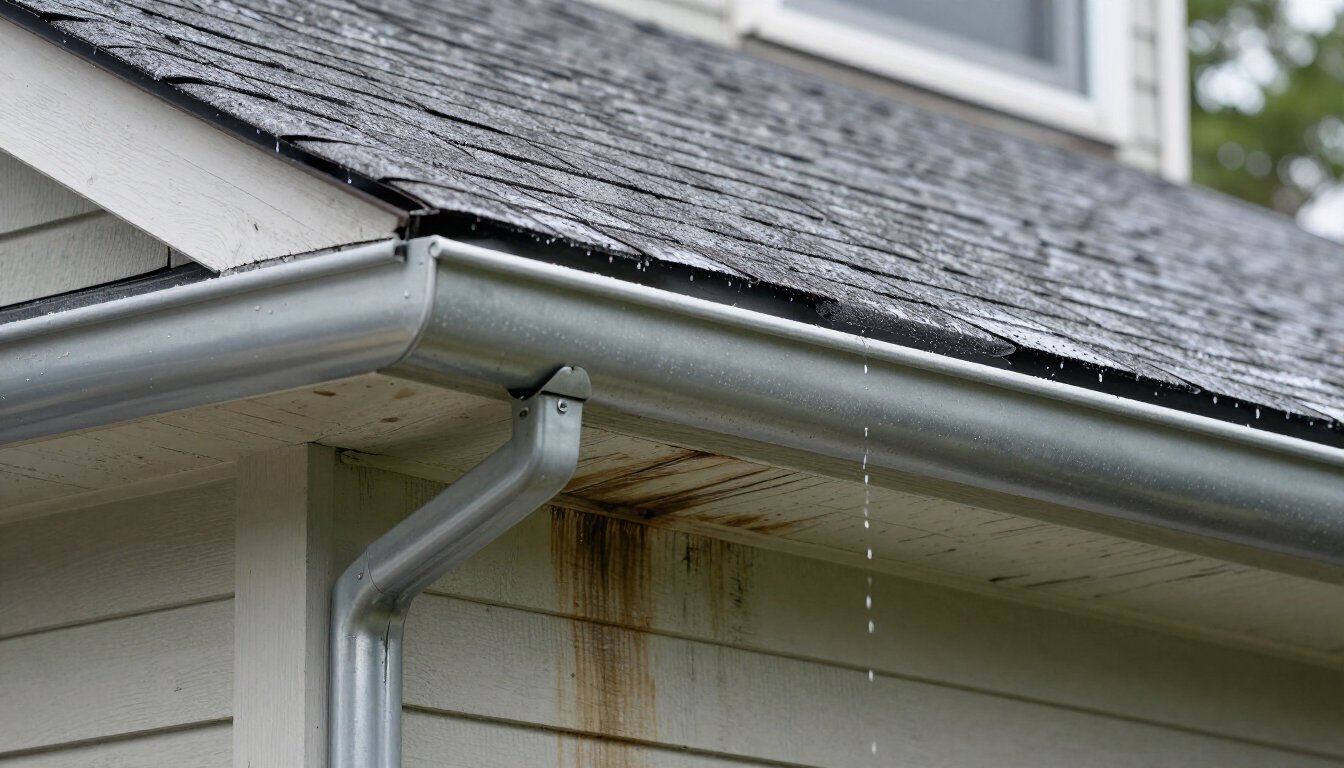
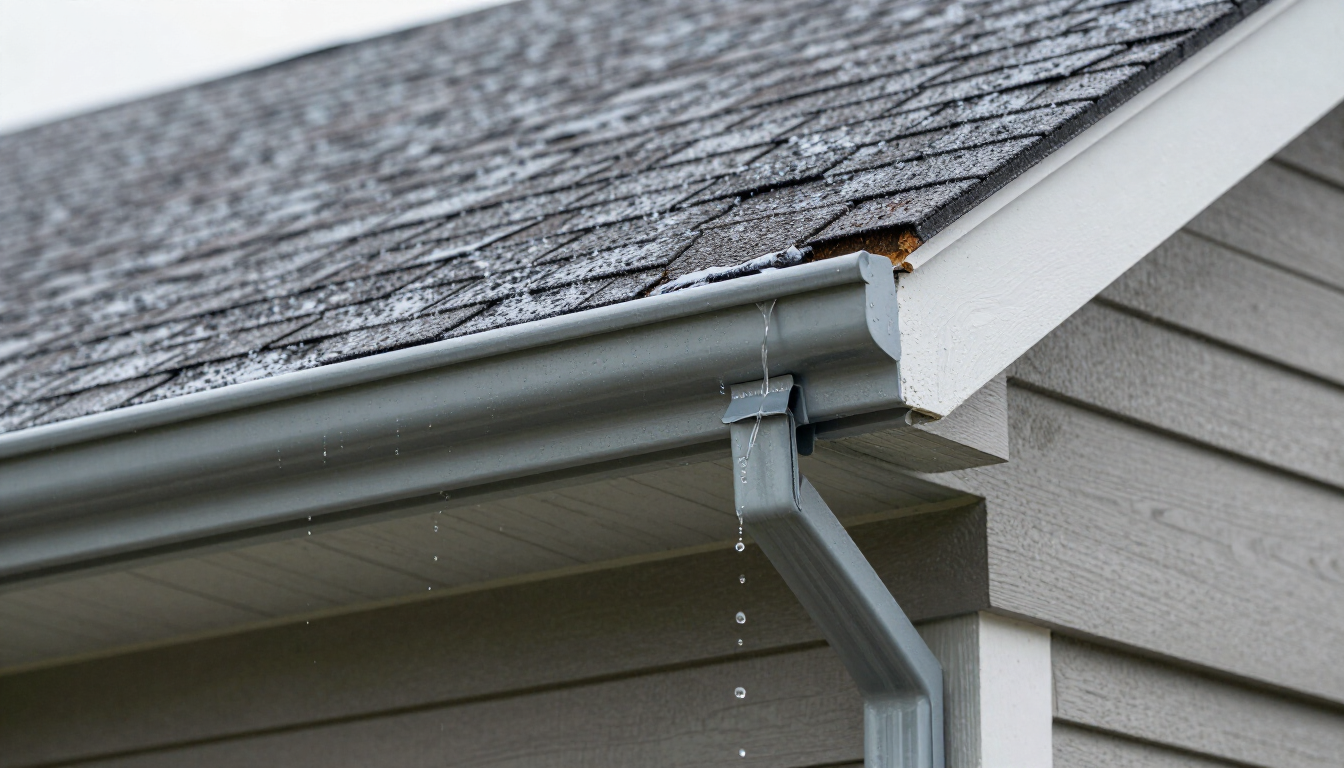
When a gutter apron is missing, water tracks off the shingle edge, follows the underside of the roof deck by surface tension, and runs down behind the gutter into the fascia board. The gutter can be perfectly clean, perfectly pitched, and perfectly sized, and the fascia still rots.
The early signs are subtle. Homeowners notice dark streaking on the fascia, peeling paint on the board behind the gutter, or a drip line in the mulch directly under the gutter rather than at the downspout.
Left alone, the fascia softens. Gutter hangers screw into that fascia, so once the wood gives up its holding strength, sections of gutter begin to pull away and sag.
Water behind the gutter also reaches the sub-fascia and the ends of the rafter tails. At that stage the fix is carpentry, not flashing, and it usually means replacing rotted fascia board before new gutters go up.
Buford gets a large share of its annual rainfall in intense summer storms, and homes near Lake Lanier see plenty of humidity on top of that. A roof edge that stays damp between rains gives rot a longer window to work.
When Both Pieces Belong on the Same Roof
Most homes with gutters are best served by drip edge along the full perimeter plus a gutter apron along the gutter runs, because the two pieces solve different failure points. Skipping the apron leaves the water-entry problem unsolved, and skipping the drip edge leaves the deck edge and rake exposed.
There are assemblies where a single deep-profile apron covers both roles at the eave. In that case the apron is doing the drip edge job as well, and drip edge still runs the rakes.
What matters is the finished geometry, not the product names. Water leaving the shingles should have metal under it all the way to the inside face of the gutter, with a clean break so nothing runs backward.
Older Buford homes are the ones most likely to be missing an apron. Original fascia on those houses has often been painted several times, which can hide early water damage until a gutter starts to pull loose.
Whether a given roof needs the apron added depends on the shingle overhang, the gutter position, and the condition of the existing edge metal. The right call comes from looking at the actual roofline rather than from a general rule.
How Flashing Gets Addressed During a Roof or Gutter Job
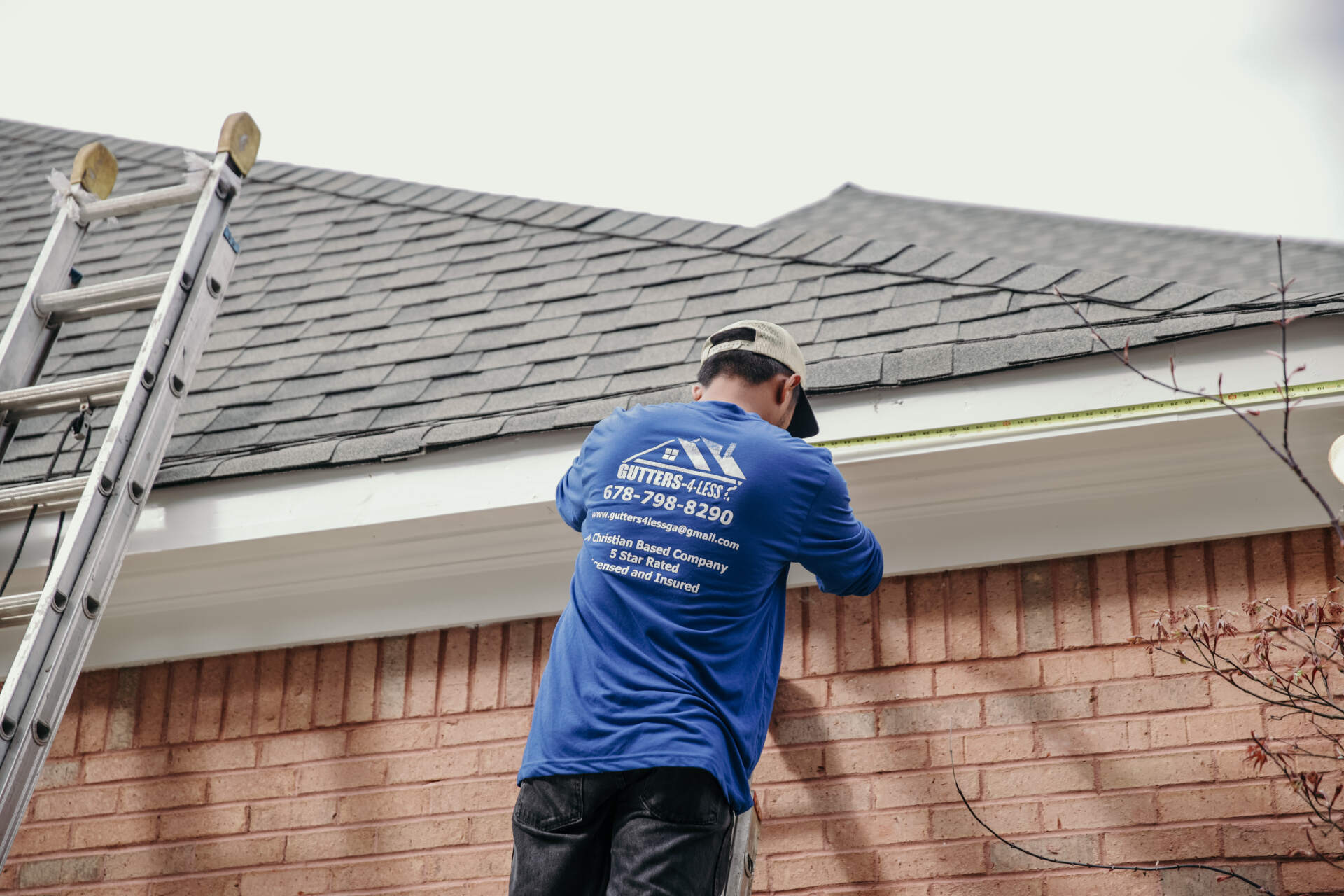
Edge flashing is easiest and least expensive to correct while either the shingles or the gutters are already off, which is why Gutters 4 Less reviews it at the start of any roof or gutter project. On a roof replacement, the eave courses come off anyway, so setting new drip edge and apron adds little to the scope.
On a gutter-only job, the gutters come down and the roof edge becomes visible and reachable. An apron can often be slid up under the first shingle course and fastened before the new gutter goes back on. The reverse situation, where the roof is being replaced and the gutters are already up, is covered in our guide to whether gutters come off during a roof replacement.
When only the gutters are being replaced and the shingles are staying, the crew checks how much overhang the shingles have and how the existing edge metal is lapped. That determines whether an apron can be added cleanly or whether the work is better paired with a shingle replacement on that section of roof.
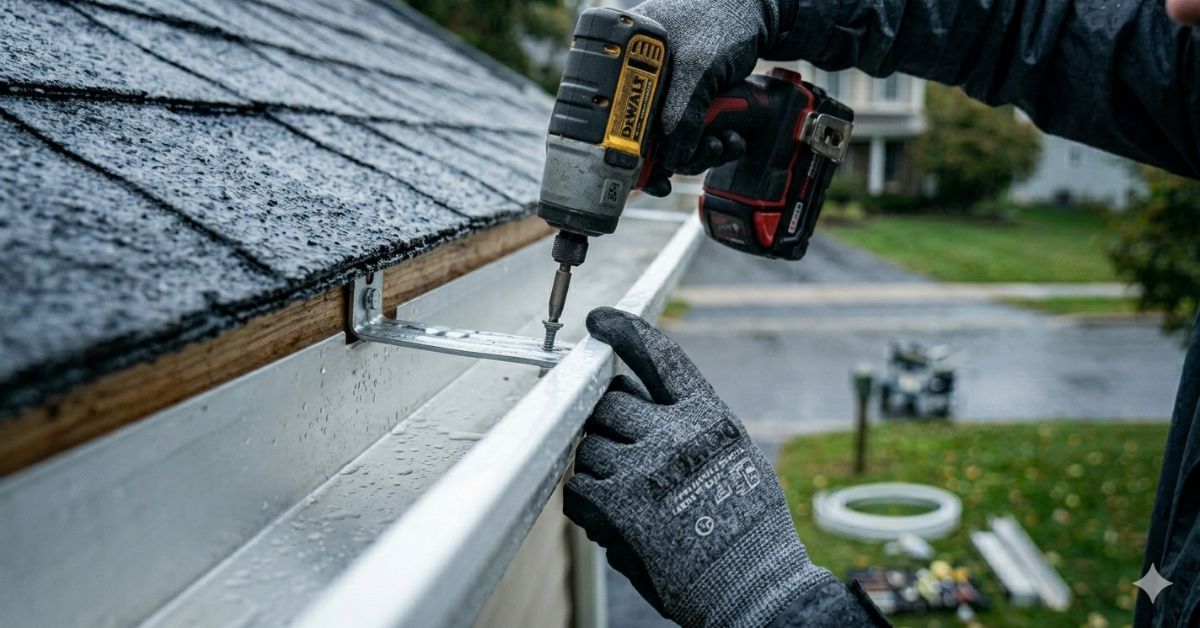
Fastener placement matters here. Apron and drip edge are nailed high on the flange so the fasteners sit under the shingle course and stay out of the water path.
Sealant at the laps is a detail worth getting right. Pieces overlap by a couple of inches in the direction of water flow, and the laps get sealed so wind-driven rain cannot push through the seam.
Getting the Roof Edge Right on Your Home
Gutter apron and drip edge are small pieces of metal that carry a lot of responsibility on a Buford roofline. Drip edge protects the deck and fascia, the apron puts the water where it belongs, and together they keep the wood behind your gutters dry through the heaviest part of the season.
If you have seen streaking on your fascia, paint failing behind the gutter, or a section that has started to pull away, the edge detail is worth a look before it turns into carpentry. Gutters 4 Less works on both sides of this problem, from roofing work across Buford to new gutter installation.
Have us take a look and walk your roofline with you. A straightforward
gutter and roof edge inspection will tell you exactly what is there and what, if anything, is missing.
You might also like
Gutters 4 Less Blog