


When to Replace Gutters in Buford: Lifespan by Material and the Signs That Matter
Gutters are due for replacement when the failures are spread across whole runs rather than isolated to one or two spots. A single leaking seam, a handful of loose hangers, or one dented section is repair work. Separation at multiple joints, sagging along entire runs, pitting through the metal, or a section you have already patched twice points toward replacement.
Material lifespan gives you a rough starting point, but age alone is not the deciding factor. Plenty of twenty-year-old gutters in Buford are still doing their job, and plenty of twelve-year-old systems are past saving because of how they were hung. What follows is the framework Gutters 4 Less uses on a service call to sort one from the other.
How Long Gutters Typically Last by Material
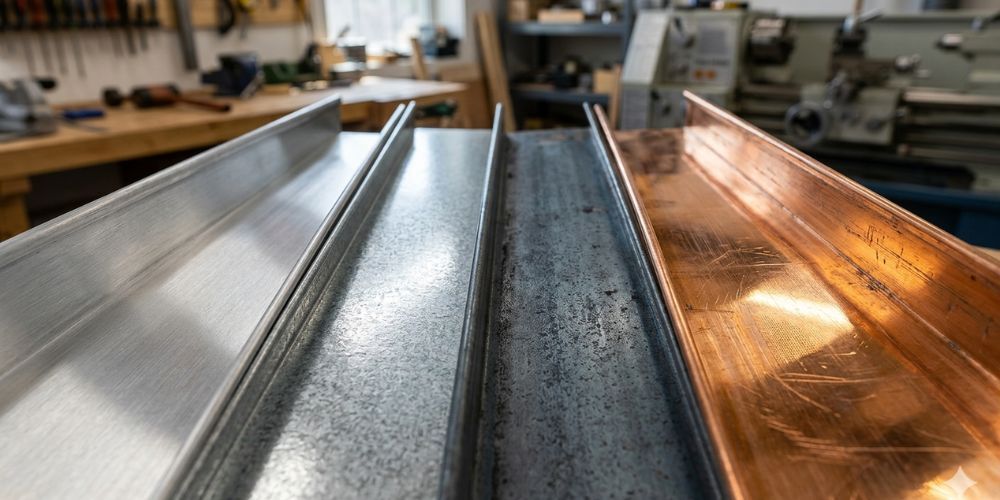
Typical service life runs 20 to 25 years for aluminum, 20 to 25 years for galvanized steel, 50 years or more for copper, and 10 to 20 years for vinyl. Those numbers assume the system was hung correctly and kept reasonably clear.
Aluminum is the most common choice on Buford homes because it holds up well in Georgia humidity and does not rust. Galvanized steel is stronger under impact but can corrode once the coating is compromised.
Copper outlasts everything else and is usually chosen for its appearance as much as its longevity. Vinyl has the shortest span because sunlight and temperature swings make it brittle over time.
Material choice affects cost and appearance as much as lifespan, and those trade-offs deserve more room than a lifespan table. Our breakdown of aluminum, steel, and copper gutters compared covers the pros, cons, and price differences in detail.
Two things shorten every one of these ranges. Standing debris that holds water against the metal, and hangers spaced too far apart, both age a system faster than the calendar does.
When Gutter Repair Makes Sense
Repair is the right call when the problem is confined to identifiable spots and the rest of the run is straight, sound, and holding its pitch. A gutter system is a collection of components, and most of them can be swapped individually.
These situations are usually repairable:
- One or two leaking seams. Seams are the weak point on sectional gutters, and a cleaned and resealed joint holds well when the surrounding metal is solid.
- A few loose or pulled hangers. Hangers can be reset or replaced, and additional hangers can be added where spacing was too wide.
- A single sagging span. One low spot between two sound sections is typically a hanger or pitch issue, not a gutter issue.
- A dented or bent section. Damage from a fallen limb often affects one length that can be cut out and replaced.
- A clogged or disconnected downspout. Downspouts, elbows, and extensions are separate parts and swap out on their own.
- Water overshooting in one corner. This is usually a pitch or debris issue at that specific point.
The common thread is that a repair restores a system that is otherwise doing its job. If eighty percent of the run is straight, tight, and draining, fixing the other twenty percent is the practical move.
When Gutter Replacement Makes More Sense
Replacement becomes the better value when the failures are systemic, meaning the same problem shows up in several places along the same run. At that point each repair only buys time until the next spot lets go.
These conditions point toward replacement:
- Separation at multiple joints. Seams pulling apart in several places usually means the whole run has been working loose for years.
- Sagging along entire runs. A gutter that dips across most of its length has lost its pitch and often its fastening surface.
- Pitting, pinholes, or rust through the metal. Corrosion visible from below means the material itself is spent, and sealant on a pinhole does not stop the next one.
- Repeated repairs on the same section. A third visit to the same twelve feet of gutter is money going into a system that is telling you something.
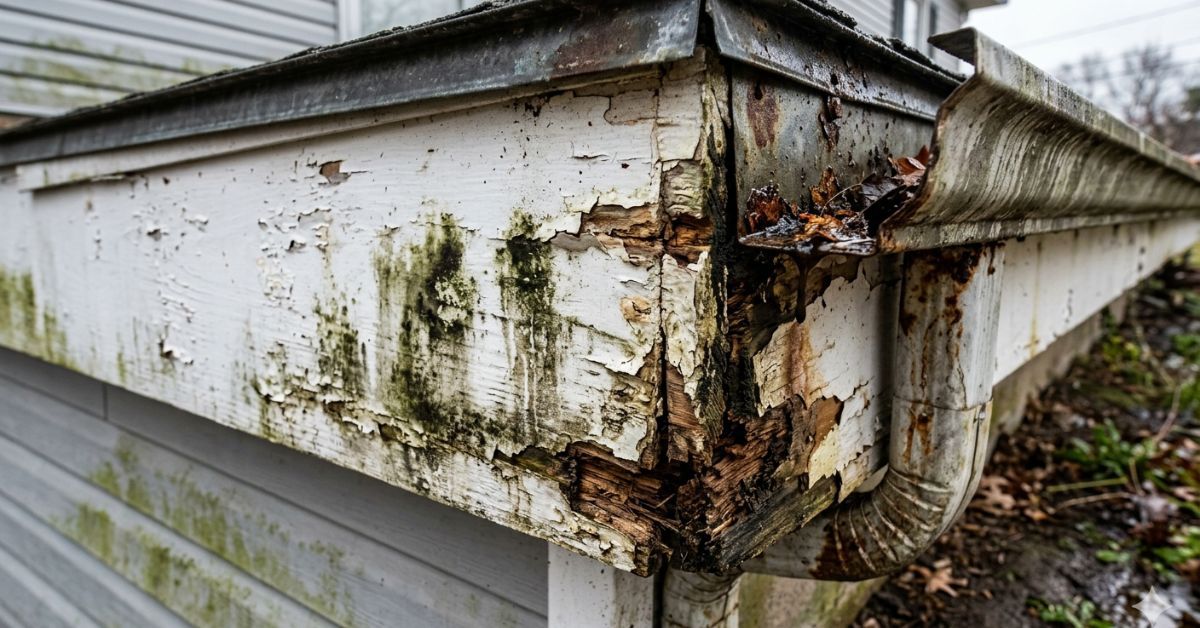
- Fascia damage behind the gutter. Rotted fascia gives hangers nothing to bite into, so the wood gets addressed and new gutters go up together.
- Undersized gutters overflowing every storm. If five-inch gutters cannot handle the roof area feeding them, resealing seams will not change the outcome.
Cost is part of this decision too. When the running total of repairs starts approaching a meaningful share of a new system, replacement generally delivers more for the money because it resets the pitch, the hangers, the seams, and the downspout sizing all at once.
The Signs That Actually Matter During an Inspection
The signs worth acting on are the ones visible from the ground during or right after a rain, because that is when a gutter system shows what it is actually doing. A dry gutter can look fine and still fail under load.
What to look for while it is raining
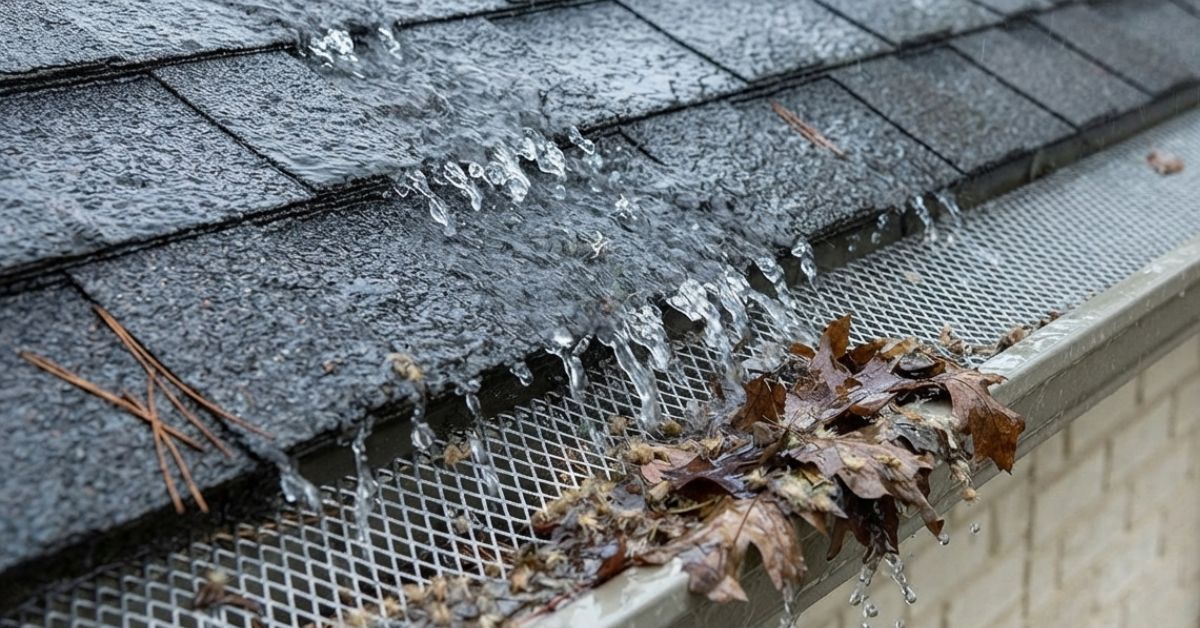
Water sheeting over the front lip means the gutter is either clogged, undersized, or pitched wrong. Water running behind the gutter and down the fascia points to a flashing or apron issue at the roof edge rather than the gutter itself.
Visible gaps at the joints during flow tell you where the seams have opened. A steady drip at a specific point is worth marking so it can be found again on a dry day.
What to look for when it is dry
Peeling paint or dark streaking on the fascia indicates water has been getting behind the system for a while. Nail heads or hanger screws backing out of the fascia mean the wood is losing its grip.
Erosion trenches, mulch washout, or pooling near the foundation show the water is landing where it should not. Standing water still sitting in the gutter days after a storm means the pitch is off or a low spot has developed.
A fuller walkthrough of these indicators is on our page covering the signs your rain gutters are failing. Buford homes with mature hardwoods and pines feed a lot of debris into their gutters, and that load accelerates most of what is described above.
How the Repair or Replace Decision Gets Made in Practice
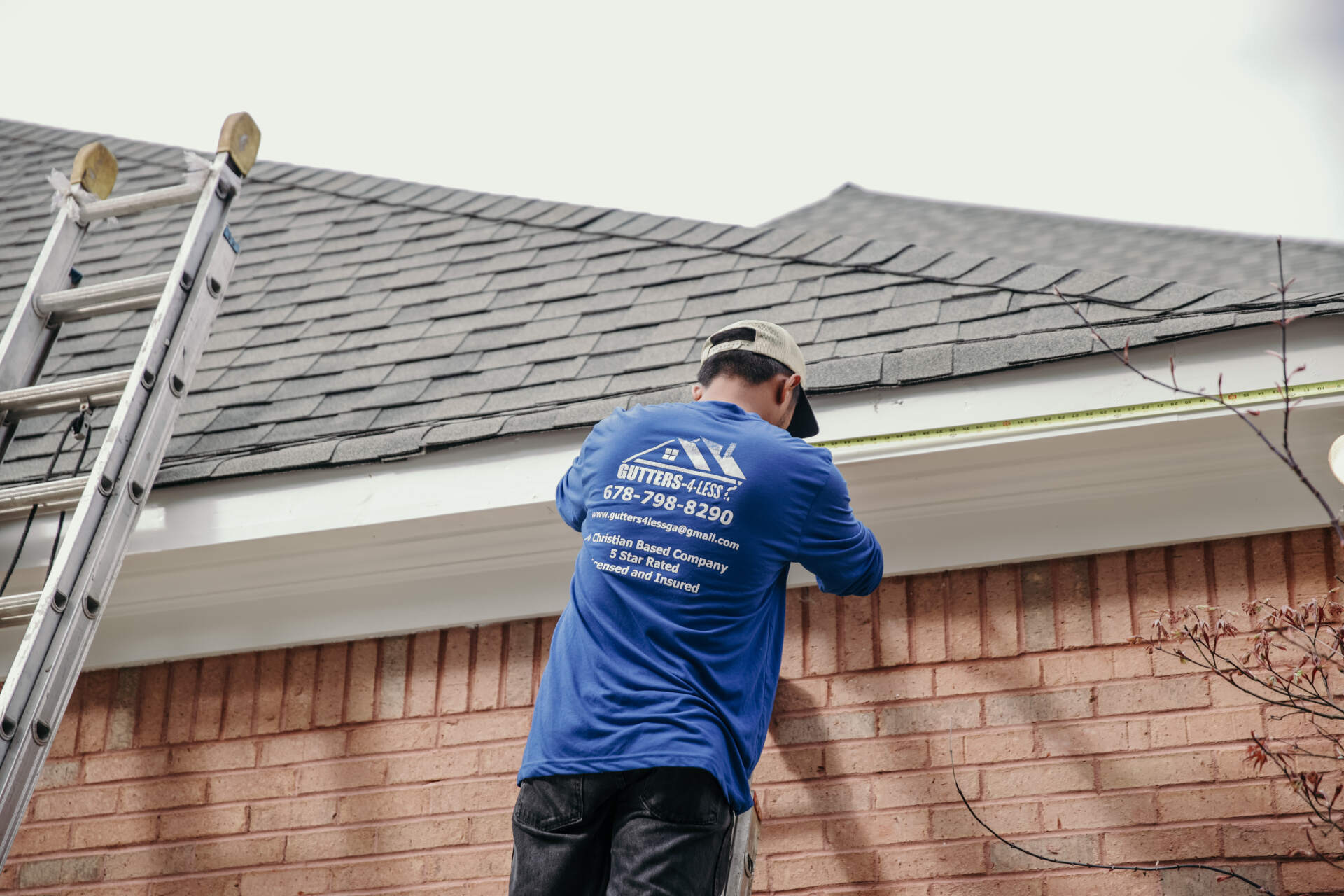
The decision comes down to counting failure points and mapping where they sit, which is why Gutters 4 Less walks the full perimeter rather than looking only at the spot a homeowner called about. One bad seam on the back of a house often turns out to be the third failure on that run.
The walkthrough covers pitch across each run, hanger spacing and condition, seam integrity, downspout count relative to roof area, and the condition of the fascia behind the system. Those five things together tell you whether the system has life left in it.
Partial replacement is a legitimate middle ground. If the front elevation is sound and the back run is spent, replacing only the failing run is often the sensible answer.
How often a system needs attention depends on the property, the tree cover, and the roof design, so no fixed schedule fits every Buford home. A house under heavy pine canopy has a very different maintenance picture than one on an open lot.
When replacement is the answer, one upgrade worth discussing is moving to seamless gutters formed on site. Seams are where most sectional systems begin to fail, and removing them removes the most common repair item.
Getting a Straight Answer on Your Gutters
Deciding when to replace gutters comes down to whether the problems are isolated or spread out. Isolated leaks, a few loose hangers, and one bad seam are repair work. Separation at multiple joints, sagging along whole runs, pitting through the metal, and repeat visits to the same section point toward replacement.
Material lifespan is useful context, and the condition of your specific system is what settles it. Gutters 4 Less handles both sides of this, from targeted gutter repair in Buford to full replacement when that is the better value.
If you are not sure which side of the line your gutters fall on, have us take a look. A
gutter inspection gives you a clear picture of what is failing, what is sound, and what it would take to fix either way.
You might also like
Gutters 4 Less Blog