


Why On-Site Gutter Fabrication Matters for Buford, GA Homes
When Buford homeowners hear that we fabricate the gutters on site at the house, the usual reaction is that it sounds like a nice detail but not a meaningful one. Metal is metal, and a gutter is a gutter.
It turns out that where the gutter gets formed changes almost everything about how it performs. The length it comes in decides how many joints end up on your roofline, and joints are where gutter systems tend to give out first.
Here is what on-site fabrication actually involves, and why it makes a real difference on Buford homes in particular.
What On-Site Gutter Fabrication Means
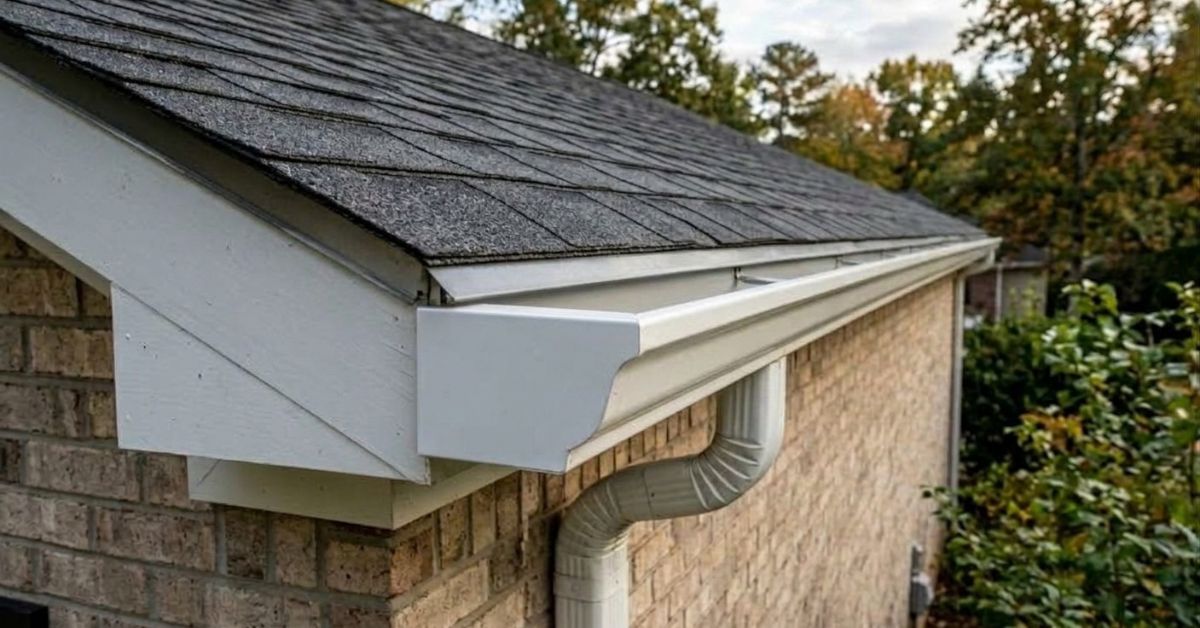
We bring a roll-forming machine to the house on a trailer. Flat aluminum coil feeds in one end, the machine shapes it into the gutter profile, and it comes out the other end as a finished run cut to the exact length of that stretch of roof.
The alternative is sectional gutter, which comes pre-cut in standard lengths, usually around ten feet. Those pieces get joined together on site with connectors and sealant to make up the full run.
So a 40-foot side of a house is either one continuous piece, or four pieces and three joints. That is the whole difference, and it is not a small one.
Why Fewer Seams Means Fewer Leaks
Every joint in a gutter run relies on sealant to stay watertight. Sealant is doing a demanding job out there, expanding and contracting through Georgia summers, sitting in standing water, and taking direct sun.
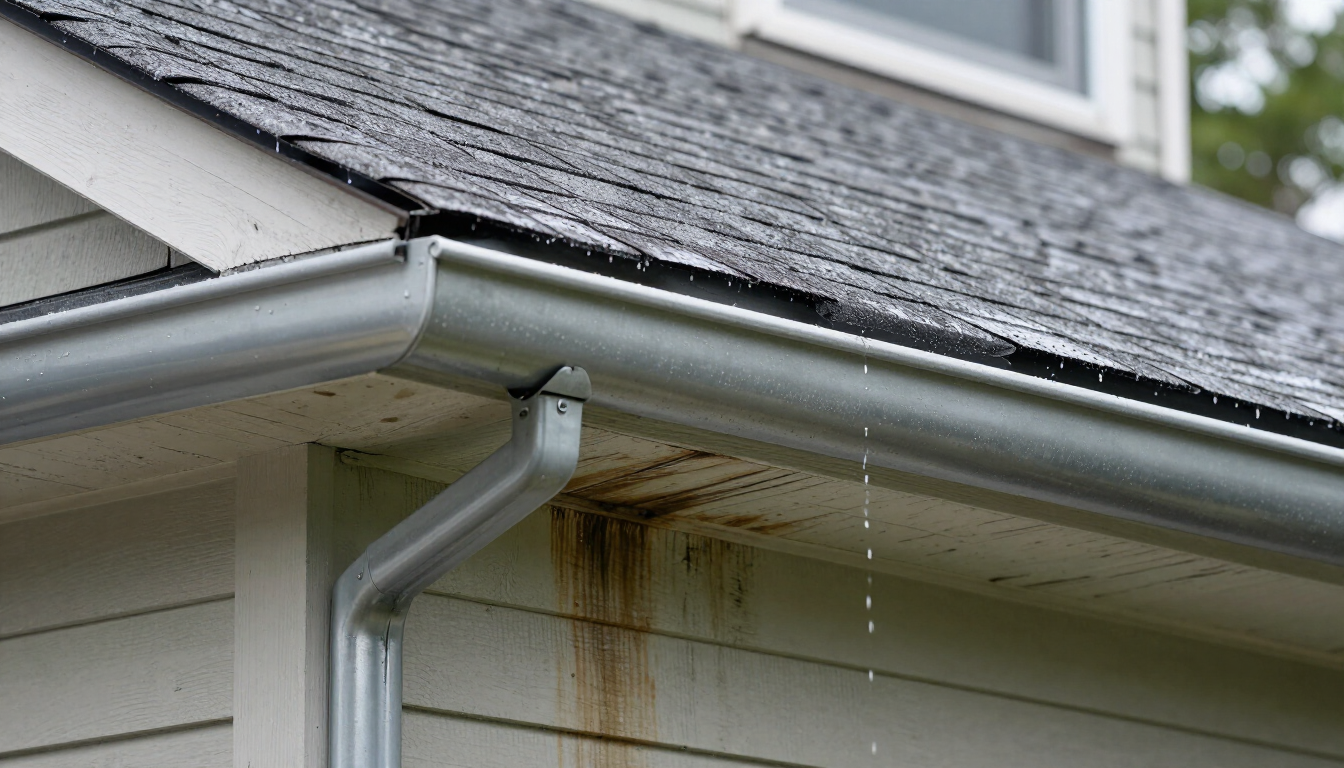
Over enough seasons it gives up. It shrinks, cracks, or separates from the metal, and water starts finding its way through. That leak usually goes behind the gutter rather than out the front, which means it lands on the fascia where nobody sees it for a while.
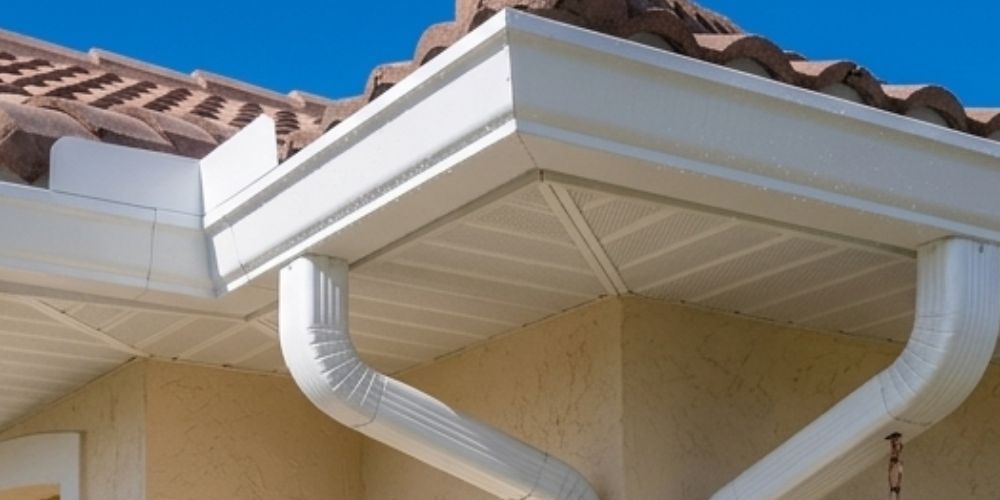
With a seamless run, there is no sealant along the straight stretch to fail in the first place. Joints only exist where they have to, at the corners and the downspout outlets, which is a much shorter list of things to watch.
How a Custom Fit Changes Performance
Making the gutter at the house means it gets built to the measurement we take that day, not to a standard length that has to be trimmed or joined to fit.
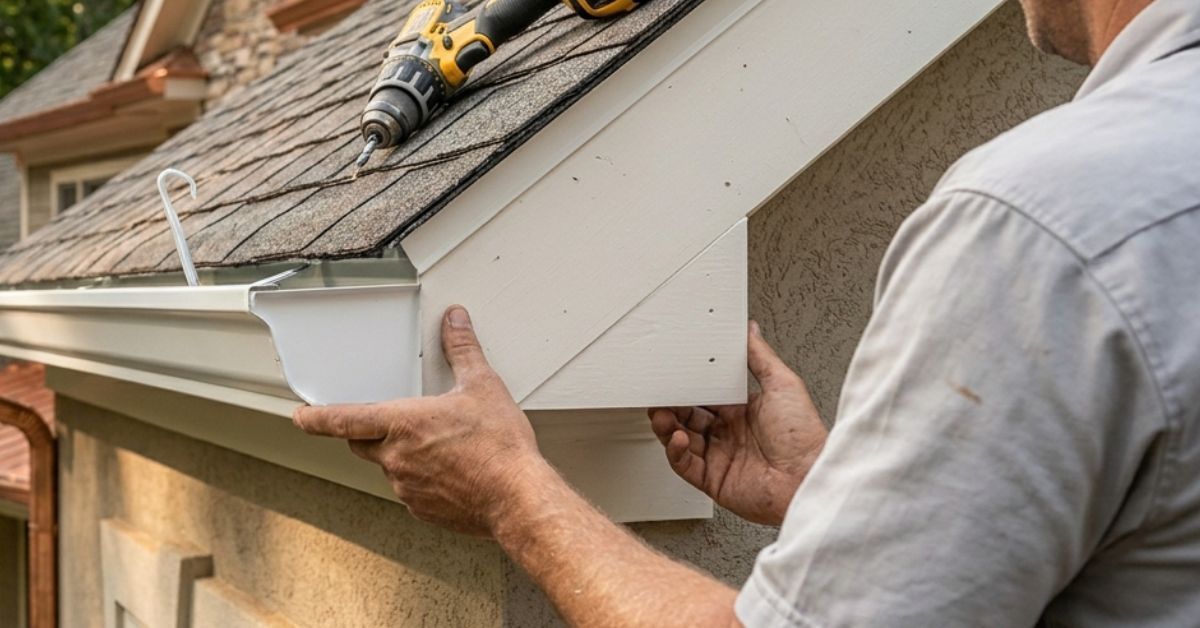
That matters most on rooflines that are not simple rectangles. Plenty of Buford homes have bump-outs, dormers, porch returns, and runs that change direction, and every one of those is a spot where a pre-cut piece would need another joint.
It also lets us set the pitch cleanly across the entire run. Water needs a consistent slope toward the downspout, and a single continuous piece holds that slope better than four pieces that each have to be aligned to one another.
Why This Matters More Around Buford and Lake Lanier
Buford rooflines deal with a specific combination. There are a lot of mature pines and oaks over these properties, and summer storms here can deliver a heavy volume of water in a short window.
Debris is the part that makes seams matter. Pine needles and leaf material collect against any interior joint, hold moisture there, and keep that spot wet long after the rest of the run has dried out. A seam sitting under a damp pack of needles for most of the year is on a much shorter clock.
The storm volume is the other half. During a real downpour, a joint that has started to loosen will not just drip, it will let a meaningful amount of water through right at the fascia line.
What On-Site Fabrication Does Not Fix
Being upfront about this matters, because seamless is sometimes talked about like it solves everything. It does not.
A seamless gutter still needs to be kept clear, because debris does not care how the metal was formed. It still needs to be sized correctly for the roof area feeding it, and it still needs sound fascia behind it to fasten into. If the wood is soft, a beautifully formed run will pull away from it just the same.
Is Seamless Worth It for Your Buford Home?
What seamless does is remove one of the most common failure points from the equation. That is worth a lot, but it works alongside good sizing and sound fascia rather than replacing the need for either.
The material choice matters too, and it is worth comparing aluminum, steel, and copper gutters for Buford homes before you decide.
If you are weighing a new gutter system and want to see how it would run on your particular roofline, get in touch with Gutters 4 Less. We are right here in Buford, and we will walk the house with you and give you a straight read on what your home needs. You can also read more about our seamless gutters in Buford.
You might also like
Gutters 4 Less Blog