


Storm Damage Gutter Repair in Cumming, GA | Gutters 4 Less
Storm damage to gutters in Cumming rarely announces itself. A storm rolls through, the rain lets up, the yard is covered in branches, and most of us glance up at the roofline and figure the gutters came through fine.
Sometimes they did. Often there is damage that stays out of sight for a while, and it shows up weeks later as a streak down the siding or a washed-out patch of mulch near the foundation.
It tends to be quiet. A hanger works loose, a seam opens a quarter inch, a downspout packs solid with roof grit, and the system keeps moving just enough water that nobody notices. Here is what to check after heavy rain and wind in Cumming, what you can look at safely from the ground, and when it makes sense to have us come out.
What Storm Damage to Gutters Looks Like in Cumming
Storms around Cumming and the Lake Lanier area combine two things that are demanding on a gutter system. You get a short burst of very heavy rain, and wind moving through the mature pines and hardwoods that hang over a lot of rooflines out here.
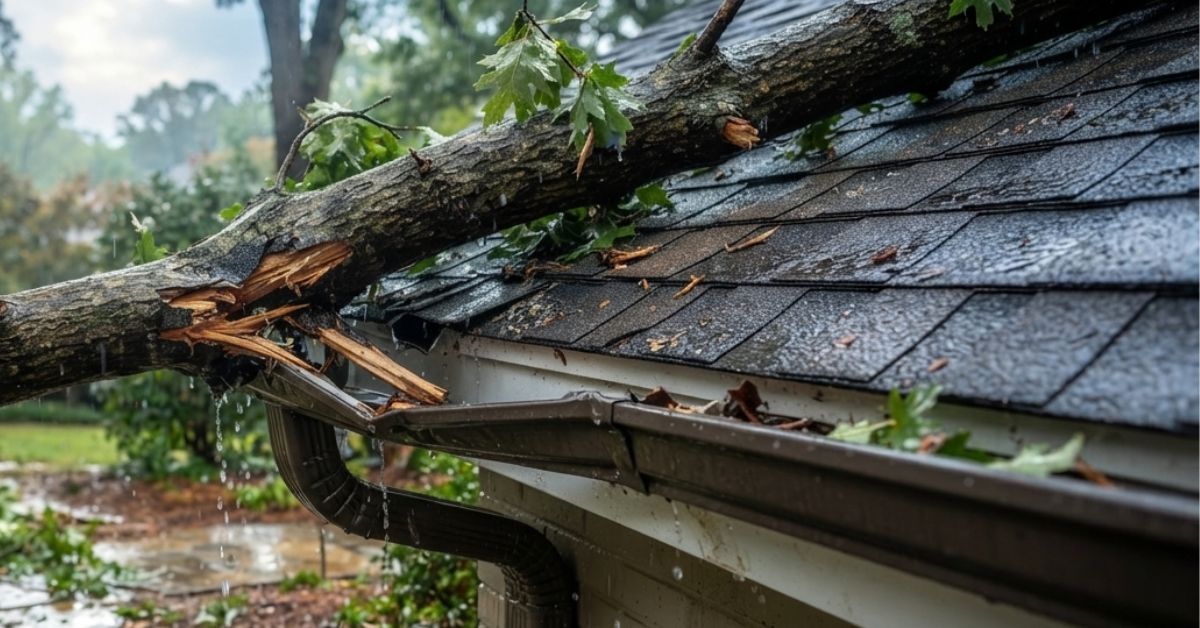
The rain is the part homeowners expect. The wind is usually what does the structural damage, because it drops limbs, whips the gutter run, and works fasteners loose over time.
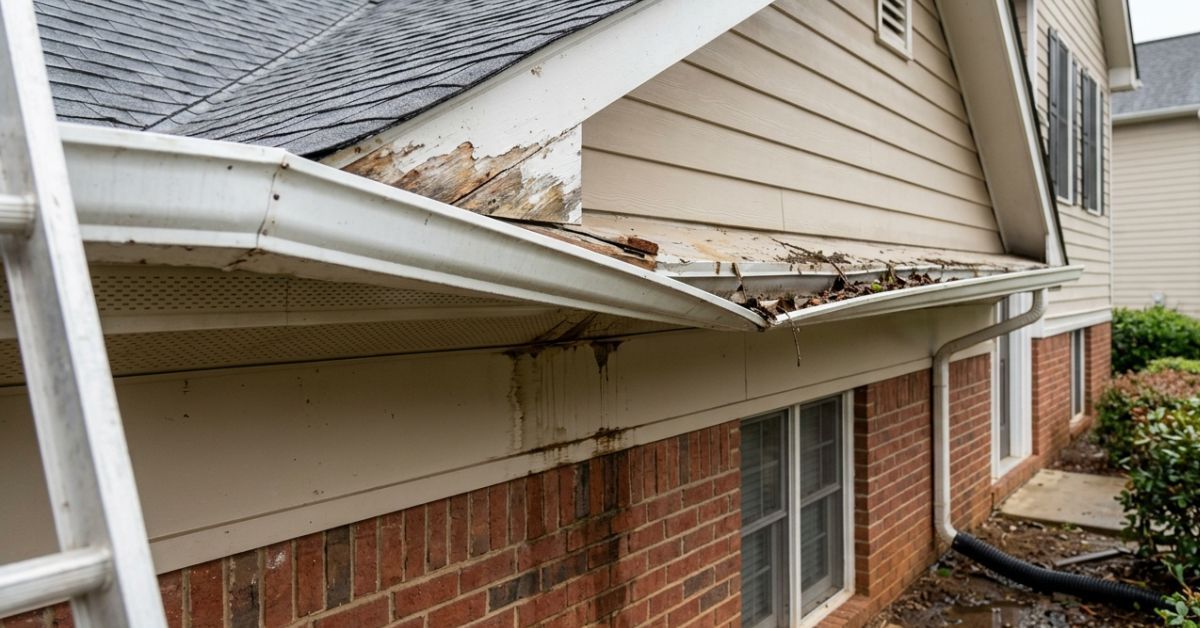
What we see most often is hangers pulled away from the fascia, seams separated at a corner or joint, sections dented by a falling limb, and downspouts knocked off their straps. None of that looks dramatic from the driveway.
What to Check First After Heavy Rain and Wind
Almost everything useful can be spotted from the ground with a slow walk around the house. Take a few minutes and look at the roofline from several angles instead of one.
Here is what to look for:
- A visible gap between the gutter and the fascia board
- A section that sits lower than the run on either side of it
- Downspouts that came loose at an elbow, a strap, or the ground
- Fresh streaking or staining on the siding underneath a seam
- Washed-out mulch, soil, or a small trench right below a downspout
That last one is the signal people miss most often. If the ground under a downspout looks different than it did before the storm, water was coming out fast and landing in the wrong place.
Why Downspouts Clog After Cumming Storms
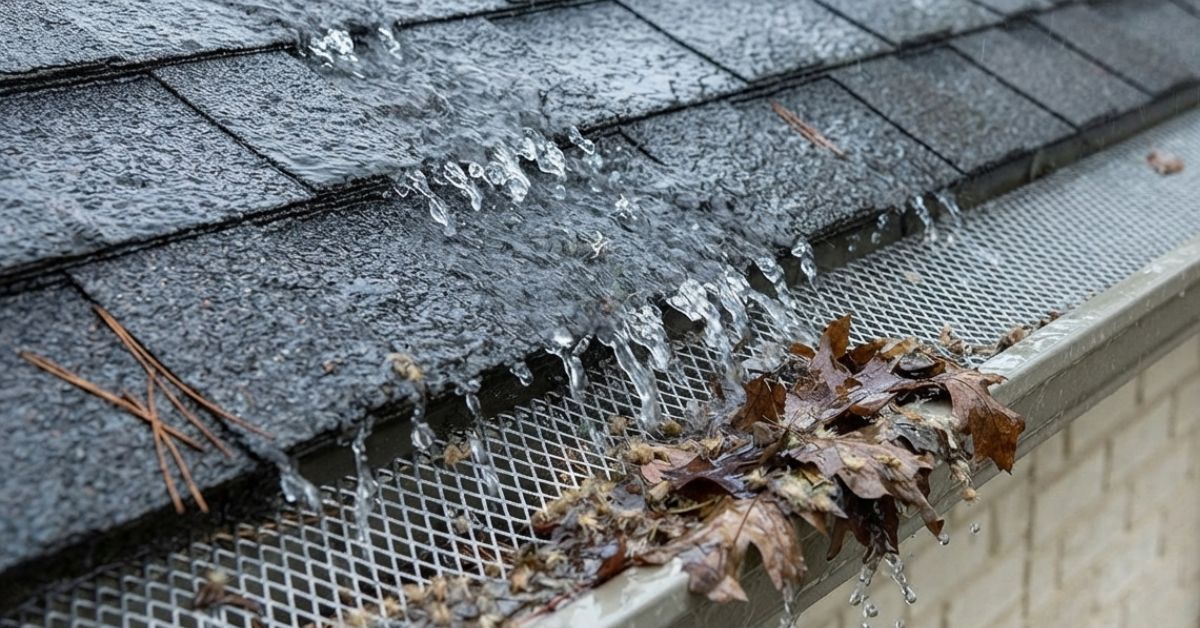
Heavy rain does not just carry leaves into the gutter. It carries roof grit and shingle granules, and once that mixes with pine needles it settles into a dense sludge that packs into the downspout opening.
A gutter can look clean along the top and still be blocked solid at the drop. The tell is standing water in the run hours after the rain stopped, or water spilling over the front edge at one spot instead of along the whole length.
If you can safely reach a downspout, running a hose into the top is a quick check. Water that pools instead of moving through means the blockage is lower down, worth clearing before the next storm rather than after it.
Signs Storm Gutter Damage Needs More Than a Quick Fix
A single loose strap is a small job. A run sagging in the middle, several hangers backed out along the same stretch, or a section bent by limb impact is a different conversation entirely.
The same goes for anything happening at the fascia. If the wood behind the gutter looks soft or discolored, or is holding the fasteners loosely, the repair has to deal with the fascia first or the gutter will pull away again.
One thing worth saying plainly: this is not the moment to put a ladder up. After a storm the fascia is saturated, the ground is soft, and a gutter run still holding water is heavier than most people expect. Looking from the ground is the right call.
What Happens When We Come Out After a Storm
We start at the ground and work up, because most of the diagnosis is visual. We look at where water went during the storm, check the pitch along each run, and inspect the hangers and seams.
From there we look at whether the fascia is sound, whether the downspouts are sized right for the roof area feeding them, and whether the damage is isolated or spread. Sometimes the answer is a handful of hangers and a resealed corner. Sometimes a run has taken enough that replacing that stretch makes more sense, and we will tell you that straight.
Getting Storm Damage Gutter Repair Handled in Cumming
Storm damage is easier to deal with when it gets caught early, while it is still a hanger and a seam. Waiting usually pulls the fascia into the job, and that turns a small repair into a much bigger one.
If your downspouts were struggling before the storm hit, the issue may be sizing rather than storm damage, and it is worth reading about 6-inch gutters and larger downspouts for Cumming homes. For a broader look at what we handle locally, see our gutter repair services in Cumming.
If you are not sure what the last storm did up there, get in touch with Gutters 4 Less and we will come take a look. We walk you through your options with no pressure and no upsell.
You might also like
Gutters 4 Less Blog