


Why Cumming Homes Need 6-Inch Gutters & Larger Downspouts
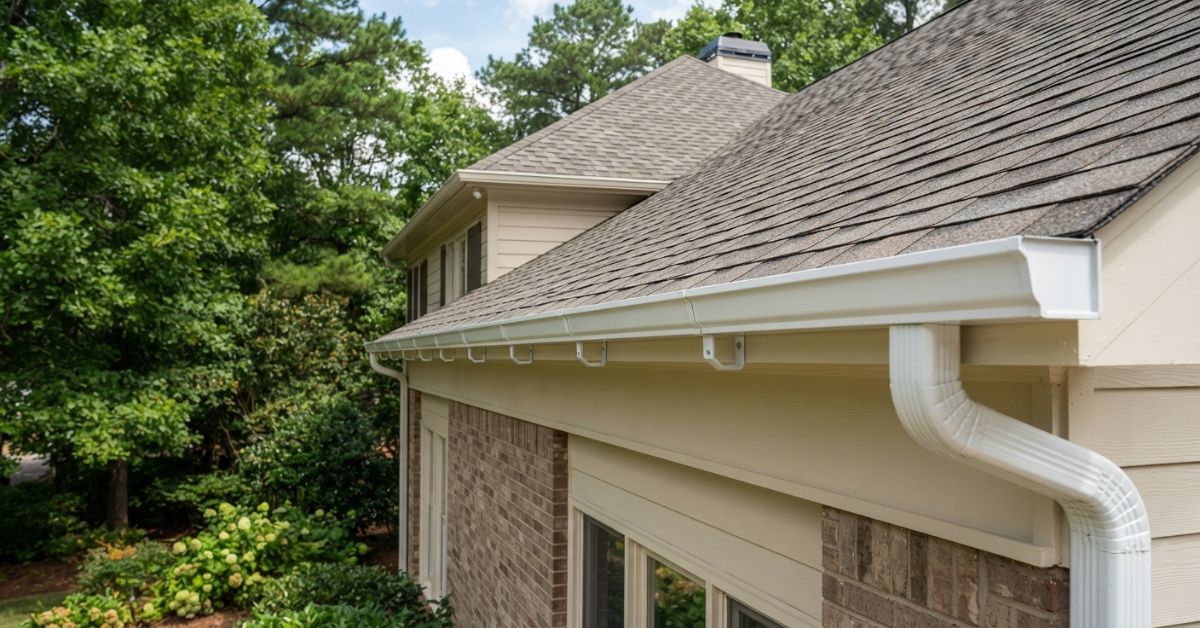
The standard 5-inch gutter system that most production homes get installed with works fine in plenty of places. Cumming usually isn't one of them. Between the lake, the trees, the topography, and the kind of summer storms North Georgia produces, plenty of Cumming homes outgrow their factory-grade 6-inch gutters within a few years, sometimes within a single storm season.
The fix isn't usually more cleaning, although that helps. It's more capacity. Six-inch gutters paired with larger 3x4 downspouts handle the volume that Cumming homes actually see. Here's why.
Why Cumming Homes Often Need 6-Inch Rain Gutters
Three factors push Cumming homes past what a standard 5-inch system can manage.
Rainfall intensity. Atlanta-area summer storms can drop 7 to 8 inches per hour at peak. That's well above national averages and at the high end of what 5-inch gutters can drain even when clean.
Tree cover. Cumming has more mature pine and hardwood canopy than most parts of metro Atlanta. The combination of pine needles, oak catkins, and fall leaves means gutters lose effective capacity throughout the year. Debris reduces how much water the system can actually move.
Lake-adjacent moisture. Homes near Lake Lanier (and there are a lot of them) sit in higher ambient humidity, which keeps gutters damp longer and accelerates the breakdown of debris into the kind of sludge that compounds clogging.
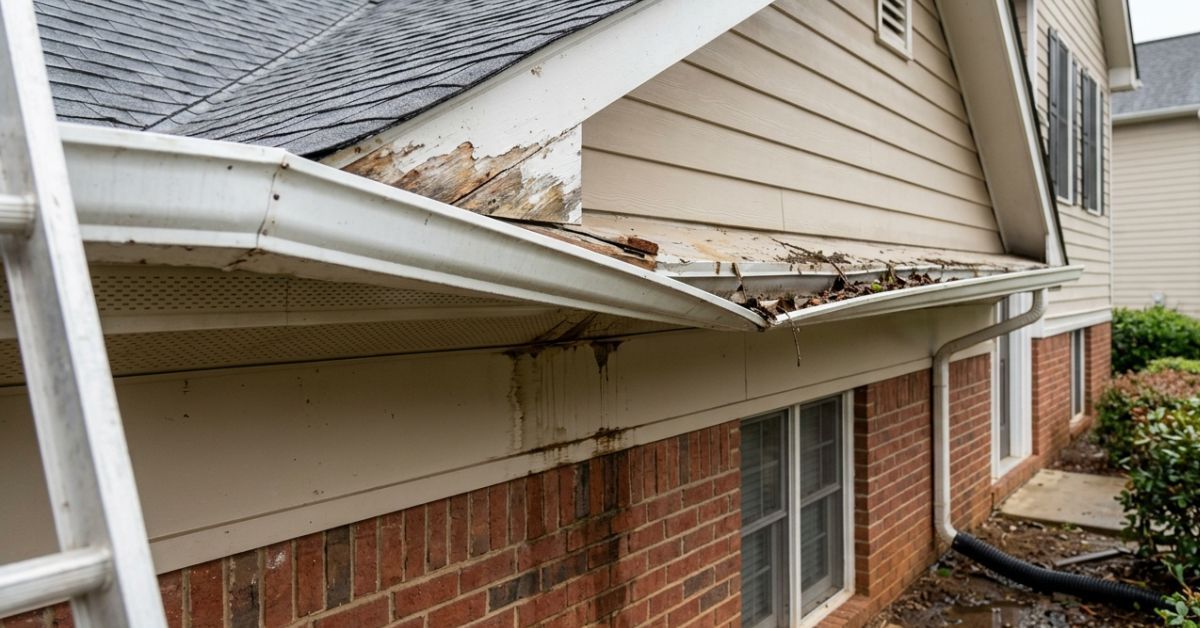
Each factor on its own is manageable. Stacked together, they push 5-inch systems past their working envelope faster than homeowners expect. On the homes we walk every week, the 5-inch overflow pattern starts showing up by year three or four under heavy tree cover.
What 6-Inch Gutters and Larger Downspouts Actually Do
The math behind the upgrade is straightforward.
Six-inch K-style gutters carry about 40% more water than 5-inch, roughly 7,900 square feet of drainage area instead of 5,500 under typical conditions. Larger 3x4 downspouts move roughly twice the water of standard 2x3 downspouts. Combined, the upgrade gives the system a
substantial buffer against peak rainfall and debris-reduced capacity.
That buffer is where the upgrade earns its keep. A 5-inch system at full capacity overflows during a peak summer storm. The same storm hits a 6-inch system at maybe 70% of its capacity. The water still moves through. Nothing pools. The fascia stays dry. The foundation doesn't get hit with concentrated runoff.
How Cumming and Georgia’s Local Topography Affect Gutter Sizing
Cumming's geography adds two complications most parts of metro Atlanta don't have.
The first is the lake itself. Homes near Lake Lanier deal with consistently higher humidity, which keeps trees actively shedding moisture-laden debris later into the season. Pine sap, mold growth, and decomposing leaves all happen faster in damp gutters.
The second is topography. Many Cumming properties are on slopes, including walkout basements that sit at the lower end of those slopes.
Water that overflows the gutter on a sloped property doesn't dissipate the way it would on a flat lot.
It runs downhill, often straight at the foundation. Wrong-sized gutters on a sloped Cumming home are a foundation issue waiting to happen.
Cumming Home Types That Especially Benefit from the Upgrade
A few patterns where 6-inch gutters and 3x4 downspouts make a clear difference.
Lake homes. Continuous moisture, mature trees, and often complex rooflines. The upgrade is close to mandatory for any home actively used near the water.
Larger or multi-story homes. More roof projection means more water funneled into the gutter run. 5-inch systems are undersized for this almost by default.
Walkout basements on slopes. The combination of concentrated runoff and slope drainage makes downspout sizing especially important. 3x4 downspouts placed correctly can prevent the chronic seepage that plagues these homes.
Properties under heavy pine canopy. Constant pine debris reduces effective capacity year-round. Sizing up gives the system enough headroom to keep working between cleanings.
Older homes with later additions. Many Cumming homes have had second stories, expansions, or roof modifications added over the years. Original 5-inch systems often weren't adjusted for the new water volume. Overflow at the junction is a giveaway.
Considering the Cost of the Upgrade
Six-inch gutters cost more than 5-inch. So do 3x4 downspouts versus the standard 2x3. The price gap depends on linear footage, roof complexity, and whether existing gutters need to be removed.
The reasonable way to think about the cost is in comparison. A single foundation seepage event, addressed by a foundation contractor rather than a gutter contractor, typically costs more than the entire upgrade from 5-inch to 6-inch on most Cumming homes. Fascia repair from prolonged overflow runs in a similar range. The upgrade isn't free, but it's measurably cheaper than fixing the problems undersized gutters cause.
If you're considering the upgrade as part of a broader gutter repair conversation, the same crew that handles the sizing also handles the common gutter repairs we see across Cumming homes. Both decisions can sit in the same walkthrough.
For an accurate quote, contact Gutters 4 Less for gutter installation services in Cumming. We'll measure the roof, evaluate the surrounding tree cover and slope conditions, and give you a number based on what your home actually needs.
Final Thoughts on 6-Inch Gutters for Cumming Homes
Five-inch gutters work fine on simple, single-story homes with light tree cover and clean rooflines. Cumming has plenty of homes that don't fit that description.
Once you add lake-adjacent humidity, mature pine canopies, sloped lots, walkout basements, or larger square footage, 5-inch systems start running closer to their limits than they should. For most Cumming homes, the safer call is sizing up. Six-inch K-style gutters with 3x4 downspouts handle the rainfall, the debris, and the topography that the area actually delivers.
If you're planning a replacement and weighing the size question, contact Gutters 4 Less for an on-site assessment. For more on what to expect at the first visit and estimate stage, see our companion guide on working with a gutter contractor in Cumming. And if you're still narrowing down who to work with, our guide to the best gutter company in Cumming walks through what to look for.
You might also like
Gutters 4 Less Blog