


5-Inch vs. 6-Inch Rain Gutters: Which Size Is Right for Atlanta Rainfall?
In our experience working on rain gutter installations across Atlanta, one of the most common questions homeowners ask is whether 5-inch or 6-inch rain gutters are better suited to local rainfall.
While the difference may seem minor at first, gutter size plays a major role in how well a system handles heavy downpours, roof runoff, and sudden storms. Understanding these differences is an important part of evaluating rain gutter service in Atlanta, especially before making installation or replacement decisions.
This guide aims to help you understand the differences between 5- and 6-inch rain gutters and how rainfall volume, gutter size, and Atlanta demographics influence the decision. It can be used to determine the right size for your gutters.
How 5-inch And 6-inch Rain Gutters Differ In Capacity And Performance
The key difference between 5-inch and 6-inch gutters is water capacity. A 6-inch gutter holds and moves more rainwater before reaching the downspout, which matters during Atlanta’s intense downpours, especially on steep roofs or valley sections where runoff concentrates quickly.
A 5-inch gutter is standard on many homes and performs well when paired with proper slope, correctly spaced downspouts, and routine maintenance. However, on larger rooflines or areas that channel heavy runoff, a 5-inch system can overflow during strong storms.
For homes with complex roof designs or frequent heavy rainfall, upgrading to 6-inch gutters often provides better overflow protection and improved drainage control.
When 5-Inch Gutters Are Sufficient for Atlanta Homes
From our field experience, 5-inch rain gutters are typically suitable for smaller to mid-sized homes with simple rooflines. Properties with minimal roof valleys, shorter gutter runs, and properly spaced downspouts can typically handle Atlanta’s rainfall with a 5-inch system.
They also work well on roofs with moderate slopes that don’t channel water into one concentrated section too quickly.
On the downside, a smaller 5-inch gutter system may require more maintenance and cleaning than a 6-inch gutter. When gutters are clear, aligned correctly, and supported properly, a 5-inch system can manage runoff without issue. Problems tend to show up during intense storms, when debris blocks sections, or when downspouts are spaced too far apart for the roof’s runoff volume.
When 6-Inch Gutters Are Recommended for Heavy Rainfall
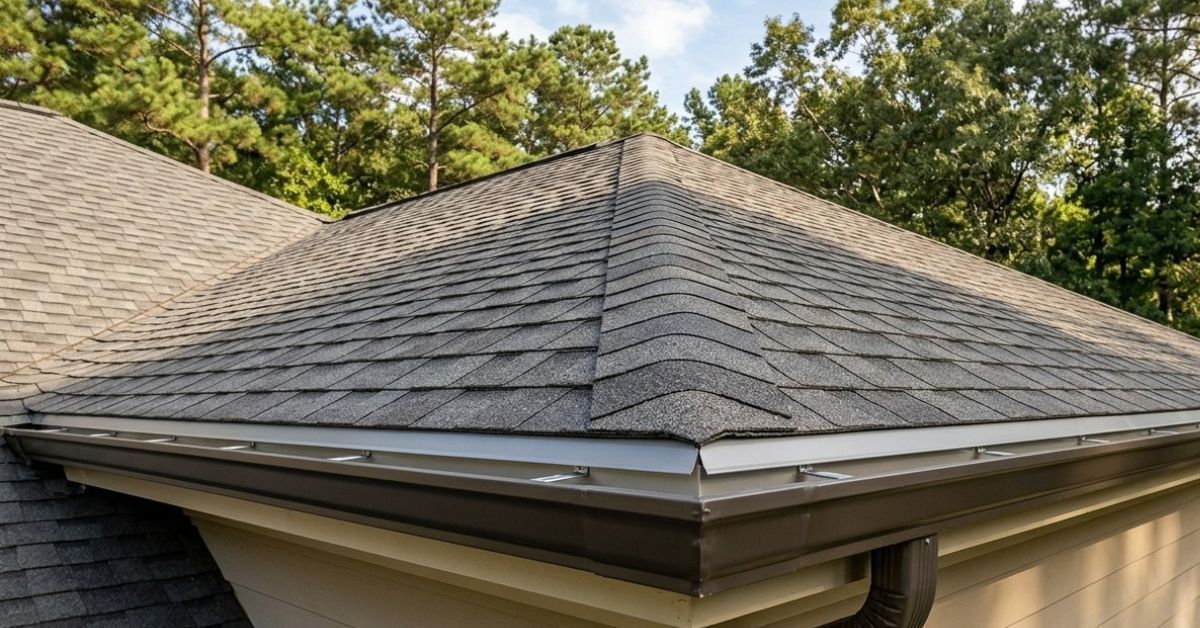
Six-inch rain gutters are often a better choice for larger homes or properties with complex roof designs. Roofs with multiple valleys, steep pitches, or long gutter runs can concentrate large volumes of water into specific sections. In those situations, a 6-inch system provides additional capacity to handle sudden downpours without overflowing.
Homes surrounded by mature trees and heavy foliage may also benefit from 6-inch gutters. The wider trough allows water to flow past leaves and small debris that restrict the channel, reducing the risk of overflow during heavy rain.
How Atlanta Rainfall Intensity Impacts Gutter Sizing
Atlanta often sees heavy storms that release large amounts of rain in a short period rather than steady, light rainfall. When heavy rainfall occurs, the gutter system must convey water quickly to prevent overflow. In many cases, water spilling over the edge points to limited capacity, not worn-out gutters.
Storm intensity matters just as much as total rainfall. Sudden downpours place additional demand on gutters, especially on steep roofs or sections that funnel water into a single area. That’s why gutter sizing in Atlanta is based on peak runoff, the maximum amount of water the system may need to handle during a storm.
Choosing the Right Gutter Size for Your Atlanta Home
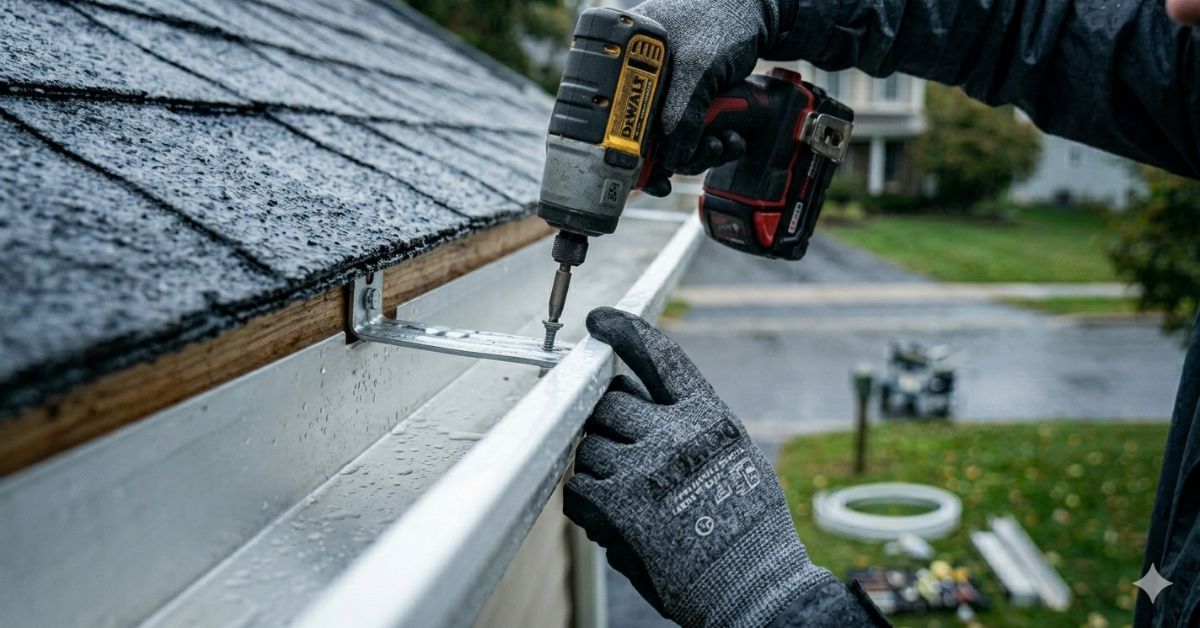
Choosing between 5-inch and 6-inch gutters affects more than the trough itself. Size impacts hanger spacing, downspout count, outlet placement, and slope planning. These details directly influence how the system handles peak runoff during Atlanta storms.
Capacity should match the roof area, pitch, and valley concentration. When sizing aligns with these factors, the system is less likely to overflow during heavy rain.
Homeowners reviewing gutter size should also understand how runoff moves from the roof edge to the discharge point. That clarity helps match gutter width and downspout layout to the structure’s actual water load.
You might also like
Gutters 4 Less Blog