


7 Things Gutter Contractors Inspect Before Installation
We’ve seen rushed gutter installations in the past that started sagging and falling apart within months. Not because the gutters were “bad.” Not because it rained too hard. But the installation wasn’t thorough enough to cover small but important details before installation.
In Atlanta, the rain doesn’t play around. One heavy storm can dump inches in a short window. If the system isn’t planned correctly from the start, water quickly finds the weak spot in your rain gutter. Behind fascia boards. Into soffits. Down foundation walls.
As a professional gutter contractor in Atlanta, we don’t just show up and start hanging aluminum. Installation is the easy part. The pre-installation inspection is typically where the real work happens.
When approaching gutter installation, we’re not just looking at the roofline. We’re looking at slope, wood condition, drainage paths, runoff volume, and how water moves across the entire structure.
If we skip pre-installation inspection, the system might look great on day one, but fail by the next storm season.
Before installing new gutters in Atlanta, here are seven things we inspect to protect the home for the long term.
1. Roofline Design and Water Flow Patterns
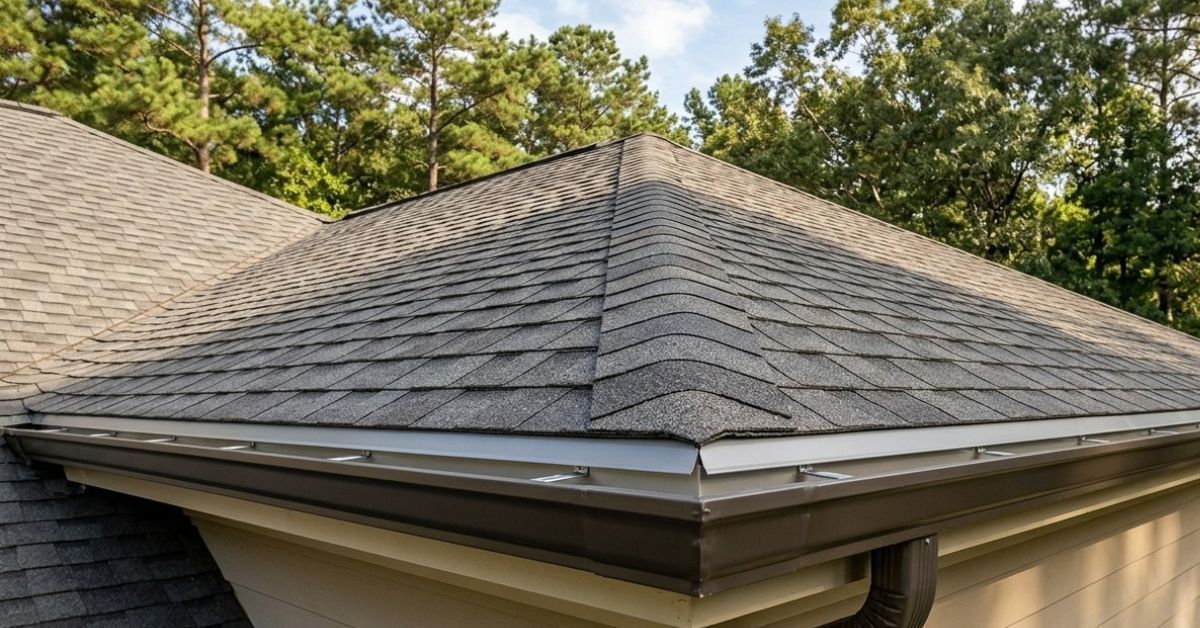
We first evaluate the roofline and how water naturally drains off the surface. We pay close attention to valleys, steep pitches, and multiple roof sections that may create concentrated runoff areas.
Some homes have roofing problem areas where rainwater pools up and adds sufficient weight to overwhelm the gutter system.
Studying flow patterns also helps us determine where larger-capacity gutters may be needed and where additional downspouts would improve drainage. This planning reduces the risk of overflow during heavy storms.
2. Condition of Fascia Boards and Attachment Points
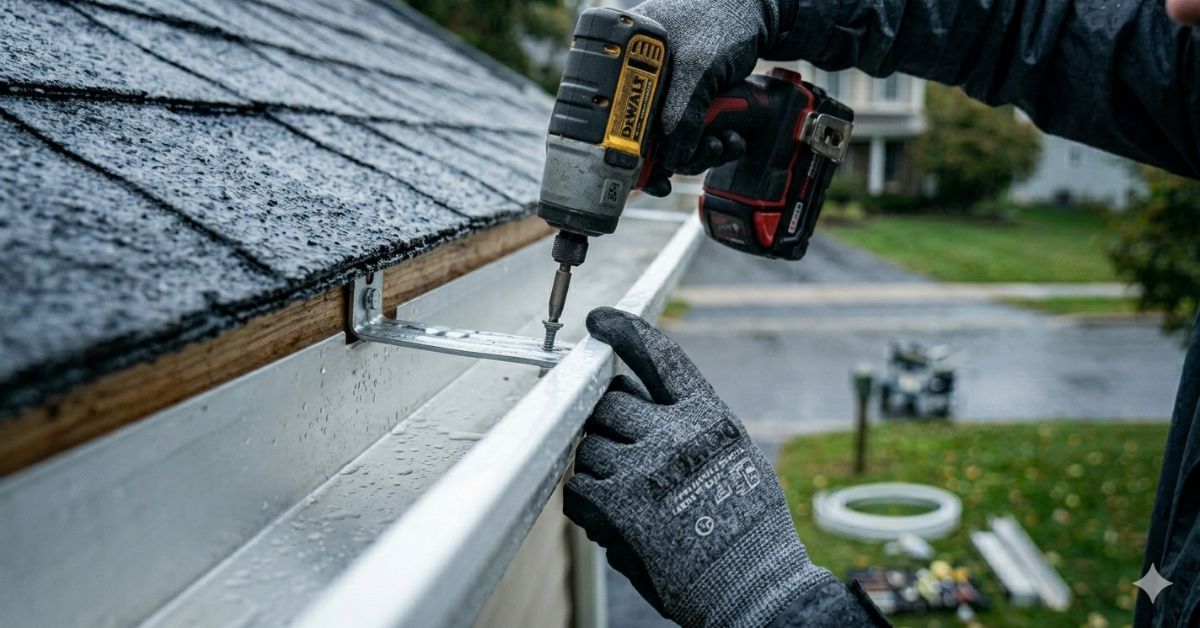
We inspect the fascia boards to confirm they can support a new gutter system. In older homes, fascia wood may have been weakened by past leaks or improper installations. Mounting new gutters onto compromised wood can lead to sagging and structural failure.
Before installation, we look for rot, warping, soft spots, and uneven surfaces. A solid mounting surface keeps gutters secure through Atlanta’s heavy rains and strong winds.
3. Gutter Size and Capacity Requirements
Not all gutters are the same size. Before installation, we calculate the roof surface area and estimate how much water the system must handle during intense rainfall. Larger or steeper roofs often require wider gutters to manage storm runoff effectively.
In Atlanta’s sudden downpours, undersized systems can overflow quickly. Selecting the correct size at the start helps new gutters manage runoff properly and lowers the chance of future drainage issues.
4. Downspout Placement and Discharge Areas
We evaluate where downspouts will direct water. Discharging too close to the foundation can create long-term moisture problems.
Walkways, driveways, landscaping, and grading all influence placement decisions.
Proper downspout positioning moves water safely away from the home and helps prevent drainage problems after heavy rain.
5. Roof Edge and Shingle Condition
We examine the roof edge and shingles where gutters will be installed. Curled or damaged shingles, deteriorated decking, or missing drip-edge flashing can cause water to run behind the gutter rather than into it.
Identifying these issues in advance allows us to install the gutter system correctly and reduce the risk of leaks or water intrusion.
6. Slope and Alignment Planning
Prior to installing new gutters, we plan the slope and positioning of each gutter section to ensure smooth water flow toward the downspouts. Gutter misalignment can cause puddling and increase the risk of overflow during a storm.
By planning ahead on this, we are able to guarantee smooth draining across the entire system, and this is particularly crucial on larger gutter runs or where homes have a more complex roofline, which is often the case in Atlanta neighborhoods.
7. Surrounding Features and Potential Obstructions
Prior to the installation, we consider other features around the gutter that might interfere with the performance of the gutter. Some of these features that might interfere could be trees, roof extensions, design features, and landscaping. All these features might impact the performance of the gutter.
Detection of obstacles in advance helps prevent future maintenance problems, thereby designing the gutter system based on realistic conditions instead of correcting it after the problems occur.
How Pre-installation Inspections Connect To Rain Gutter Service In Atlanta
Every inspection step influences how well a gutter system performs over time. Roof design, fascia strength, sizing, slope, and drainage layout all affect durability and service needs. Quality rain gutter service in Atlanta begins long before the first bracket is installed.
Understanding what contractors inspect before installation also helps set expectations for what happens afterward. Homeowners often benefit from learning how post-installation responsibilities and limitations factor into ongoing gutter performance and maintenance over time.
You might also like
Gutters 4 Less Blog