


Standing Water in Your Buford Gutters: What Causes It and Where It Leads
Most people find standing water in their gutters by accident. The storm's been gone a day, you look up from the driveway, and there's still a strip of water up there with pollen or pine straw floating in it.
When we get called out for this in Buford, it's almost always one of three things: a debris dam, a section that's started to sag, or an outlet that's partly blocked.
At Gutters 4 Less we treat it as an early warning. That water is already working on the hangers and the fascia long before anything spills over.
What Causes Standing Water in Gutters
Water sits in a gutter when something stops it from getting to the downspout. A healthy gutter empties out within minutes of the last drops, and all you'd see is a damp film.
We run into the same three causes over and over on Buford homes. Luckily each one looks a little different from the ground.
Debris Dams
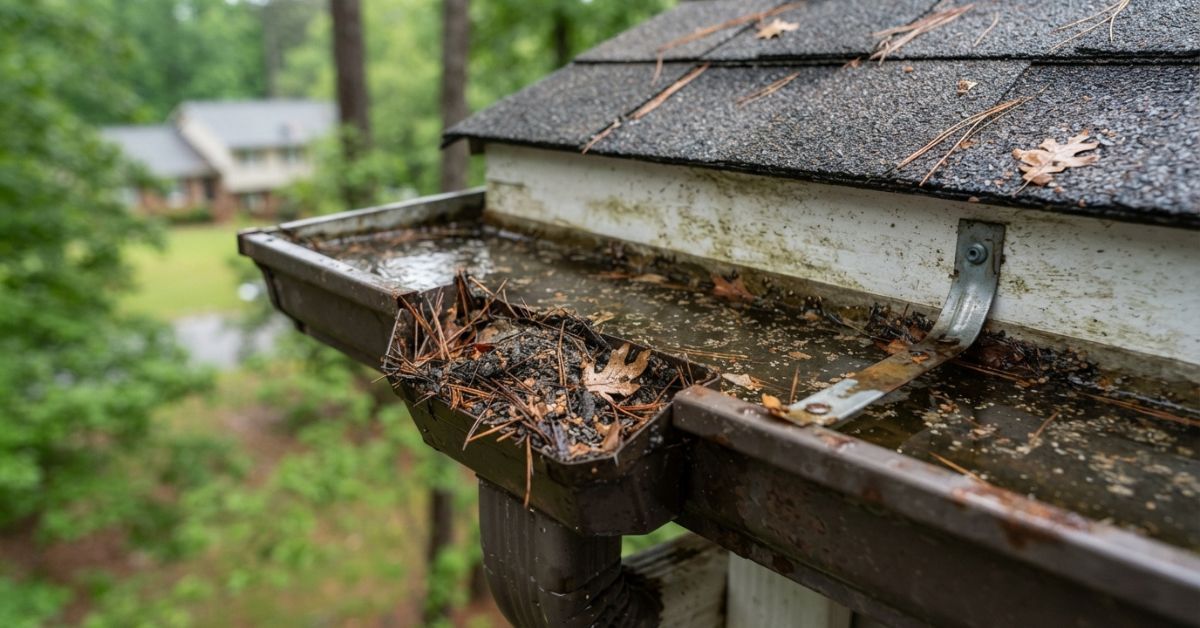
Leaves, pine needles, seed pods, and roof grit collect in one spot and pack down. Water backs up behind the pile and just sits there, even if the rest of the gutter is clear.
Dams like corners, the spots under roof valleys, and the stretch right before the outlet. Around Buford the oaks and pines keep feeding them most of the year, and spring pollen glues it all into a tight mat.
Sagging Sections
A sag makes a low spot, and a low spot holds water whether the gutter is clean or not. Most sags start where a hanger has worked loose or the fascia behind it has gone soft.
Then it feeds itself. The puddle adds weight, the weight pulls the section lower, and next storm there's even more water in the dip.
Blocked Outlets
When the outlet is blocked, the whole run backs up, not just one spot. The clog is usually right where the gutter drops into the downspout, or just below it in the first elbow.
From the yard, you'll see a gutter that's full end to end while the downspout stays dry. Pine needles are a common cause, since they slide right into the opening and catch in the bend.
Sometimes it's how the gutter was hung. Gutters need a slight slope toward the downspout, and one that was put up dead level, or tilted the wrong way, will hold water even when it's spotless.
What Standing Water Does to Gutter Hangers
Hangers are made to carry a load for the length of a storm, not all day and night. Water weighs a little over eight pounds a gallon, so even a shallow strip along a long gutter adds up fast.
All of that weight hangs on screws or spikes in the fascia. Leave it long enough and the fasteners start backing out, and once one gives up, the ones next to it take on the extra load.
Winter makes it worse. On the nights Buford drops below freezing, that water can turn to ice, which adds weight and pushes on the seams as it expands.
How Standing Water in Gutters Damages Fascia
Fascia damage is usually the last thing anybody notices. The board is tucked right behind the gutter where you can't really see it, and water seeps through any gap at the back and soaks in.
Wet wood gets soft, and soft wood won't hold a hanger screw. That's when a gutter that was "just holding a little water" starts pulling away from the house.
Peeling paint on the fascia, dark streaks under the gutter, or a board that gives when you push on it all mean the water has gotten into the wood. Check behind the low spots first, since that's where the water sits longest.
Then there are the mosquitoes. Georgia summers are warm enough that a gutter holding water for days after every rain turns into a breeding spot right outside your windows.
How to Check Your Buford Gutters for Standing Water
The easy check is to look the day after a decent rain. If you can see water, floating junk, or a shine along the gutter from an upstairs window, that run isn't draining all the way.
There are other clues you can spot from the ground. Look for dark tide lines on the outside of the gutter, one section that always overflows first, green growth poking up, or a downspout that barely trickles in a storm.
Green growth is worth a closer look on its own, because seeds only sprout where moisture hangs around. Our guide to plants growing in gutters on Buford homes explains what that growth is telling you.
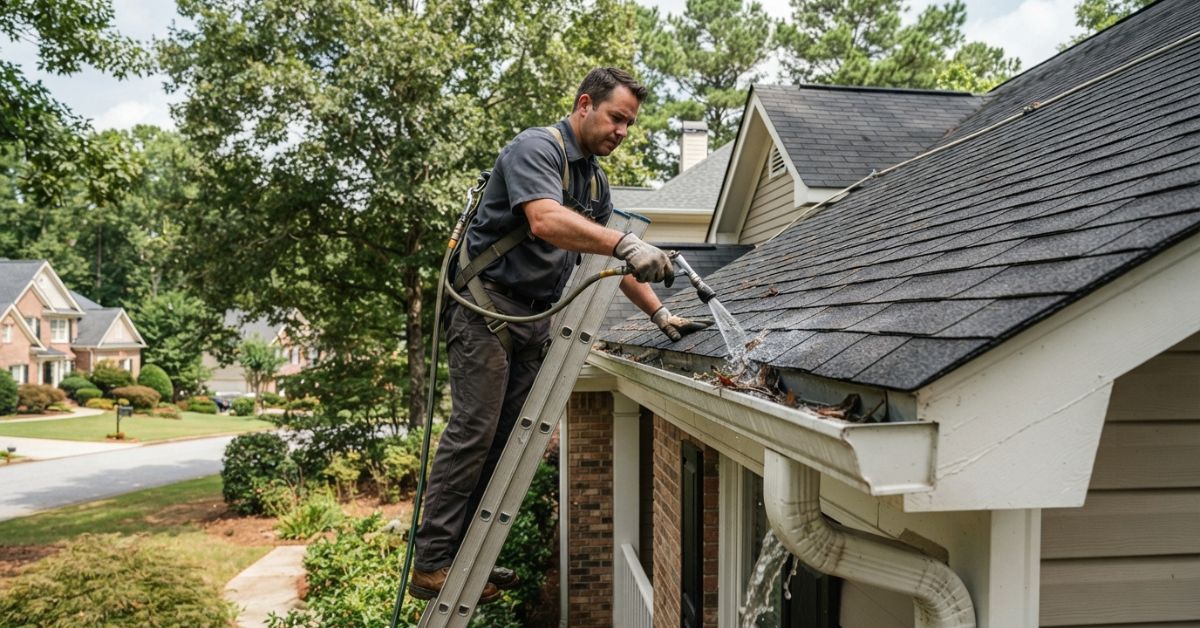
If you're comfortable on a ladder, run a garden hose into the far end and watch where the water goes. If it stops short or pools in one spot, that's your problem area.
Clearing Standing Water and Fixing the Cause
The fix depends on why the water is there, so we start by finding exactly where it's sitting. From the driveway, a debris dam and a sag can look exactly the same.
If it's debris, one good gutter cleaning in Buford breaks up the dam, opens the outlet, and gets the downspout moving water again. We dig out the packed stuff at the corners, outlets, and elbows, not just what's sitting on top.
If a section has sagged, cleaning alone won't hold it. Those hangers need to be reset or replaced, and if the fascia behind them is soft, the wood gets fixed first.
Plenty of Buford homes have both, since an old clog is often what pulled the section down in the first place. Our gutter cleaning service in Buford includes a look at the hangers, outlets, and low spots, so you'll know what the water was doing and what needs attention next.
Why Standing Water Is Worth Handling Early
It's easy to put off because nothing's leaking yet. Still, the weight on the hangers and the water in the fascia are already at work, and both are a lot easier to deal with early.
Whether it's a dam, a sag, or a blocked outlet, the first step is a simple inspection to see where the water is sitting and why. If your gutters are still holding water after the rain stops, have us take a look, and we'll walk you through what we find with no pressure and no upsell.
You might also like
Gutters 4 Less Blog