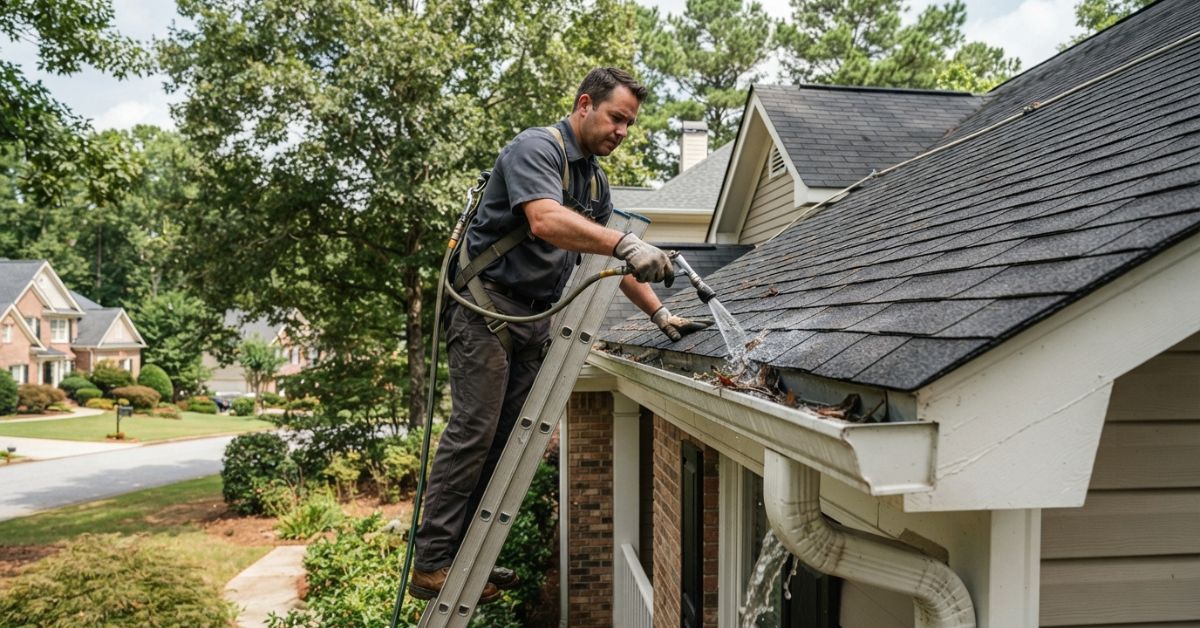



Long Rooflines on Cumming Homes: Why Fewer Seams Mean Fewer Leaks
We see a lot of long rooflines in Cumming. Wide ranch homes, two-story houses with one eave running end to end, that kind of thing.
That much roof dumps a lot of water into one gutter, and the water has a long trip to the downspout. So when a long run leaks, we usually go straight to the joints.
Each seam is held together by sealant, and sealant doesn't love heat, cold or sitting water. When we plan a long run at Gutters 4 Less, we think about how the metal will move, how the gutter slopes to each outlet, and where a downspout can actually go.
Why Long Gutter Runs Leak at the Joints
A joint is just two pieces of metal overlapping with sealant in the gap. The longer the eave, the more water rolls over that spot every time it
rains.
Think about what that sealant goes through. Water sits on it after storms, the sun bakes it all summer, and it gets pulled every time the gutter expands.
Eventually it cracks or lets go. Then water slips behind the gutter and into the fascia board, and a lot of people don't find out until the wood is soft.
Every gutter has joints at the corners and outlets. On a long roofline, the question is how many extra ones are hiding along the straight stretches.
Seamless Gutters on Long Roof Runs: Where Joints Belong
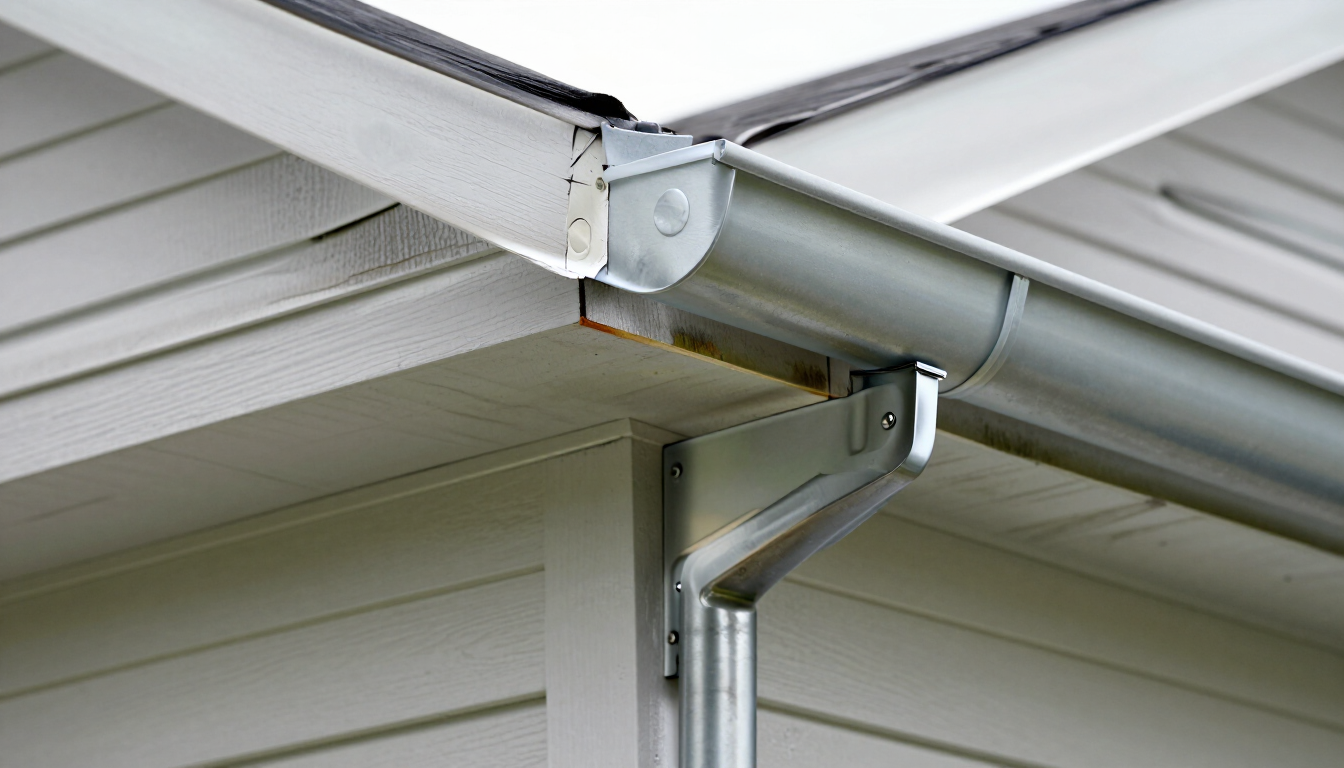
Corners and outlets need a joint, no way around it. Out on the straight stretch, though, every extra joint is one more spot for sealant to dry out.
There's a slope issue too. A long gutter has to fall toward the outlet the whole way, and at a joint one piece can end up sitting a bit lower than its neighbor, which leaves a little pocket of water.
Seamless gutters are formed on site to fit each run, so the straight stretch between corners and outlets doesn't need a joint at all. If you're still deciding between the two types, our guide to seamless vs sectional gutters lays out how they compare.
Expansion and Contraction on Long Gutter Runs
Aluminum gets longer when it's hot and shorter when it's cold. On a short piece over the porch you'd never notice.
On a gutter that runs the full side of the house, the gap between an August afternoon and a January morning is a lot bigger.
All that back and forth tugs on the joints and wears the sealant down faster. A long run needs a little room at the ends and hangers that let
it slide a bit without pulling out.
Some really long eaves get split into two sections that drain in opposite directions. Whether that makes sense depends on the length and on where you can put downspouts.
Outlet Count and Downspout Placement on Long Cumming Eaves
Most long eaves need more than one outlet. With a single outlet at one end, rain from the far end has to cross the whole gutter before it can drop.
During a hard Cumming storm, that far end can fill up and spill first. If you split the run at a high point in the middle and put an outlet at
each end, the water only travels half as far.
You also get a smaller total drop that way, so the gutter still looks straight on the fascia.
Then there's where the water ends up. On a sloped lot, each downspout should empty where water can run off away from the house, not
back toward the foundation.
What to Look For on a Long Roofline in Cumming
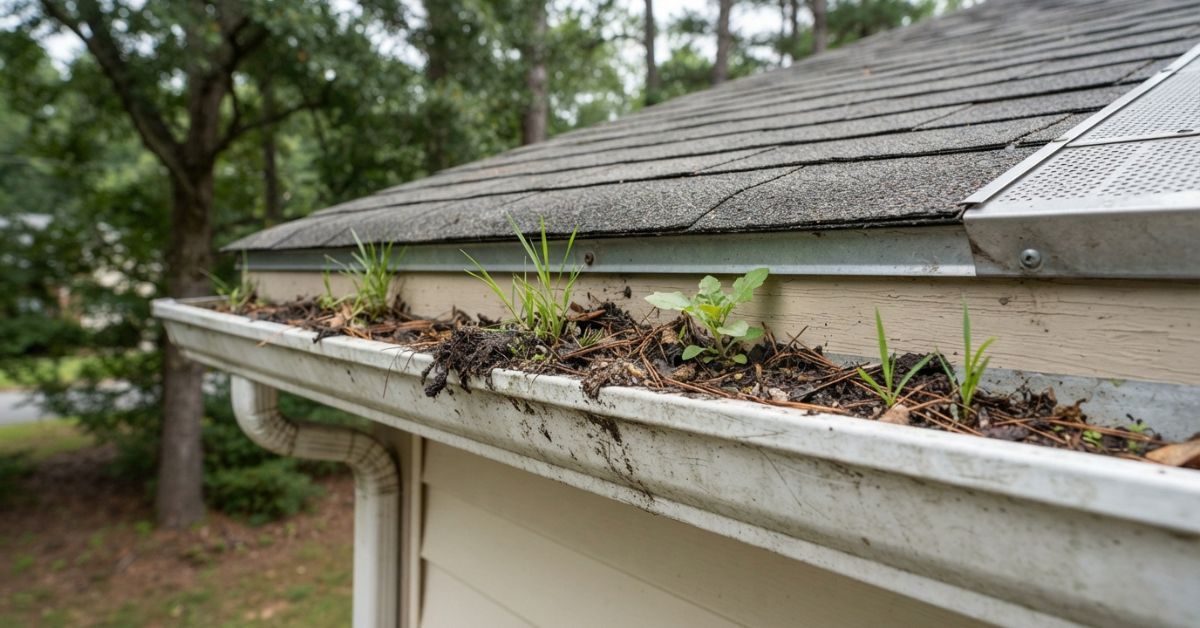
Check the joints on the straight stretches first. Drips under a seam when it's raining, dark streaks below a joint, or old sealant peeling at the
edges are early warning signs.
Some other clues that a long run is falling behind:
- Overflow at the end of the run farthest from the downspout.
- A low spot in the middle of the run that holds water after storms.
- Peeling paint or soft spots on the fascia behind a seam.
- A gutter line that looks wavy when you sight down it from a corner.
Newer homes show a lot of these too, especially where the original install used joined pieces. Our guide to builder-grade gutters on newer Cumming homes covers how to spot a basic install and when an upgrade is worth it.
Planning Gutters Around the Length of Your Home
A long roofline puts more water in the gutter and sends it farther. It also goes through bigger temperature swings than a short run does.
Fewer joints on the straight stretches, extra outlets where the roof sheds the most water, and some room for the metal to move all go a long way.
If you've got a long eave that drips at the seams or overflows at one end, our team for
gutter installation in Cumming can measure each run and walk you through the options for that roofline.
You might also like
Gutters 4 Less Blog