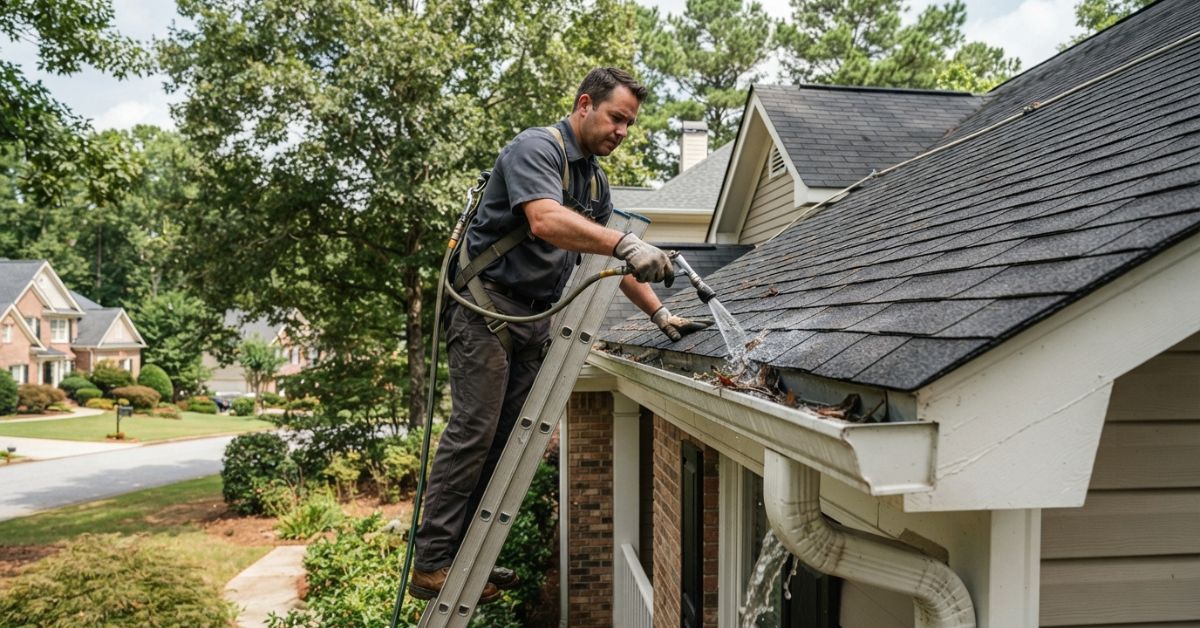



Shingle Granules in Your Gutters: What They Tell Cumming Homeowners About the Roof
Shingle granules in gutters on Cumming homes look like coarse, dark sand. On a lot of houses they show up every single time the gutters get cleaned.
A little is normal. A pile that keeps growing, though, can tell you something about the roof, and since clearing out shingle grit is part of the gutter cleaning plans Gutters 4 Less offers in Cumming, we see a lot of it.
What Shingle Granules in Gutters Are
Granules are the small mineral chips pressed into the top of asphalt shingles. They protect the asphalt from the sun, and they give the roof its color.
Rain knocks the loose ones down into the gutter. They're heavier than leaves, so they sink to the bottom and build up near the downspout outlets long after the leaves have dried and blown away.
When Granules in Your Gutters Are Normal
New roofs shed the most. Shingles come from the factory with extra loose granules, and the first few rains wash them off.
That usually slows down on its own. A light layer after a big storm is also pretty common on an older roof, and if the amount stays about
the same from cleaning to cleaning, we don't usually worry about it.
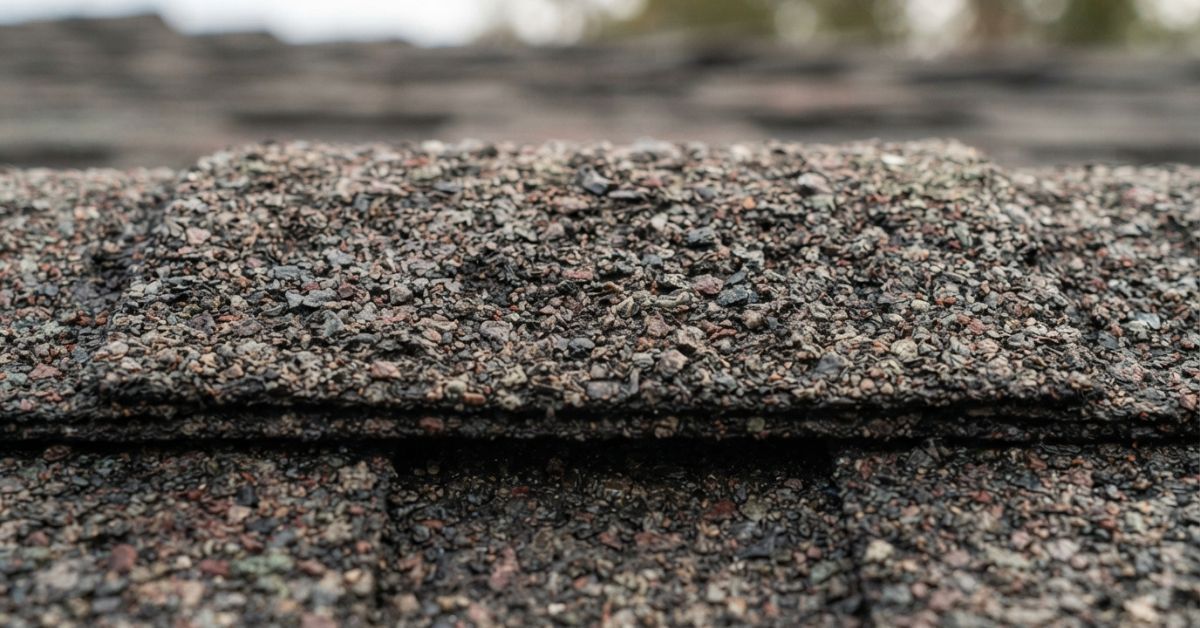
Shingle granules in gutters on Cumming homes look like coarse, dark sand. On a lot of houses they show up every single time the gutters get cleaned.
A little is normal. A pile that keeps growing, though, can tell you something about the roof, and since clearing out shingle grit is part of the gutter cleaning plans Gutters 4 Less offers in Cumming, we see a lot of it.
What Shingle Granules in Gutters Are
Granules are the small mineral chips pressed into the top of asphalt shingles. They protect the asphalt from the sun, and they give the roof its color.
Rain knocks the loose ones down into the gutter. They're heavier than leaves, so they sink to the bottom and build up near the downspout outlets long after the leaves have dried and blown away.
When Granules in Your Gutters Are Normal
New roofs shed the most. Shingles come from the factory with extra loose granules, and the first few rains wash them off.
That usually slows down on its own. A light layer after a big storm is also pretty common on an older roof, and if the amount stays about the same from cleaning to cleaning, we don't usually worry about it.
You might also like
Gutters 4 Less Blog