


Leaves Stuck in Roof Valleys Above Cumming Gutters: Why It Builds Up There
Our crews run into leaves stuck in roof valleys on Cumming homes every fall, usually once the oaks start dropping in earnest. A valley is the low seam where two roof slopes meet, and anything that slides off either side ends up sitting in it, which changes where the water lands in your gutters.
Most people notice it first at the inside corner of the gutter right below the valley, because that corner catches wet leaves and runoff at the same time.
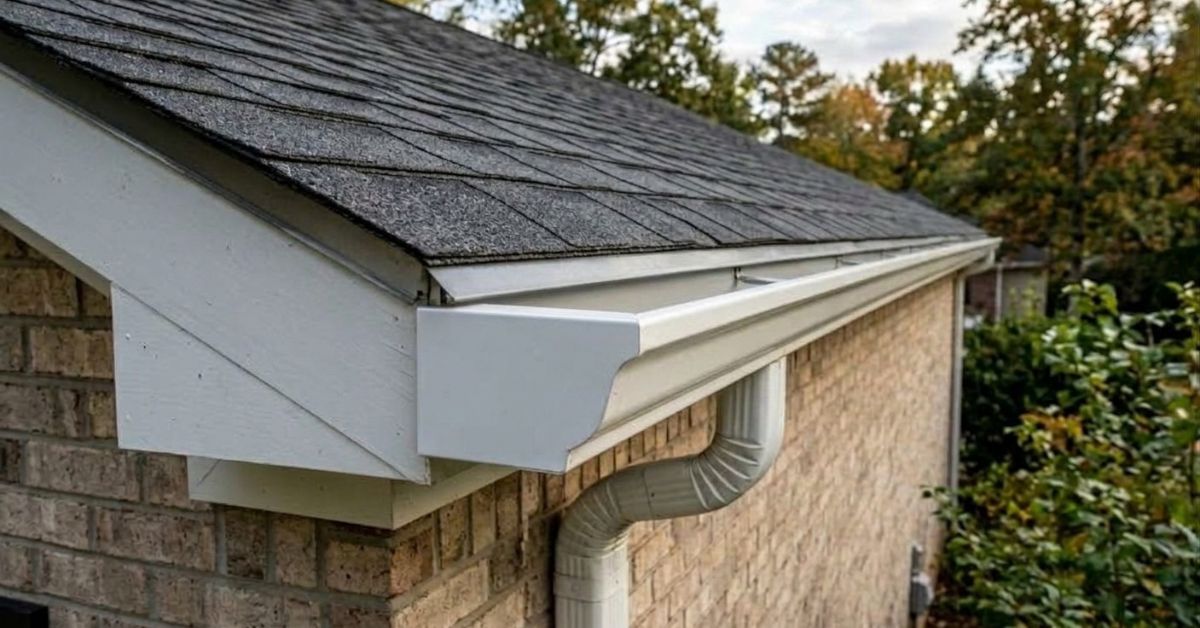
At Gutters 4 Less, our gutter cleaning service in Cumming clears the gutters, top elbows, and downspouts under those valleys, and we'll tell you if we see leaves piling up above them.
Why Leaves Build Up in Roof Valleys on Cumming Homes
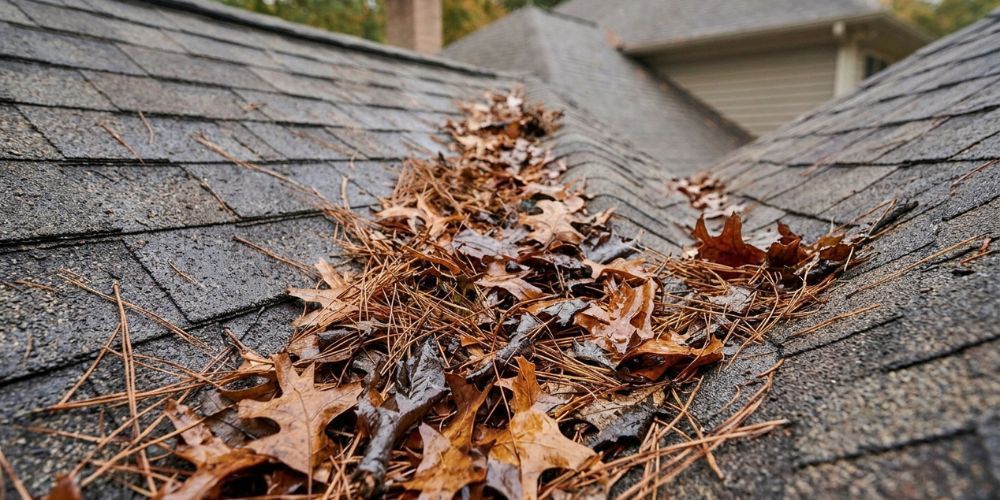
Leaves build up in roof valleys because the valley is the lowest path on that part of the roof. Two slopes empty into one shallow channel, so it catches a lot more than most people expect.
In our experience, it starts with pine needles. They lie flat, weave into each other, and give the oak leaves and small twigs that come next something to grab onto.
Dry leaves mostly blow off. Wet ones mat down against the shingles and can stay put through one storm after the next.
The most packed valleys we see are usually the shady ones under a big hardwood. They never really dry out between rains, so the pile keeps growing all season.
Plenty of Cumming yards fit that description, with tall pines and hardwoods growing close to the house. Add a few gables or dormers and the roof simply has more valleys to fill.
What Roof Valley Leaves Do to the Gutters Below
Even a clean valley carries more water than the roof slopes beside it, since two roof sections drain down one line. Drop a pile of leaves into that line, and the water either backs up behind the pile or gets squeezed past it in a tighter, faster stream.
Either way, the water hits the inside corner of the gutter in one big rush. In a heavy Georgia downpour, it can jump clean over the front lip while the straight runs on each side are doing fine.
The leaves make their way down too, just more slowly. Every storm rinses a little more out of the valley and into that corner, so it's normally the first part of the gutter to clog and overflow.
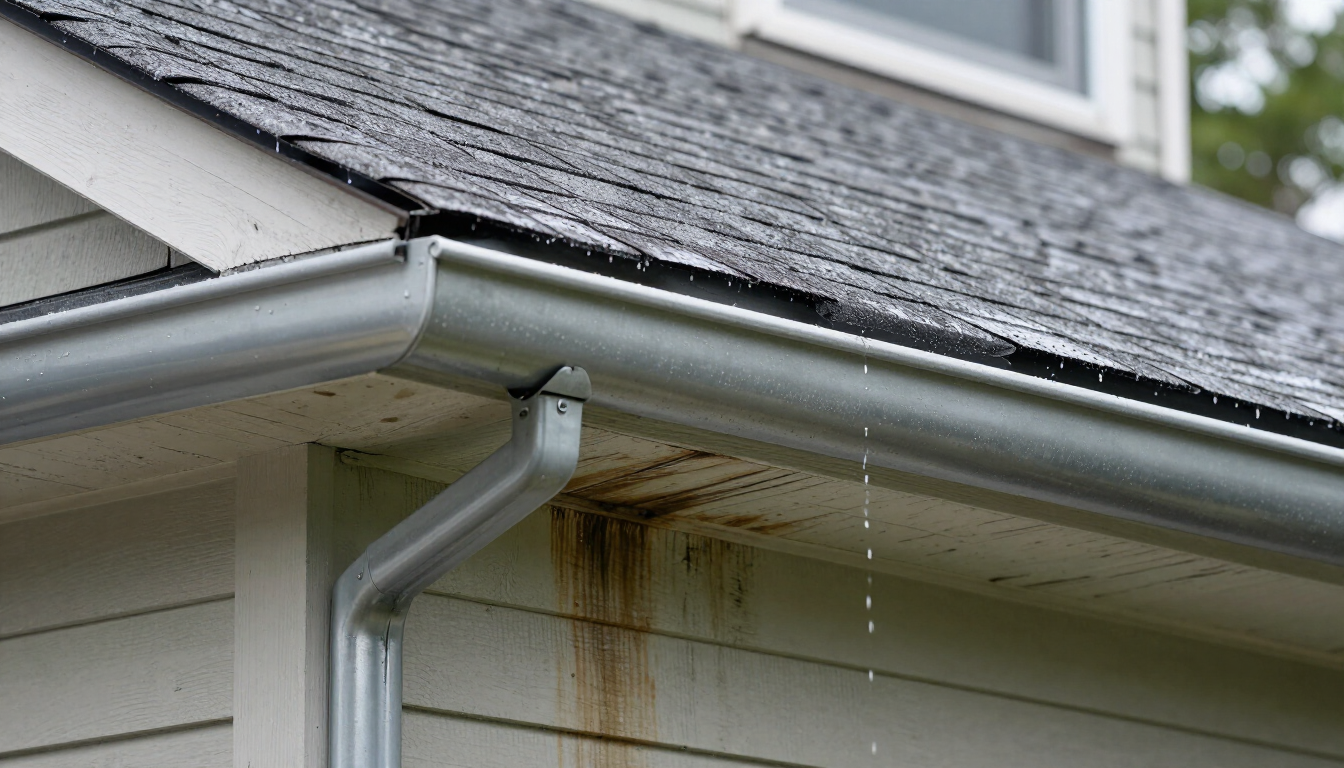
When a corner overflows in the same spot over and over, the board behind the gutter rarely gets a chance to dry out. That's how a lot of fascia rot from a clogged gutter gets started, and the weight of soggy leaves at one corner can pull on the hangers there too.
Signs of Roof Valley Debris Above Your Cumming Gutters
You can spot most of this from the ground. Next time it rains steadily, walk out to the yard (or wait till it lets up) and look at the corners under each valley.
- Water sheeting over an inside corner even though the straight runs are keeping up
- A dark clump sitting in the valley, which you can often see from the driveway
- Leaves and needles sticking up above the gutter at the corner
- Mulch washed out of the bed below one corner, sometimes with a little trench cut into the soil
- Stains on the fascia or siding right below a valley
- A nearby downspout that only trickles, even in a heavy rain
We often find shingle grit in valley debris, since the same water carries both down. If you're seeing plenty of grit mixed in with the leaves, our guide to
shingle granules in your gutters covers what that grit can say about the roof.
How Gutter Cleaning Handles Roof Valley Leaves in Cumming
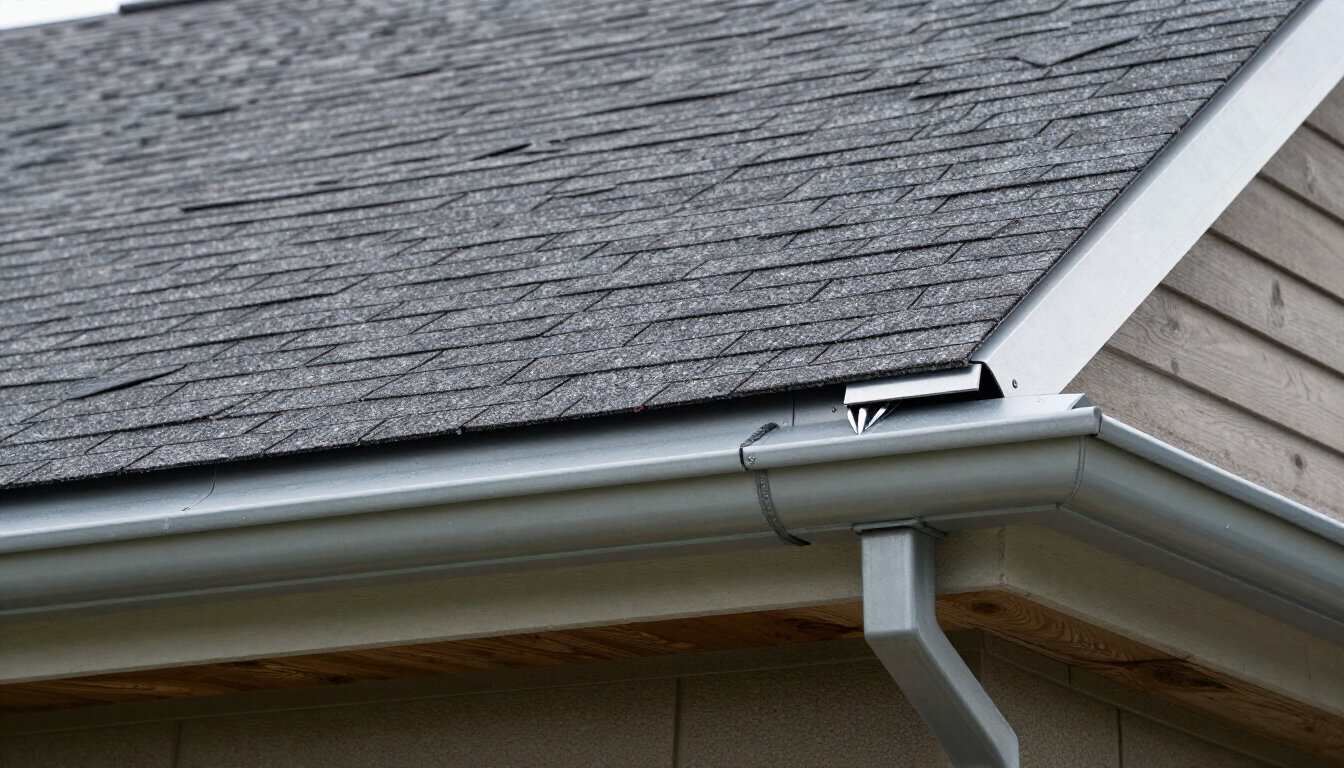
A full valley does most of its damage down at the gutter line. On a Gutters 4 Less cleaning visit in Cumming we clean the gutters, top elbows, and downspouts, and the corners under valleys get extra attention because that's where the packed leaves end up.
We don't leave a corner until water can run from it to the downspout without backing up. If the weight has made a corner sag or worked a bracket loose, we'll point it out so it can be resecured or repaired.
We'll also glance up at the valley. If leaves are stacking up in it, you'll hear about it from us before we leave.
Why bother mentioning it at all? Because a freshly cleaned corner can fill right back up when the valley above is still holding a big mat of leaves.
How often those gutters need attention depends on your trees and how many valleys your roof has, so we won't give every Cumming homeowner the same schedule. If the same corner spills every fall, more frequent checks may be worth considering.
When Gutter Guards Help Below Roof Valleys
Gutter guards can help at a valley corner, mostly by keeping the leaves that wash down from settling inside the gutter. Gutters 4 Less installs them, and the right type depends on what falls on your roof and how much water that corner has to handle.
They won't keep leaves out of the valley, though. A guard means less gutter cleaning, not zero, and a busy corner under a valley still deserves a look now and then.
Already have guards and the corner still spills? Leaves may be sitting on top of the guard instead of in the gutter, and that's worth checking before you change anything else.
Sometimes it's the gutter. If a corner overflows even right after a cleaning, the gutter or downspout may simply be too small for what that
valley sends down, and then we're talking about a repair or an upgrade.
What to Do About Leaves Stuck in Roof Valleys
Leaves get stuck in roof valleys because two slopes drain into one shallow channel, and wet pine needles and oak leaves mat down there instead of blowing off. You'll usually notice it first at the gutter corner below, where those leaves and a rush of water land together and spill over.
If that corner keeps spilling, a cleaning that clears the gutter, top elbow, and downspout under the valley is the place to start. We're happy to look at the gutters under your valleys and talk through whether cleaning, guards, or a repair makes the most sense, and you can reach our Cumming team at (678) 883-7649.
You might also like
Gutters 4 Less Blog