


The Best Gutter Company in Atlanta for Older Homes: Common Retrofit Issues
In our experience working on older homes across Atlanta, gutter problems often aren’t caused by storms alone. They’re frequently tied to how the home was originally built.
Older rooflines, fascia boards, drainage layouts, and previous “patch” repairs can create retrofit challenges that don’t show up on newer properties.
That’s why homeowners searching for the best gutter company in Atlanta for older homes are usually looking for one thing: a team that understands how to work with existing structures without creating new issues.
This guide covers common retrofit problems we typically see on older Atlanta homes and what to look for in a gutter service provider when upgrades, repairs, or replacements are needed.
Retrofit Issue #1: Fascia and Wood Rot Behind Existing Gutters
The most frequent problem we have seen on older homes in Atlanta is hidden damage behind the fascia.
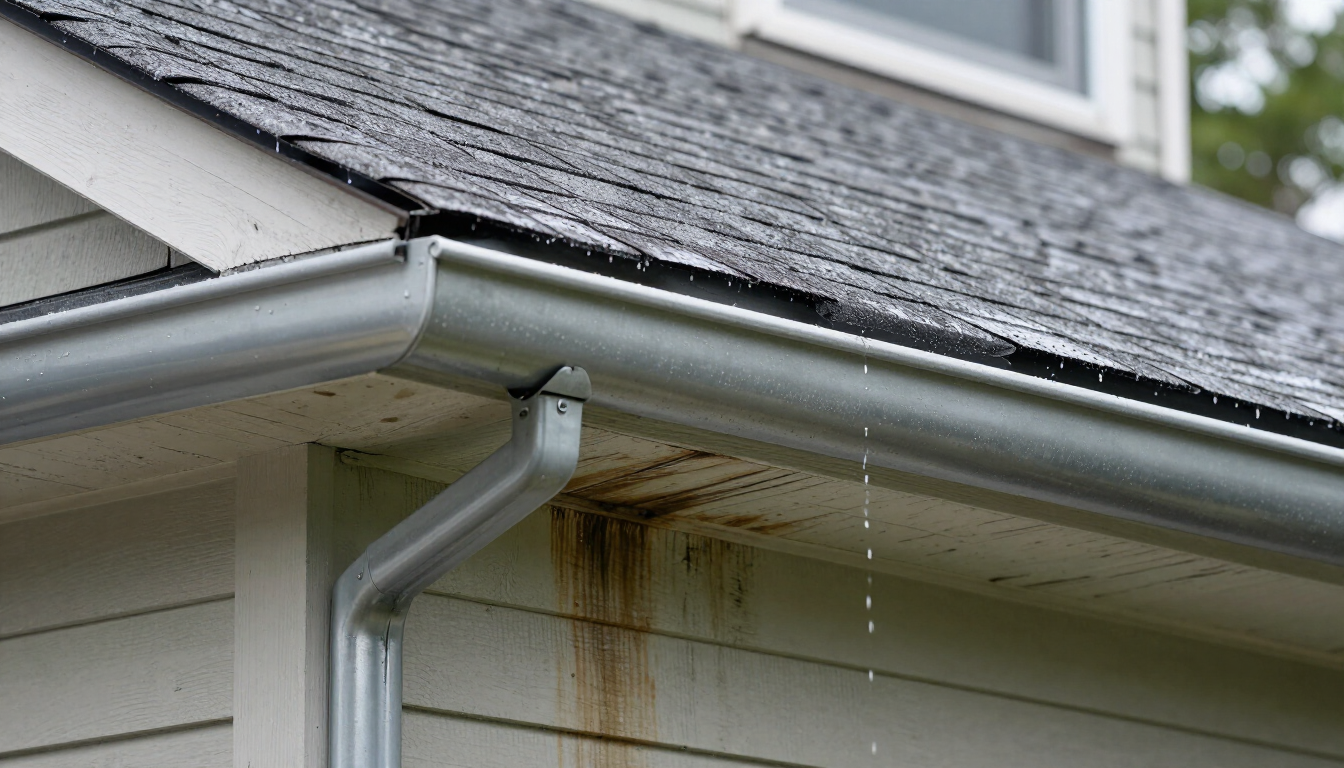
Older gutters may have been subjected to frequent overflow or pulled away from the roofline, allowing water to drain behind the gutters. If this has happened, reinstalling the gutters may cause them to sag, separate, or leak again.
Prior to putting in or re-installing gutter systems, we often check the points of attachment as well as the state of the fascia board. This, in turn, ensures a long lifespan while preventing water from backing up behind the gutter system.
Retrofit Issue #2: Outdated Gutter Sizing and Capacity
In many older homes in Atlanta, the gutter and downspout systems are undersized according to current design standards. They may be overwhelmed by expansions or additions to the roof, or by changes in rainfall patterns.
This is evident during storms, when the gutters overflow despite the systems being clean and free of obstructions.
Oftentimes, when retrofitting existing residential properties, assessments are made to determine whether the existing sizes of gutters and downspouts are adequate to support the current load they carry. Increasing capacity can greatly become more efficient.
Retrofit Issue #3: Improper Slope and Alignment From Past Repairs
On many houses we’ve worked on previously, we notice several gutter installations that have been fine-tuned a number of times without tackling the overall slope.
Over time, small alterations to the gutters during past repairs may cause uneven gutter performance, with water remaining in the gutter rather than flowing to the downspouts.
Generally speaking, when performing a retrofit, we look to adjust the whole run rather than just correcting individual low spots, so when we correct the slope, water flows efficiently, making an upgraded gutter system last longer.
Retrofit Issue #4: Downspout Placement That No Longer Works
In older homes, the downspout placement may have been suitable decades ago, but due to the changes that have occurred, it is not as effective today. This is because the addition of new landscape designs, walkways, or changes to the foundation can cause the downspout
to discharge water too close to the house.
After heavy rains, water accumulates near the house, causing erosion. When retrofitting the gutter system, it is crucial to consider whether changes are needed in where downspouts are discharging, as improving their position can offer improved protection of the foundation without necessarily modifying the gutter system.
Retrofit Issue #5: Mixed Materials and Compatibility Problems
Older homes often have gutter systems made from mixed materials due to past repairs or partial replacements. Combining different metals or outdated components invites corrosion, poor sealing, and uneven wear over time.
These may not be evident until heavy rainfall reveals leaks or joint failures.
Commonly during retrofits, we search for any compatibility issues between already existing materials and new components. Employing consistent and compatible materials in a system enhances its durability and minimizes the chances of future failure due to mismatched parts.
How Retrofit Issues Connect To Professional Gutter Service in Atlanta
Retrofitting gutters on older homes often requires a proper overview of the entire drainage system. Issues like fascia damage, outdated sizing, improper slope, and downspout placement are rarely isolated problems.
They usually reflect how the gutter system has aged alongside the home.
Addressing these challenges effectively is part of providing complete gutter service in Atlanta, where installation, repair, and long-term performance are closely connected. Retrofit concerns can also become more noticeable after severe weather. Storms tend to expose weaknesses in older gutter systems that may have gone unnoticed for years.
This is why many homeowners begin evaluating retrofit needs after reviewing how storm damage affects gutter systems across Atlanta homes, especially when deciding whether repairs or upgrades are necessary.
You might also like
Gutters 4 Less Blog