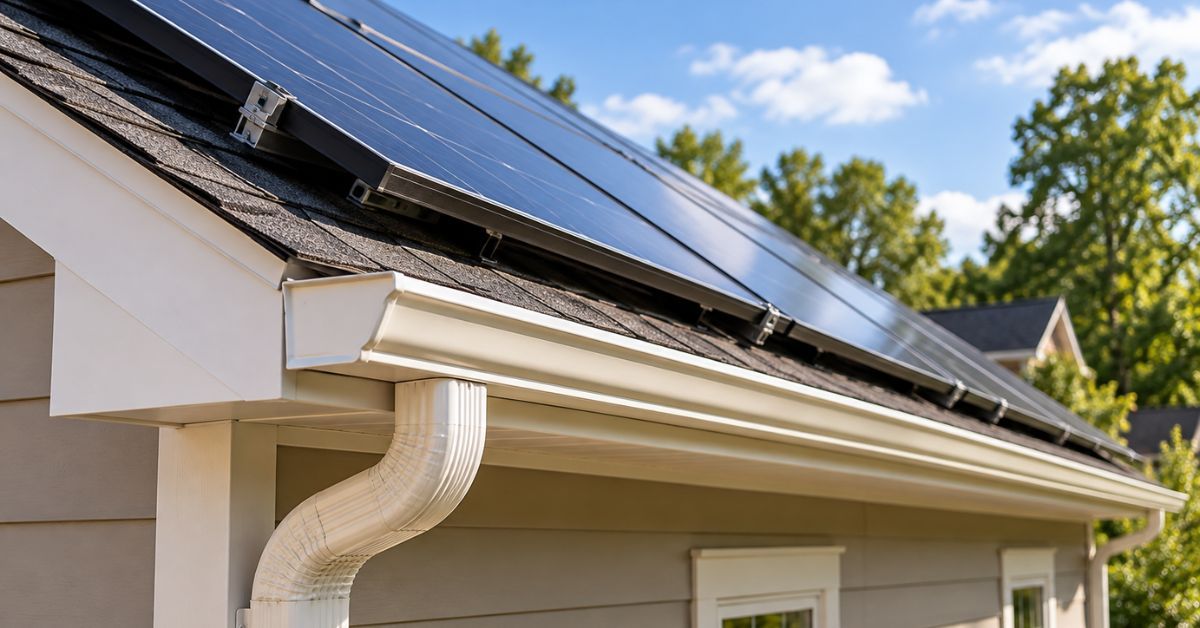



Gutter Guard Types Compared: Micro-Mesh, Screen, Foam, and Reverse-Curve Options for Atlanta Homes
Most Atlanta homeowners start thinking about gutter guards after spending a weekend pulling wet leaves out of a clogged system.
Between the region's tree canopy and its heavy summer storms, gutters here fill up faster than many people expect.
Gutter guards can reduce how often that happens, but the four main types work in different ways. This guide compares micro-mesh, screen, foam, and reverse-curve guards so you can see which one fits your home, your roofline, and the kind of debris you deal with most.
How Gutter Guards Work on Atlanta Homes
A gutter guard is a cover that sits over the gutter channel and lets water in while keeping most debris out. The goal is to keep the channel clear so rainwater can move to the downspouts without spilling over the sides.
In the Atlanta area, that debris is usually a mix of pine needles, oak leaves, shingle grit, and springtime pollen. Each guard type handles those materials differently, which is why the right choice depends on what falls on your roof. Roof pitch, gutter size, and tree coverage all play a part in how well a guard performs.
Micro-Mesh Gutter Guards
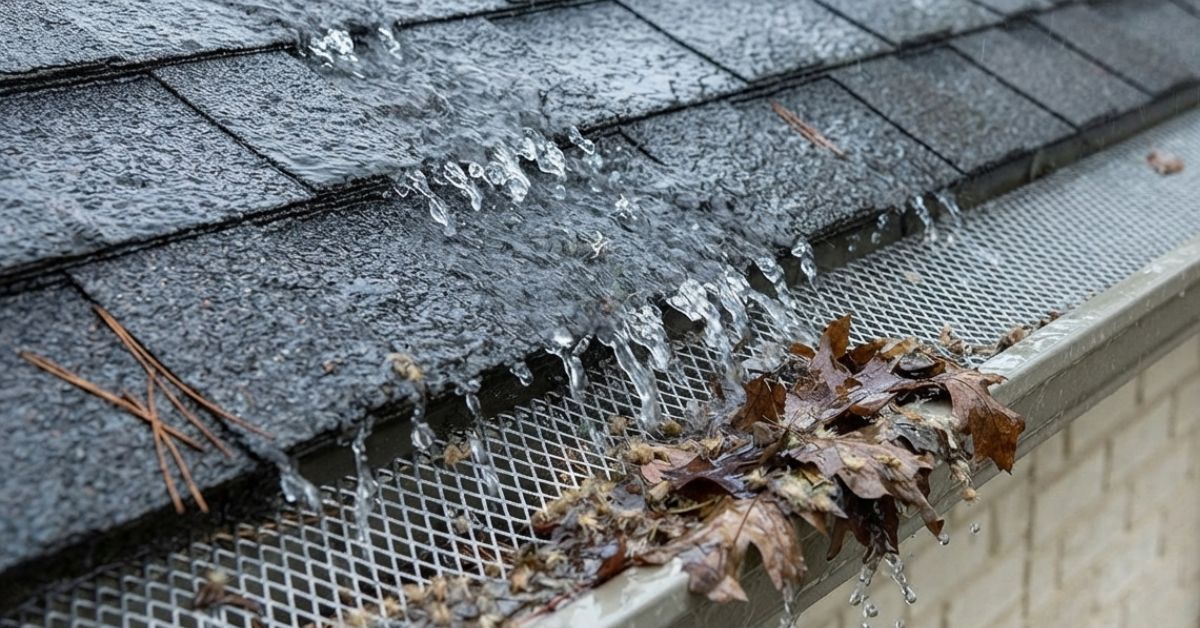
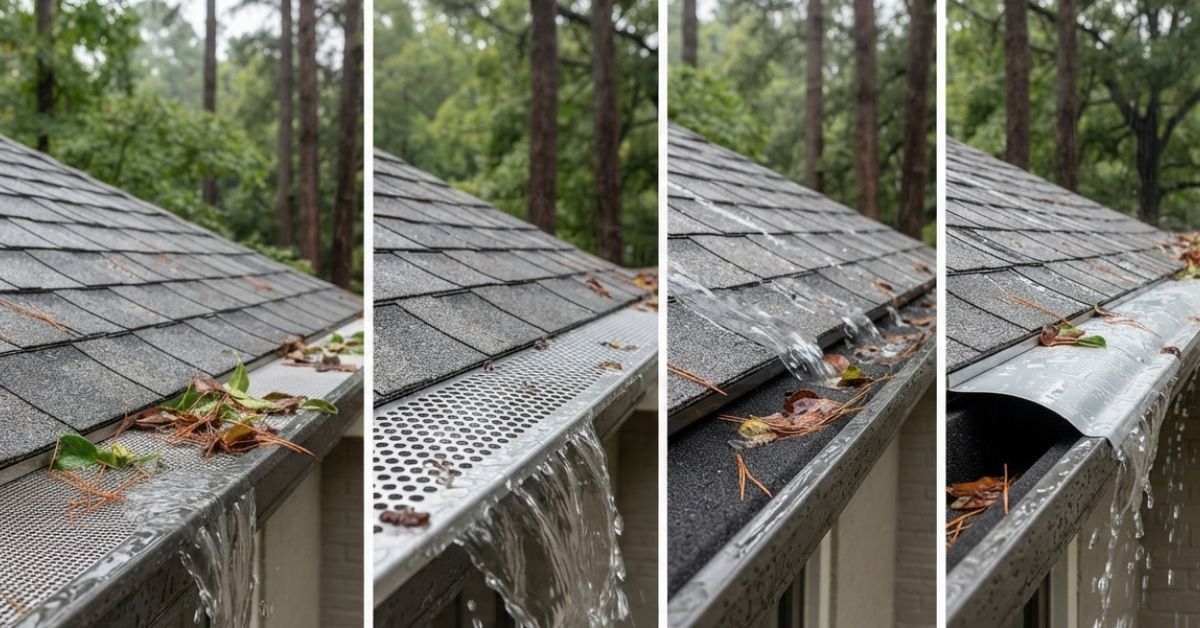
Micro-mesh guards use a fine metal or stainless screen stretched over a support frame. The openings are small enough to block pine needles and shingle grit while still letting water pass through.
For many Atlanta homes surrounded by pines, this is the type that keeps the smallest debris out. Micro-mesh tends to cost more than other options, and it performs best when it is installed with proper pitch so water does not pool on the surface. It is a common recommendation for homes with heavy fine-debris loads.
Screen Gutter Guards
Screen guards use a wider mesh or perforated panel, usually aluminum or plastic, that snaps or slides into place over the gutter. They block larger leaves and twigs while remaining one of the more affordable options.
The tradeoff is that smaller debris like pine needles and seed pods can still work through the larger openings. For a home shaded mostly by hardwoods rather than pines, a quality screen guard can handle the majority of what falls. Homes with a heavy pine presence may find they still need periodic cleaning.
Foam Gutter Guards
Foam guards are wedge-shaped inserts that sit inside the gutter channel. Water passes through the foam while leaves and larger debris stay on top.
They are inexpensive and can be installed without special tools, which makes them appealing for a quick fix. Over time, foam can hold moisture and collect fine debris and pollen within the material, so it often needs replacement sooner than metal options. For Atlanta's pollen-heavy spring, that is worth keeping in mind.
Reverse-Curve Gutter Guards
Reverse-curve guards, sometimes called surface-tension guards, use a curved solid cover. Water clings to the curve and follows it into the gutter while leaves slide off the edge.
These guards move large leaves off the roof well and can handle high water volume during heavy storms. Because they rely on a solid surface, fine debris and pollen can sometimes ride the water into the channel, and the visible edge is more noticeable from the ground. Installation matched to your roof pitch is important for them to work as intended.
Which Gutter Guard Type Works Best for Atlanta Homes
The best guard depends on the trees around your home and the way your roof sheds water. Homes surrounded by pines usually benefit from micro-mesh because it blocks the finest needles, while homes shaded by oaks and other hardwoods can often do well with a solid screen guard.
Foam is a budget option that works in the short term but tends to need earlier replacement in a pollen-heavy climate. Reverse-curve guards handle large-leaf loads and heavy rain well when they are installed with the correct pitch. No guard is fully maintenance-free, so the real question is which one reduces cleaning the most for your specific home. A quick inspection from us can match the guard to your roofline and debris type, and you can read more on our gutter guards in Atlanta page.
Do Gutter Guards Still Need Maintenance?
Even quality gutter guards need occasional attention. Guards reduce how often gutters clog, but they do not remove maintenance entirely.
Micro-mesh surfaces can collect a film of pollen, screens can hold twigs, and reverse-curve covers can let fine grit through during heavy storms. A yearly check keeps the system moving water the way it should, and it gives us a chance to spot loose hangers or pitch issues before they lead to overflow.
What Gutter Guards Cost in Atlanta
Gutter guard pricing depends on the material, the length of the run, the height of the home, and the condition of the existing gutters. Foam and basic screen products sit at the lower end, while micro-mesh and reverse-curve systems fall at the higher end because of the materials and the installation involved.
It also helps to have the gutters cleaned and checked before guards go on, since covering a clogged system only hides the problem.
Many homeowners find that fewer cleanings and less overflow make guards worthwhile over the life of the system. If regular cleaning is the current approach, our gutter cleaning in Atlanta service is another way to keep the system clear while you decide.
Choosing a gutter guard comes down to matching the type to your home's trees, roof pitch, and rainfall. Micro-mesh, screen, foam, and reverse-curve guards each have a place, and the right one depends on the debris you deal with most. If you are not sure which option fits your home, Gutters 4 Less can inspect your gutters and walk through the choices with no pressure and no upsell. Contact us to schedule a free estimate for gutter guard installation in the Atlanta area.
You might also like
Gutters 4 Less Blog