


Gutter Guard and Leaf Filter Installation in Atlanta
Atlanta's trees are one of the best parts of living here, and one of the harder parts of owning gutters. Oaks, pines, and maples drop something most of the year, and their schedules overlap.
Throw in long pollen seasons and warm, humid days, and the debris in your gutters breaks down slowly and packs in tight. If you've ever cleaned your gutters in spring, again in fall, and once more after a storm, that's why.
Sooner or later, most Atlanta homeowners ask whether gutter guards are worth it. Truthfully, it depends on your lot, and we'll walk through how to figure that out.
What Gutter Guards Actually Change in a Leaf-Heavy City
Guards won't end cleaning altogether. What they change is how often debris gets into the gutter, and how much of it ends up in the downspout.
That second part matters more than most people think. Clogged downspouts are a big reason gutters fail in Atlanta, because a blocked outlet turns the whole run into a holding tank in a summer storm.
With guards, the outlet stays clearer, so water goes down the downspout instead of over the front edge. On lots with tall trees close to the roof, that's the biggest practical difference they make.
How much you gain depends on your trees. Under heavy canopy, you'll notice it right away, but on a newer lot with young landscaping, the difference is a lot smaller.
How to Tell Whether Guards Will Pay Off on Your Home
It really comes down to how often your gutters clog now, and what those clogs have already cost you.
If you're cleaning them several times a year, or paying someone to, the math is pretty simple. Guards mean fewer cleanings, and those savings add up over the years the guards are in place.
If overflow has already damaged your fascia boards, that changes the picture even more. Fixing fascia is carpentry, not gutter work, and it's a bigger project than adding guards would have been.
There's also the prevention side. Storm overflow puts water against the foundation and up near the roofline, and moisture problems in either spot are expensive to fix after the fact.
In areas with fewer trees or in newer neighborhoods, guards take longer to pay off. They still make sense if you'd rather stay off the ladder, but it's worth comparing our
maintenance plan options against the cost of guards before you decide.
What Affects the Cost of Installation
The size of the house, how high the roof is, how many downspouts you have, and which guard system you pick all move the price.
The gutter material plays a part, too. Seamless aluminum, steel, and copper are the usual choices, and copper is at the high end.
How complicated the roof is matters as much as its size. A simple gable goes quickly, while multiple valleys, dormers, and steep pitches take longer and cost more.
What changes a quote most often is the fascia. If the board behind the gutter needs fixing, that has to happen first, since guards on soft wood don't solve anything and just add weight to hangers that are already struggling.
We'd rather price the fascia work up front than find it halfway through the job.
When to Schedule Gutter Guard Installation
Atlanta has its own seasonal rhythm. A lot of homeowners schedule in late winter or early spring, before storm season, while others go for late summer or early fall, ahead of leaf drop.
There's no one best month. Installation just goes smoother when the gutters are already clear and the weather's steady, and getting it done before peak leaf season keeps clogs from forming right after the work.
That said, if your gutters are already sagging or leaking, there's no reason to hold out for the perfect window. A failing system does more damage every time it rains.
Maintenance After Guards Go On
No guard system is completely maintenance-free. You still need to check on things, just in a different way.
With guards, a quick look is usually enough. Make sure water's flowing freely through the downspouts, no panels have lifted or shifted after a storm, and debris isn't sitting on top of the screens instead of washing off.
Without guards, you're back to digging out the gutters by hand, and how often depends on what's over your roof.
We'd rather look at your property than give you a number in advance. A house under four mature oaks is a whole different story from one on a cleared lot, and setting a schedule before seeing either one is just guessing.
If guards were put in badly, or they're the wrong style for the debris you get, they can actually make access harder. Our guide on removing gutter guards covers that situation.
Choosing a Gutter Guard Installer in Atlanta
How well the guards are installed matters as much as the guards themselves. A good installer checks the fascia, confirms the slope, and fits the guards tight enough that debris can't get in at the seams.
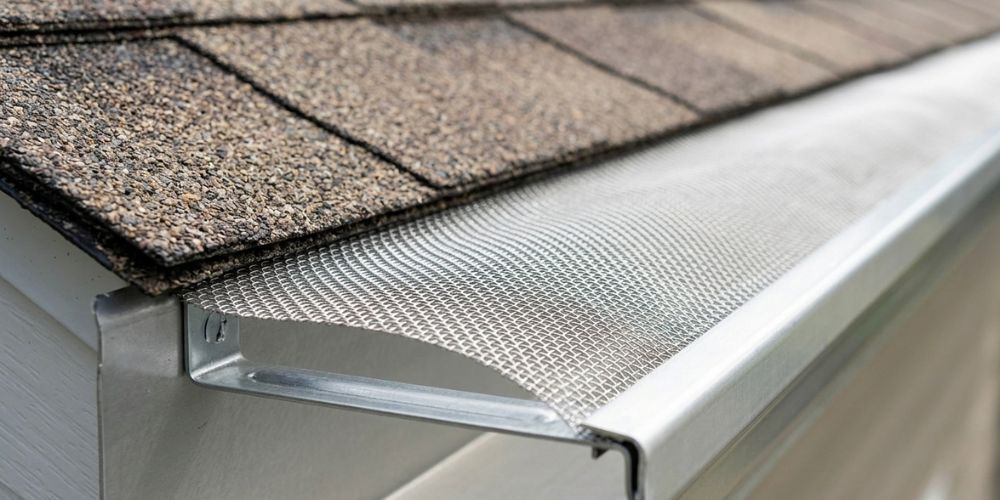
They should also explain the differences between mesh, screen, and micro-mesh, instead of pushing one product as the answer for every house. Different trees call for different mesh sizes, and pine needles especially can beat guards that handle oak leaves just fine.
Look for someone who explains your options clearly, gives you a straight read on how your gutters are holding up, and hands you a simple estimate without pushing you to sign on the spot. Our guide to gutter guard types covers the differences so you can go into that conversation knowing what to ask.
With all the different rooflines and trees around Atlanta, the right guard really does change from house to house.
Are Gutter Guards Worth It in Atlanta?
If your home sits under mature trees, guards usually pay for themselves through less cleaning and fewer overflows. On a lighter lot, they take longer to pay off, and a maintenance plan may be worth weighing instead.
Either way, the fascia underneath decides whether the work will hold. If your gutters are getting old, clogging over and over, or showing stress at the hangers, start there.
Our
Atlanta gutter contractors will look at what's actually over your roof and tell you which group your home falls into.
You might also like
Gutters 4 Less Blog