


Gutter Repair in Atlanta, GA: What Should You Check Before Calling a Pro
Most Atlanta homeowners who call us have already noticed something going on with their gutters. A drip during the last storm, a stain creeping down the fascia, a section of gutter that just looks off. The tricky part is knowing whether it’s a ten-minute fix or the start of a bigger problem.
This is a simple walk-through to help you check your gutters before picking up the phone. About ten minutes and a pair of shoes you don’t mind getting wet. No ladder for most of it.
Gutter Repair Starts With a Walk Around the Perimeter
Honestly, this is where most of the useful information comes from. Stand back about fifteen feet from one corner of the house and look up.
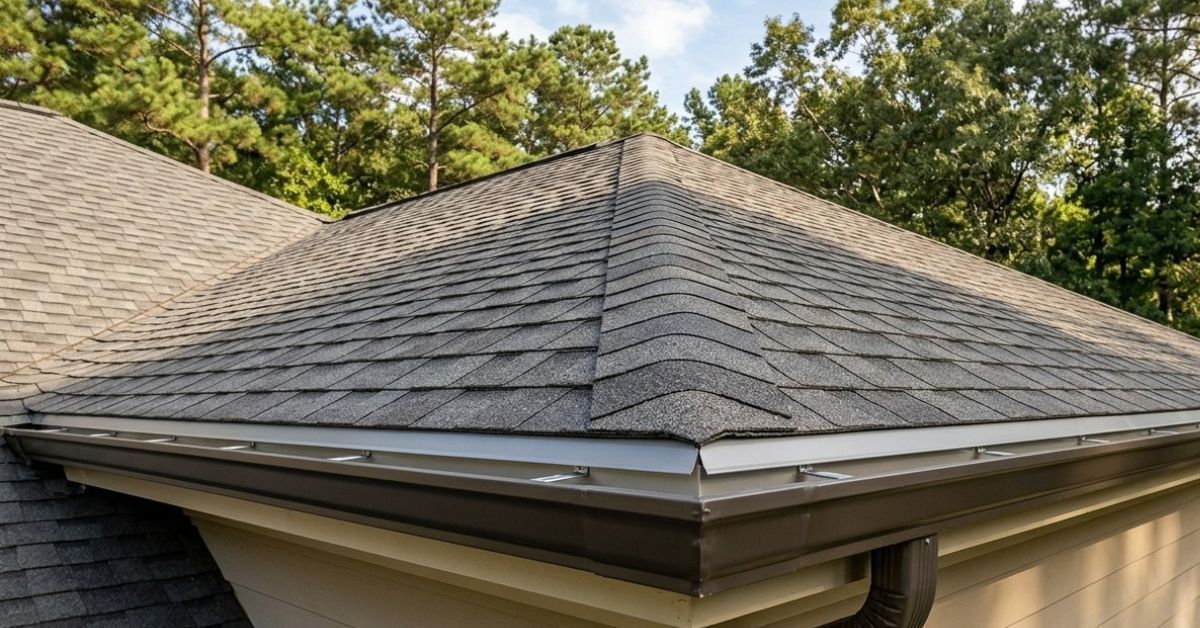
What you’re looking for is anything that breaks the line of the gutter. A sag in one spot. A spike that’s pulled out a quarter inch and is now a gap you can see sunlight through.
A dark streak running down the siding under a seam. Anything that’s drooping or coming loose from the edge of the roof.
A clean, straight run with no staining usually means whatever you’re dealing with is small. Sags and streaks and pulled fasteners tell a
different story.
The system is carrying weight it shouldn’t, which usually clogs, sometimes rots, sometimes both.
Walk the full perimeter. Bungalows in Inman Park and Grant Park often have different gutter systems on the back of the house than the
front, so the side that drove past you when you pulled in isn’t always the side that’s failing.
Check the Fascia and the Roof Edge
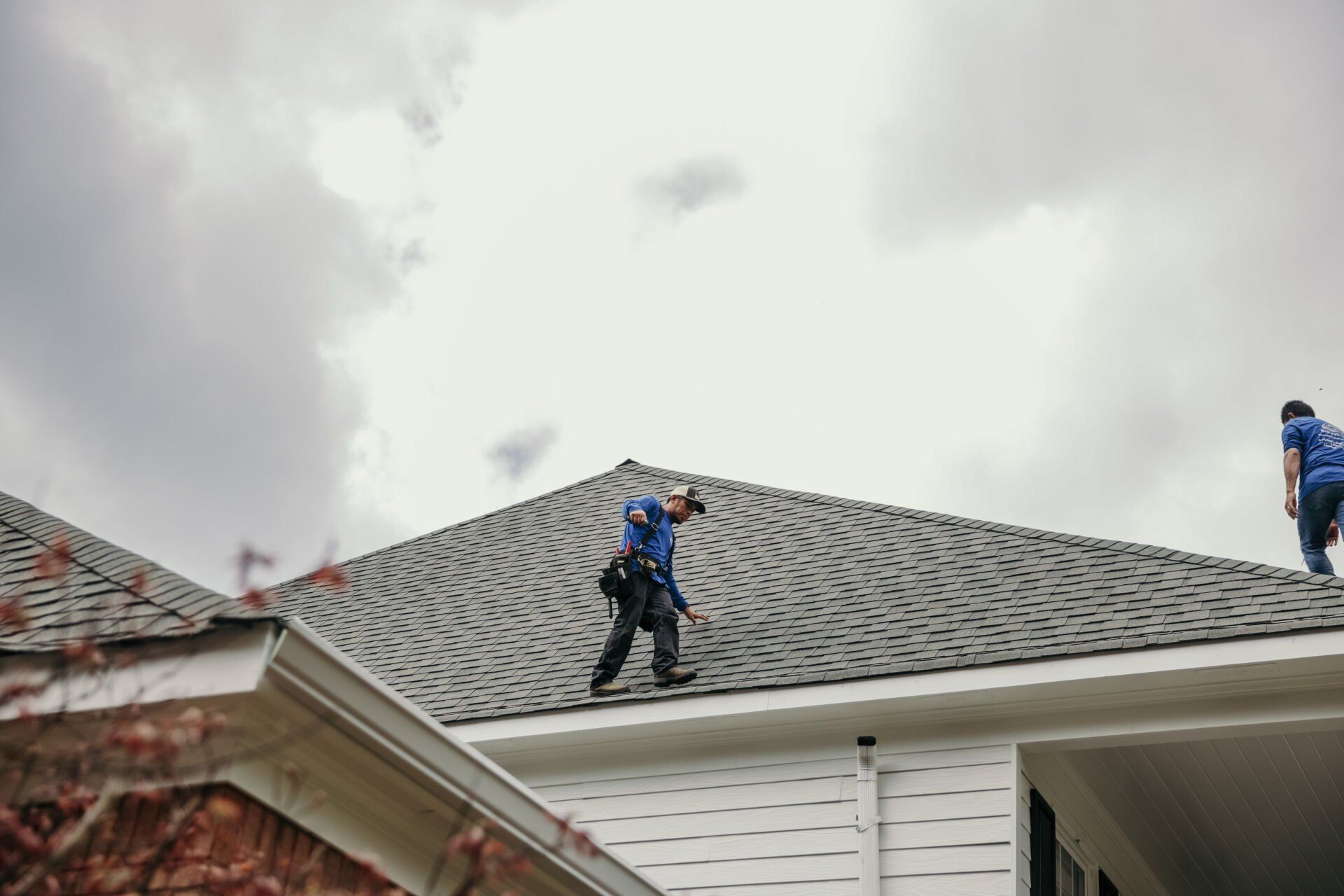
The fascia is the woodboard the gutter hangs from. It’s usually the first thing to fail when gutters back up, and the damage creeps in slowly enough that most people don’t notice until the paint starts bubbling.
Inspect for irregularities in the gutter system along the fascia on each wall. Dark staining behind the gutter line means water has been slipping behind it. Peeling paint means that it’s been going on for a while.
If you can safely reach up, press your thumb into the board, and it gives, the wood’s gone soft — that’s rot, and it changes the scope of the repair. Depending on the existing gutter size, that may affect the overall repair cost as well.
If you can see daylight behind the gutter, water’s already getting behind it. That’s still a repair job, not a replacement, but it’s not one to sit on through another storm season.
When Access is Available, Look From Inside the Gutter
Atlanta’s trees do a number on gutter systems. The oaks in Candler Park, Druid Hills, and Lake Claire drop more debris than most people realize, and pine needles stitch into seams in a way that’s almost engineered to hold water.
When you look into the gutter itself, you want clean walls no higher than half-stained. You want the seams to look sealed, not crusty or pulled apart. And you want a slope, just a slight one, about a quarter inch every ten feet, running toward the downspout.
The single most useful thing to check is whether water is still standing there a day after the rain stopped. Standing water means the slope is off, the downspout is clogged, or both. If you’re not comfortable on a ladder, skip this part entirely. It’s exactly what we look at on a free walkthrough.
Don’t Skip the Downspouts
The downspouts do half the work and take most of the blame. The easiest way to test one is to pour a bucket of water in at the top and watch what comes out at the bottom.
Fast and clear is what you want. Trickling, gurgling, or backing up means something is wedged in the vertical run, usually right where the elbow turns. A gutter can be perfectly clean and still flood the foundation if the downspout isn’t moving water away from the house.
Extensions matter too. If the downspout is dumping water two feet from the foundation, you’re creating a problem you’ll see later as basement moisture or erosion around the footer.
When It’s Probably Safe to Wait, and When It Isn’t
Here’s the honest answer. Most of what we get called about is small and doesn’t need same-week attention.
If you’ve got one leaky seam and your gutters are otherwise under ten years old and straight, that repair can reasonably sit on the schedule. A small drip after a cleaning is usually the cleaning doing its job, give it one more rain.
The calls that shouldn’t wait are the ones where water has stopped going where it’s supposed to. A section that’s pulling away from the house. Water sheeting over the front edge of the gutter during every rain.
Fascia staining or pooling around the foundation after storms. A downspout that’s disconnected or dumping against the wall.
None of that is scare-talk. It’s the short version of what quietly costs Atlanta homeowners siding, soffits, and foundation work a year or two later.
When to Call a Pro
If you’ve worked through the checklist and you’re still not sure what you’re looking at, that’s a reasonable time to have someone take a quick look. Most calls we run in Atlanta end with a repair, not a replacement — and usually a cheaper one than homeowners expect.
No pressure. No guesswork. If your walk-through turned up something that doesn’t feel right, give Gutters 4 Less a call. We’ll take a look at the system, tell you straight what’s going on, and help you decide what actually makes sense — no unnecessary upsells.
For the full service overview, see our gutter repair in Atlanta.
You might also like
Gutters 4 Less Blog